Critical, or Magical…

Topics: Civilization, Climate Change, Existentialism, Science Fiction, Star Trek

Critical thinking is the intellectually disciplined process of actively and skillfully conceptualizing, applying, analyzing, synthesizing, and/or evaluating information gathered from, or generated by, observation, experience, reflection, reasoning, or communication, as a guide to belief and action. In its exemplary form, it is based on universal intellectual values that transcend subject matter divisions: clarity, accuracy, precision, consistency, relevance, sound evidence, good reasons, depth, breadth, and fairness.

Source: The Foundation for Critical Thinking

Magical thinking is the belief that one’s ideas, thoughts, actions, words, or use of symbols can influence the course of events in the material world. Magical thinking presumes a causal link between one’s inner, personal experience and the external physical world. Examples include beliefs that the movement of the Sun, Moon, and wind or the occurrence of rain can be influenced by one’s thoughts or by the manipulation of some type of symbolic representation of these physical phenomena.

Source: Britannica Online

Testifying before Congress, Carl Sagan called out the mainstream media of his day as to why there was (and still is) a daily horoscope but not even a weekly science column. When the Nobel Prizes come out – I try to post them all: science categories, Economics, Literature, and Peace – you’re likely going to see more here than you will on traditional media. It is still now rare, as it was during Carl’s crusade for science literacy. I can remember when “A&E” and “TLC” were the acronyms for Arts & Entertainment and The Learning Channel, not the homes of Duck Dynasty or Honey Boo-Boo. Sagan would be woefully disappointed.

Which is more likely a problem that can be tackled and solved: climate change or warp drive? Granted, I’m a Trekkie from TOS days, The Animated Series (TAS), TNG, DS9, VOY, Enterprise, Discovery, Lower Decks, and Strange New Worlds. As much as I enjoy the storytelling, similar to Ali Baba, or Aladdin, I’m not interested in the physics of flying carpets, because that is a plot device, like inertia dampeners or Heisenberg compensators. Yes, there’s a lot of theoretical research on warp field mechanics since the 1994 paper by Miguel Alcubierre. At the risk of sounding like a curmudgeon, the efforts will likely yield something close to 0.1 – 0.25c, which is pretty fast, leagues beyond our current rocket speeds. The reason Trek did a LOT of time travel is, superluminal speeds would permit it, and eventually, the Grandfather Paradox: A begets B, B begets C, but if C travels back in time and kills A, did C ever make the trip if he never existed (see: Causality)?

We will probably “boldly go” to the Asteroid Belt, Mars, and the moons of Jupiter or Saturn. With eight billion souls and climbing, we have a lot of physics problems to solve on Gaia.

However, exploration of our solar system cannot happen if, beyond sense, we allow the planet’s temperatures to continue to climb.

A.1 Human activities, principally through emissions of greenhouse gases, have unequivocally caused global warming, with the global surface temperature reaching 1.1°C above 1850-1900 in 2011-2020. Global greenhouse gas emissions have continued to increase, with unequal historical and ongoing contributions arising from unsustainable energy use, land use and land-use change, lifestyles and patterns of consumption and production across regions, between and within countries, and among individuals (high confidence). {2.1, Figure 2.1, Figure 2.2}

A.1.1 Global surface temperature was 1.09°C [0.95 to 1.20] °C5 higher in 2011-2020 than 1850-19006, with larger increases over land (1.59 [1.34 to 1.83] °C) than over the ocean (0.88 [0.68 to 1.01] °C). Global surface temperature in the first two decades of the 21st century (2001-2020) was 0.99 [0.84 to 1.10] °C higher than 1850-1900. Global surface temperature has increased faster since 1970 than in any other 50-year period over at least the last 2000 years (high confidence). {2.1.1, Figure 2.1}

A.1.2 The likely range of total human-caused global surface temperature increase from 1850-1900 to 2010-20197 is 0.8°C to 1.3°C, with a best estimate of 1.07°C. Over this period, it is likely that well-mixed greenhouse gases (GHGs) contributed a warming of 1.0°C to 2.0°C8, and other human drivers (principally aerosols) contributed a cooling of 0.0°C to 0.8°C, natural drivers changed global surface temperature by –0.1°C to +0.1°C, and internal variability changed it by –0.2°C to +0.2°C. {2.1.1, Figure 2.1}

There’s more: AR6 Synthesis Report – Climate Change 2023 | Summary for Policymakers

Our science focus should be here on Terra Firma and the pursuit of continuing human civilization. Without it, civilization, sustainability, and space travel is impossible.

Critical thinking will help us all survive. We will have to cooperate, make lasting changes, reduce income inequality; eliminate global poverty, remediate houseless citizens, and proceed forward, changing the very structure of our civilization, what we focus on as important and esteem as admirable. Billionaires are not superheroes, and beyond fantasy roles, have no function or analog in nature.

Magical thinking, believing that the climate crisis does not exist, hoarding resources while refusing to pay taxes in one’s home country and hiding it in shelters overseas from yours, whistling past the climate graveyard, won’t.

Straining Moore…

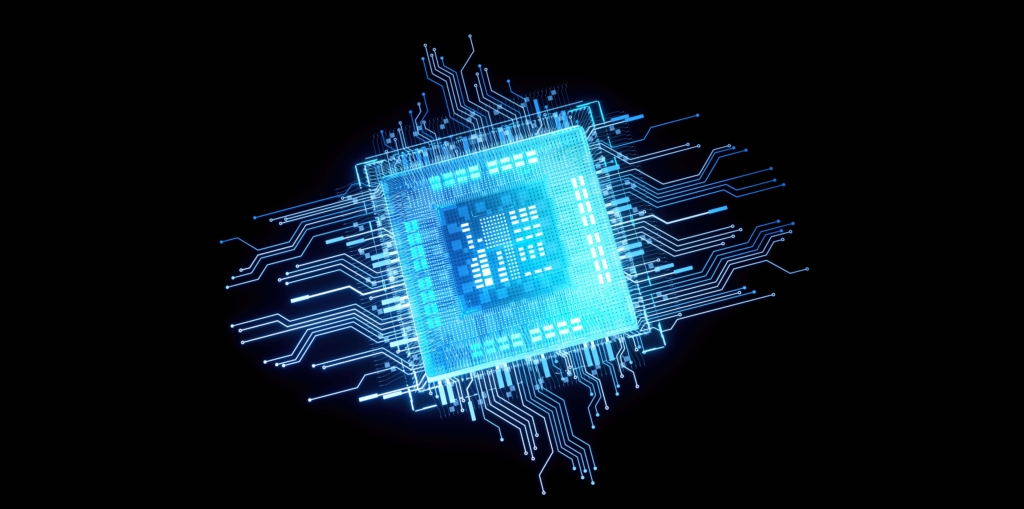
3D rendering of cyberpunk AI. Circuit board. Technology background. Central Computer Processors CPU and GPU concept. Motherboard digital chip. Tech science background.

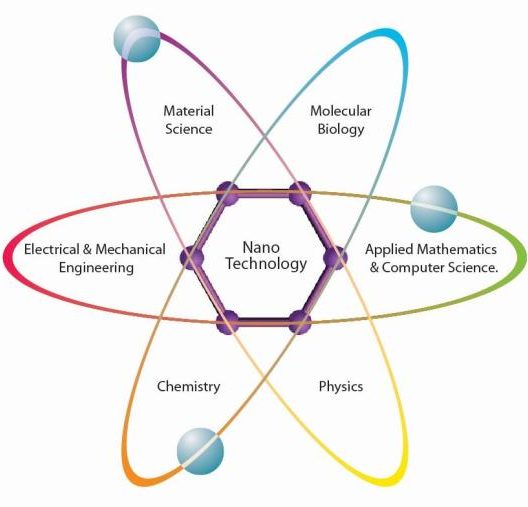
Topics: Applied Physics, Chemistry, Computer Science, Electrical Engineering, Materials Science, Nanotechnology, Quantum Mechanics, Semiconductor Technology

Gordon Moore, the co-founder of Intel who died earlier this year, is famous for forecasting a continuous rise in the density of transistors that we can pack onto semiconductor chips. James McKenzie looks at how “Moore’s law” is still going strong after almost six decades but warns that further progress is becoming harder and ever more expensive to sustain.

When the Taiwan Semiconductor Manufacturing Company (TSMC) announced last year that it was planning to build a new factory to produce integrated circuits, it wasn’t just the eye-watering $33bn price tag that caught my eye. What also struck me is that the plant, set to open in 2025 in the city of Hsinchu, will make the world’s first “2-nanometer” chips. Smaller, faster, and up to 30% more efficient than any microchip that has come before, TSMC’s chips will be sold to the likes of Apple – the company’s biggest customer – powering everything from smartphones to laptops.

But our ability to build such tiny, powerful chips shouldn’t surprise us. After all, the engineer Gordon Moore – who died on 24 March this year, aged 94 – famously predicted in 1965 that the number of transistors we can squeeze onto an integrated circuit ought to double yearly. Writing for the magazine Electronics (38 114), Moore reckoned that by 1975 it should be possible to fit a quarter of a million components onto a single silicon chip with an area of one square inch (6.25 cm2).

Moore’s prediction, which he later said was simply a “wild extrapolation”, held true, although, in 1975, he revised his forecast, predicting that chip densities would double every two years rather than every year. What thereafter became known as “Moore’s law” proved amazingly accurate, as the ability to pack ever more transistors into a tiny space underpinned the almost non-stop growth of the consumer electronics industry. In truth, it was never an established scientific “law” but more a description of how things had developed in the past as well as a roadmap that the semiconductor industry imposed on itself, driving future development.

Moore’s law: further progress will push hard on the boundaries of physics and economics, James McKenzie, Physics World

Valentina Tereshkova…

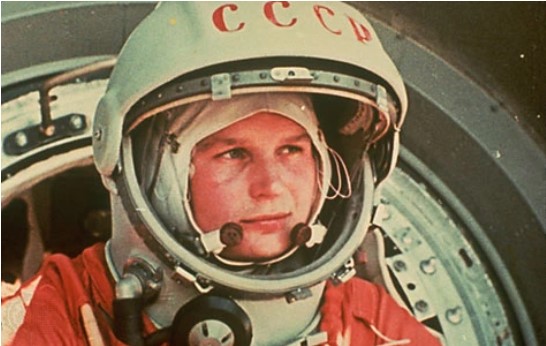
Valentina Tereshkova. Credit: ESA

Topics: Astronautics, ESA, History, NASA, Space Exploration, Spaceflight, Women in Science

The first female cosmonaut flew years before NASA put a man on the Moon and decades before any other country would send a woman into orbit.

On a drab Sunday in Moscow in November 1963, a dark-suited man stood beside his veiled bride, whose bashful smile betrayed the merest hint of nerves. Despite the extraordinarily lavish surroundings of the capital’s Wedding Palace, it might have been any normal wedding, but for one thing: Both groom and bride were cosmonauts, members of Russia’s elite spacefaring fraternity.

Two years earlier, that bride, Valentina Tereshkova, had been a factory seamstress and amateur parachutist with more than 100 jumps to her name when she’d volunteered for the cosmonaut program. Now, the 26-year-old, whom TIME magazine dubbed “a tough-looking Ingrid Bergman,” was among the most famous women in the world, an accolade she had earned just months ago by becoming the first female to leave the planet.

Sixty years on from her pioneering Vostok 6 mission, more than 70 women from around the globe have followed in Tereshkova’s footsteps, crossing that ethereal boundary between ground and space. Some have commanded space missions, helmed space stations, made spacewalks, spent more than a cumulative year of their lives in orbit, and even flown with a prosthesis. And women from Britain, Iran, and South Korea have become their countries’ first national astronauts, ahead of their male counterparts.

60 years ago today, Valentina Tereshkova launched into space, Ben Evans, Astronomy

Juneteenth and Equitable Science…

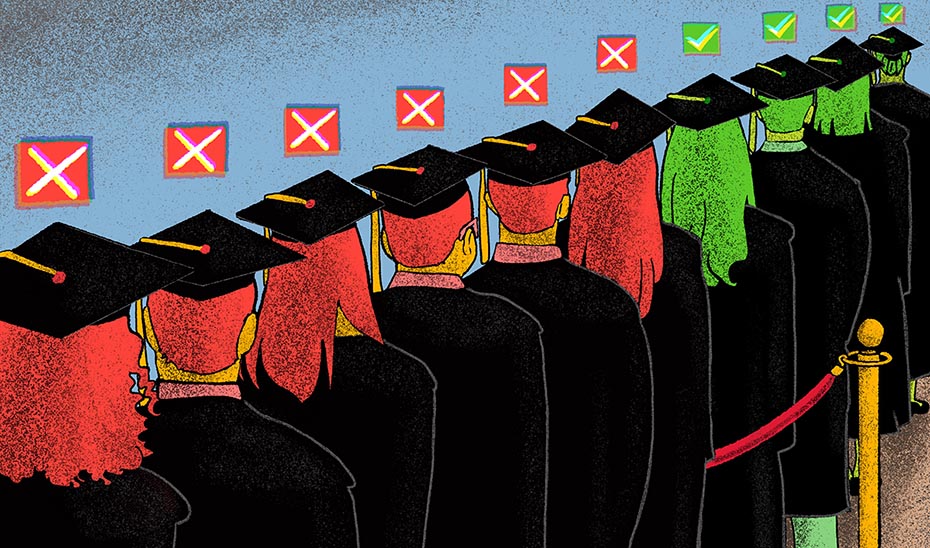
Figure 1 Overcoming scientific racism as a Community. (Top) This figure depicts the barriers Black scientists face in academia. (Bottom) The bottom part of the figure depicts Black scientists overcoming those challenges.

Topics: Civil Rights, Diversity, Diversity in Science, Women in Science

We are 52 Black scientists. Here, we establish the context of Juneteenth in STEMM and discuss the barriers Black scientists face, the struggles they endure, and the lack of recognition they receive. We review racism’s history in science and provide institutional-level solutions to reduce the burdens on Black scientists.

Keywords
Juneteenth, diversity, STEMM, scientific racism

Introduction
June 19, 1865, independence day, commonly referred to as Juneteenth, celebrates the freedom of the last large body of enslaved Black Americans following the American Civil War. Although the Emancipation Proclamation, which declared free those slaves residing in states in open rebellion against the United States, took effect more than 2 years prior, it was not until Union troops liberated Texas that more than 250,000 slaves gained their freedom. However, some in the United States remained enslaved through convict leasing and sharecropping. Following Juneteenth came the Reconstruction Era (1865–1877) in the United States, a tumultuous time when the North and South began reunification and ideologies of freedom and equality clashed, leading to the ratification of the 14th and 15th Amendments to the Constitution to protect the rights of Black peoples—defined here as people of ancestral African origin, including peoples of African American, African, Afro-Caribbean, and mixed ancestry—in the face of race riots, lynchings, and black codes (restrictive laws designed to limit the advancement of Black individuals to retain cheap labor), including Jim Crow laws. Black and White America developed along segregated and unequal paths. As segregation and intentional underinvestment occurred across education, many Black individuals did not learn to read or write, hampering career opportunities. Across the mid-to-late 1900s, the powerful civil rights movements led to the repeal of many segregationist laws. Even so, some of their effects remained unchanged: Black individuals still faced discrimination and unequal opportunities for education, and to this day, Black communities lack resources.


It took over 150 years for Juneteenth to be recognized as a federal holiday in the summer of 2021, following multiple police killings of Black individuals that gained media prominence in the preceding year. Juneteenth recognizes and celebrates freedom, civil rights, and the potential for the advancement of Black people in the United States. Yet, it also serves as a day of reflection and hopes that a nation might someday live up to its core founding principle—equality for all. Shortly after freeing Black Americans, the US state legislatures enacted harsh laws to curtail their progress; thus, as formal slavery declined, institutional slavery arose. These laws have had generational impacts: today, Black scientists continue to suffer institutional slavery, leading to lower pay, lesser access to resources, and fewer advancement opportunities. In addition to cultural erasure, undervalue, isolation, stereotype threat, and tokenism, Black scientists face many obstacles to attaining education and persisting in the fields of science, technology, engineering, mathematics, and medicine (STEMM). As the official correspondence from The White House states,“Juneteenth not only commemorates the past. It calls us to action today.” Juneteenth is a rallying call for all, but it is especially a call for action from scientists. Even though scientific innovation prospers from a richly diverse field, science has historically existed as a bastion for harboring racism.

In this commentary, we seek to explain some of the history of Black individuals in the United States. This includes the initial gap in and continued barriers to income attainment, which have inhibited their growth. We discuss the racist institutions that still exist in science, including lack of recognition for awards and disparities in funding rates. We also consider the toll that institutional racism takes on the mental health of Black individuals, which has unfortunately led to suicides. Finally, we note the double binds for those with intersectionality—e.g., those underrepresented by a combination of gender, sexual orientation, disability status, and race. Together, these limitations inhibit the progression of individuals through the elitist STEMM pipeline.1 Given the continued exclusion of Black scientists at different levels of STEMM training, it is important to recognize the relevance of Juneteenth as well as how it may contribute to future improvements. We offer steps that institutions and wider bodies should take to reduce the impact of racism in science (Figure 1). Importantly, we consider Juneteenth a growth pillar and propose steps to improve mentoring, institutional support, and training to reduce remaining institutional barriers.

Juneteenth in STEMM and the Barriers to equitable science, Cell dot com

Challenging the Standard Model…

Excited helium nuclei inflate like balloons, offering physicists a chance to study the strong nuclear force which binds the nucleus’s protons and neutrons. Kristina Armitage/Quanta Magazine

Topics: Modern Physics, Nobel Prize, Particle Physics, Quantum Mechanics, Steven Weinberg, Theoretical Physics

A new measurement of the strong nuclear force, which binds protons and neutrons together, confirms previous hints of an uncomfortable truth: We still don’t have a solid theoretical grasp of even the simplest nuclear systems.

To test the strong nuclear force, physicists turned to the helium-4 nucleus, which has two protons and two neutrons. When helium nuclei are excited, they grow like an inflating balloon until one of the protons pops off. Surprisingly, in a recent experiment, helium nuclei didn’t swell according to plan: They ballooned more than expected before they burst. A measurement describing that expansion, called the form factor, is twice as large as theoretical predictions.

“The theory should work,” said Sonia Bacca, a theoretical physicist at the Johannes Gutenberg University of Mainz and an author of the paper describing the discrepancy, which was published in Physical Review Letters. “We’re puzzled.”

For many years, physicists didn’t understand how to use the strong force to understand the stickiness of protons and neutrons. One problem was the bizarre nature of the strong force — it grows stronger with increasing distance rather than slowly dying off. This feature prevented them from using their usual calculation tricks. When particle physicists want to understand a particular system, they typically parcel out a force into more manageable approximate contributions, order those contributions from most important to least important, then simply ignore the less important contributions. With the strong force, they couldn’t do that.

Then in 1990, Steven Weinberg found a way to connect the world of quarks and gluons to sticky nuclei. The trick was to use an effective field theory — a theory that is only as detailed as it needs to be to describe nature at a particular size (or energy) scale. To describe the behavior of a nucleus, you don’t need to know about quarks and gluons. Instead, at these scales, a new effective force emerges — the strong nuclear force transmitted between nucleons by the exchange of pions.

A New Experiment Casts Doubt on the Leading Theory of the Nucleus, Katie McCormick, Quanta Magazine

Unsustainable…

From the Twilight Zone season 3, episode 8, “It’s a Good Life.” Billy Mumy plays an evil little boy who terrorizes his neighborhood with his magical powers for any slight. Here, he turned a man into a jack-in-the-box.

Topics: Civics, Civil Rights, Civilization, Existentialism, Fascism

Jesse Pinkman: You don’t want a criminal lawyer… you want a “criminal” lawyer,

Jesse Pinkman: What, dude, wouldn’t take a bribe? [That] dude in there? Saul Goodman. we’re talking about?

Walter White: Yeah. “Morally outraged,” he said. Threatened to call the police.

Jesse Pinkman: Wait, and Badger is gonna spill?

Walter White: Like the Exxon Valdez.

Jesse Pinkman: So, what do we do about it?

Aaron Paul: Jesse Pinkman on “Breaking Bad” and “Better Call Saul,” IMDB.

From the 2019 documentary, Where’s My Roy Cohn,: “Roy Cohn personified the dark arts of American politics, turning empty vessels into dangerous demagogues – from Joseph McCarthy to his final project, Donald J. Trump.” IMDB

In order to understand the mind of Donald Trump, one must acquaint themselves with the life and legacy of his mentor, Roy Cohn. He’s the notorious lawyer who tampered with evidence in order to ensure that Julius and Ethel Rosenberg were sent to the electric chair, despite the fact that their shared status as dangerous Russian spies is still hotly debated. Cohn coaxed what was later alleged as a false testimony from Ethel’s brother, David Greenglass, that affirmed her complicity in the eyes of the court. Has enough evidence subsequently come to light connecting her with Julius’ role as a recruiter of Russian spies, and have the nuclear secrets reportedly stolen by Julius been found to be of much value?

Bully. Coward. Victim. The Story of Roy Cohn, Matt Fagerholm, Roger Ebert

David Frum said it succinctly: “The President is a Crook,” in this case, the former president tried to, and is still trying to foment an insurrection because he ran and lost in 2020. Then, and now, we have the choice between the man, the presidency, and the rule of law.

The Constitution is essentially a property document. Despite the genius we proffer to the founding fathers, they were humans in the eighteenth century. The citizens they were writing to were wealthy property owners like themselves, many of them attaining that wealth through the ownership and trade of human chattel. Their women didn’t have the right to vote until the suffrage movement produced the 19th Amendment, throwing the black women who worked on suffrage “under the bus.” My mother and sister didn’t get the full right of citizenship until the 1965 Voting Rights Act. I was three years old.

The United States Constitution is a remarkable document written by men steeped in education but fallible. No document nor dogma can anticipate changes in the world and society. Barack Hussein Obama would have shocked them. They would have guffawed at a presidential candidacy of a Hillary Clinton.

Unless you’ve been on Mars or hiding under a rock, the twice-impeached president has now been twice indicted for criminal activity. After losing to E. Jean Carrol in a case accusing him of sexual assault, he doubled down on a CNN Town Hall, calling her a “whack job,” and she and her lawyer rightly sued again. The backlash and poor ratings afterward probably contributed to the firing of CNN’s former CEO, Chris Licht.

After getting his first indictment for paying off an adult film star and playboy centerfold, affairs he covered up while his third wife was pregnant with his fifth child, he strutted like a peacock. After being indicted for stealing classified information, he held a rally at his club in Bedminster, New Jersey, where arguably, one of his espionage crimes was recorded on tape.

What. is. WRONG. With. HIM? For that matter, what is wrong with our fellow citizens?

Mary Trump wrote “Too Much And Never Enough” about her malignant narcissist uncle. In chapter 3, titled “The Great I Am,” he was sent to military school in Newburg, New York, after getting aggressive with his mother and bullying issues at the age of thirteen.

“Finally, by 1959, Donald’s misbehavior—fighting, bullying, arguing with teachers—had gone too far,” Mary Trump writes.

Fred Trump was on the board of trustees for the Kew-Forest prep school that Donald Trump was attending.

“Fred didn’t mind Donald’s acting out, but it had become intrusive and time-consuming for him,” Mary Trump wrote. “When one of his fellow board members at Kew-Forest recommended sending Donald to New York Military Academy to rein him in, Fred went along with it.”

In the book, Mary Trump wrote that Trump’s mother, Mary Anne Trump, “didn’t fight for her son to stay home … a failure Donald couldn’t help but notice.”

“Over Donald’s objections, he was enrolled at NYMA,” she writes. “The other kids in the family referred to NYMA as a ‘reform school’—it wasn’t prestigious like St. Paul’s, which (older brother) Freddy had attended.”

Nobody sent their sons to NYMA for a better education, and Donald understood it rightly as a punishment,” Mary Trump wrote.

Trump Sent to ‘Reform School’ As Teen for Bullying, Niece’s Book Says, Elizabeth Crisp, Newsweek

What are the symptoms of spoiled brat syndrome?

The syndrome is characterized by “excessive, self-centered, and immature behavior.” It includes a lack of consideration for other people, recurrent temper tantrums, an inability to handle the delay of gratification, demands for having one’s own way, obstructiveness, and manipulation to get their way. Wikipedia

Professor William T. Kelley at the Wharton School of Business, let’s just say, didn’t think highly of the 45th president’s intellect (see Mystery 2). His fellow Wharton students spent their weekends in study groups. Young Trump went back to New York on weekends, tutored likely by criminals that Roy Cohn represented, inspired to create a fantasy world from the Godfather trilogy popular in his youth. John Gotti was the original “Teflon Don” until he, like Al Capone, was eventually caught. He practically struts like Marlon Brando.

It’s not theirs. It’s mine! He is indicted on 37 counts, 31 for espionage. He is a criminal, but in a certain sense, he is the epoch of the spoiled brat grown-up physically. The indictment happened a day before his 77th birthday. He had issues getting lawyers in Florida, aided by his reputation of stiffing anyone who works for him and his childish stubbornness to not follow counsel: silence is golden, but he can’t shut up.

On the calendar, he’s a late-stage septuagenarian. Emotionally, he is a child. He is Billy Mumy with the magical power to manipulate an entire constituency that the GOP didn’t know they had. His wand is explicit bigotry and cruelty; his power is to give those who will follow him over the abyss cover and approval to be their worst selves. No one liked Mumy’s character portrayal, and other than fellow sociopaths, no one [really] likes him.

A political party following the machinations of an impulsive being is not sustainable. 2024 will mark 20 years since the GOP won both the electoral college and the popular vote. That can lead a party to desperation. And desperation leads to demagogues and violence.

Magnetic Chirality…

An RNA-making molecule crystallizes on magnetite, which can bias the process toward a single chiral form. S. FURKAN OZTURK

Topics: Biology, Biotechnology, Chemistry, Magnetism, Materials Science

In 1848, French chemist Louis Pasteur discovered that some molecules essential for life exist in mirror-image forms, much like our left and right hands. Today, we know biology chooses just one of these “chiral” forms: DNA, RNA, and their building blocks are all right-handed, whereas amino acids and proteins are all left-handed. Pasteur, who saw hints of this selectivity, or “homochirality,” thought magnetic fields might somehow explain it, but its origin has remained one of biology’s great mysteries. Now, it turns out Pasteur may have been onto something.

In three new papers, researchers suggest magnetic minerals common on early Earth could have caused key biomolecules to accumulate on their surface in just one mirror image form, setting off positive feedback that continued to favor the same form. “It’s a real breakthrough,” says Jack Szostak, an origin of life chemist at the University of Chicago who was not involved with the new work. “Homochirality is essential to get biology started, and this is [a possible]—and I would say very likely—solution.”

Chemical reactions are typically unbiased, yielding equal amounts of right- and left-handed molecules. But life requires selectivity: Only right-handed DNA, for example, has the correct twist to interact properly with other chiral molecules. To get [life], “you’ve got to break the mirror, or you can’t pull it off,” says Gerald Joyce, an origin of life chemist and president of the Salk Institute for Biological Studies.

Over the past century, researchers have proposed various mechanisms for skewing the first biomolecules, including cosmic rays and polarized light. Both can cause an initial bias favoring either right- or left-handed molecules, but they don’t directly explain how this initial bias was amplified to create the large reservoirs of chiral molecules likely needed to make the first cells. An explanation that creates an initial bias is a good start but “not sufficient,” says Dimitar Sasselov, a physicist at Harvard University and a leader of the new work.

‘Breakthrough’ could explain why life molecules are left- or right-handed, Robert F. Service, Science.org

Chiplets…

Source: Semiengineering dot com – Chiplets

Topics: Computer Science, Electrical Engineering, Materials Science, Semiconductor Technology, Solid-State Physics

Depending on who you’re speaking with at the time, the industry’s adoption of chiplet technology to extend the reach of Moore’s Law is either continuing to roll along or is facing the absence of a commercial market. However, both assertions cannot be true. What is true is that chiplets have been used to build at least some commercial ICs for more than a decade and that semiconductor vendors continue to expand chiplet usability and availability. At the same time, the interface and packaging standards that are essential to widespread chiplet adoption remain in flux.

On the positive side of this question are existence proofs. Xilinx, now AMD, has been using 2.5D chiplet technology with large silicon interposers to make FPGAs for more than a decade. The first commercial use of this packaging technology appeared back in 2011 when Xilinx announced its Virtex-7 2000T FPGA, a 2-Mgate device built from four FPGA semiconductor tiles bonded to a silicon interposer. Xilinx jointly developed this chiplet-packaging technology with its foundry, TSMC, which now offers this CoWoS (Chip-on-Wafer-on-Substrate) interposer-and-chiplet technology to its other foundry customers. TSMC customers that have announced chiplet-based products include Broadcom and Fujitsu. AMD is now five generations along the learning curve with this packaging technology, which is now essential to the continued development of bigger and more diverse FPGAs. AMD will be presenting an overview of this multi-generation, chiplet-based technology, including a status update at the upcoming Hot Chips 2023 conference being held at Stanford University in Palo Alto, California, in August.

Similarly, Intel has long been developing and using chiplet technology in its own packaged ICs. The company has been using its 2.5D EMIB (embedded multi-die interconnect bridge) chiplet-packaging technology for years to manufacture its Stratix 10 FPGAs. That technology has now spread throughout Intel’s product line to include CPUs and SoCs. The poster child for Intel’s chiplet-packaging technologies is unquestionably the company’s Ponte Vecchio GPU, which packages 47 active “tiles” – Intel’s name for chiplets – in a multi-chip package. These 47 dies are manufactured by multiple semiconductor vendors using five different semiconductor process nodes, all combined in one package using Intel’s EMIB 2.5D and 3D Foveros chiplet-packaging techniques to produce an integrated product with more than 100 billion transistors – something not currently possible on one silicon die. Intel is now opening these chiplet-packaging technologies to select customers through IFS – Intel Foundry Services – and consequently expanding the size and number of its packaging facilities.

The Chiplet’s Time Is Coming, It’s Here, Or Not. Steven Leibson, Tirias Research, Forbes

Quantum Vortexes…

A new study by KTH Royal Institute of Technology and Stanford University revises of our understanding of quantum vortices in superconductors. Pictured, an artist’s depiction of quantum vortices. Credit: Greg Stewart, SLAC National Accelerator Laboratory

Topics: Modern Physics, Quantum Mechanics, Research, Superconductors

Within superconductors little tornadoes of electrons, known as quantum vortices, can occur, which have important implications in superconducting applications such as quantum sensors. Now a new kind of superconducting vortex has been found, an international team of researchers reports.

Egor Babaev, professor at KTH Royal Institute of Technology in Stockholm, says the study revises the prevailing understanding of how electronic flow can occur in superconductors, based on work about quantum vortices that was recognized in the 2003 Nobel Prize award. The researchers at KTH, together with researchers from Stanford University, TD Lee Institute in Shanghai and AIST in Tsukuba, discovered that the magnetic flux produced by vortices in a superconductor can be divided up into a wider range of values than thought.

That represents a new insight into the fundamentals of superconductivity, and also potentially can be applied in superconducting electronics.

A vortex of magnetic flux happens when an external magnetic field is applied to a superconductor. The magnetic field penetrates the superconductor in the form of quantized magnetic flux tubes which form vortices. Babaev says that originally research held that quantum vortices pass through superconductors each carrying one quantum of magnetic flux. But arbitrary fractions of quantum flux were not a possibility entertained in earlier theories of superconductivity.

Using the Superconducting Quantum Interference Device (SQUID) at Stanford University Babaev’s co-authors, research scientist Yusuke Iguchi and Professor Kathryn A. Moler, showed at a microscopic level that quantum vortices can exist in a single electronic band. The team was able to create and move around these fractional quantum vortices, Moler says.

“Professor Babaev has been telling me for years that we could see something like this, but I didn’t believe it until Dr. Iguchi actually saw it and conducted a number of detailed checks,” she says.

Tiny quantum electronic vortexes can circulate in superconductors in ways not seen before, KTH Royal Institute of Technology, Phys.org.

Distant Cousins…

The galaxy observed by Webb shows an Einstein ring caused by a phenomenon known as gravitational lensing.  Credit: S. Doyle / J. Spilker

Topics: Astrobiology, Biology, James Webb Space Telescope, Space Exploration

Researchers have detected complex organic molecules in a galaxy more than 12 billion light-years away from Earth—the most distant galaxy in which these molecules are now known to exist. Thanks to the capabilities of the recently launched James Webb Space Telescope and careful analyses from the research team, a new study lends critical insight into the complex chemical interactions that occurred in the first galaxies in the early universe.

University of Illinois Urbana-Champaign astronomy and physics professor Joaquin Vieira and graduate student Kedar Phadke collaborated with researchers at Texas A&M University and an international team of scientists to differentiate between infrared signals generated by some of the more massive and larger dust grains in the galaxy and those of the newly observed hydrocarbon molecules.

The study findings are published in the journal Nature.

“This project started when I was in graduate school studying hard-to-detect, very distant galaxies obscured by dust,” Vieira said. “Dust grains absorb and re-emit about half of the stellar radiation produced in the universe, making infrared light from distant objects extremely faint or undetectable through ground-based telescopes.”

In the new study, the JWST received a boost from what the researchers call “nature’s magnifying glass”—a phenomenon called gravitational lensing. “This magnification happens when two galaxies are almost perfectly aligned from the Earth’s point of view, and light from the background galaxy is warped and magnified by the foreground galaxy into a ring-like shape, known as an Einstein ring,” Vieira said.

Webb Space Telescope detects the universe’s most distant complex organic molecules, Lois Yoksoulian, University of Illinois at Urbana-Champaign.