"The one exclusive sign of thorough knowledge is the power of teaching." Aristotle | Disclaimer: The views and opinions expressed on this Wordpress website are the views and opinions of the content creator, Dr. Reggie Goodwin, and should not be construed as shared, or sourced from The Environmental Protection Agency, or any organizations with which they have cooperative, or business relationships.
Lurking for decades: researchers have discovered Pines’ demon, a collection of electrons in a metal that behaves like a massless wave. It is illustrated here as an artist’s impression. (Courtesy: The Grainger College of Engineering/University of Illinois Urbana-Champaign)
For nearly seven decades, a plasmon known as Pines’ demon has remained a purely hypothetical feature of solid-state systems. Massless, neutral, and unable to interact with light, this unusual quasiparticle is reckoned to play a key role in certain superconductors and semimetals. Now, scientists in the US and Japan say they have finally detected it while using specialized electron spectroscopy to study the material strontium ruthenate.
Plasmons were proposed by the physicists David Pines and David Bohm in 1952 as quanta of collective electron density fluctuations in a plasma. They are analogous to phonons, which are quanta of sound, but unlike phonons, their frequency does not tend to zero when they have no momentum. That’s because finite energy is needed to overcome the Coulomb attraction between electrons and ions in a plasma in order to get oscillations going, which entails a finite oscillation frequency (at zero momentum).
Today, plasmons are routinely studied in metals and semiconductors, which have conduction electrons that behave like a plasma. Plasmons, phonons, and other quantized fluctuations are called quasiparticles because they share properties with fundamental particles such as photons.
In 1956, Pines hypothesized the existence of a plasmon which, like sound, would require no initial burst of energy. He dubbed the new quasiparticle a demon in honor of James Clerk Maxwell’s famous thermodynamic demon. Pines’ demon forms when electrons in different bands of metal move out of phase with one another such that they keep the overall charge static. In effect, a demon is the collective motion of neutral quasiparticles whose charge is screened by electrons from another band.
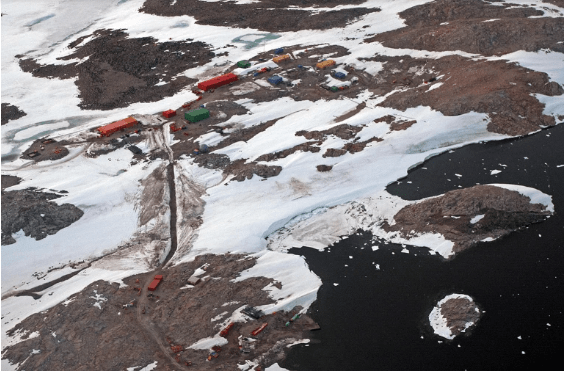
The sea floor near Australia’s Casey station in Antarctica has been found to have levels of pollution comparable to those in Rio de Janeiro’s harbor. Credit: Torsten Blackwood/AFP via Getty
Topics: Antarctica, Biology, Chemistry, Environment, Physics, Research
Antarctica is often described as one of the most pristine places in the world, but it has a dirty secret. Parts of the sea floor near Australia’s Casey research station are as polluted as the harbor in Rio de Janeiro, Brazil, according to a study published in PLoS ONE in August.
The contamination is likely to be widespread across Antarctica’s older research stations, says study co-author Jonathan Stark, a marine ecologist at the Australian Antarctic Division in Hobart. “These contaminants accumulate over long time frames and don’t just go away,” he says.
Stark and his colleagues found high concentrations of hydrocarbons — compounds found in fuels — and heavy metals, such as lead, copper, and zinc. Many of the samples were also loaded with polychlorinated biphenyls, highly carcinogenic chemical compounds that were common before their international ban in 2001.
When the researchers compared some of the samples with data from the World Harbor Project — an international collaboration that tracks large urban waterways — they found that lead, copper, and zinc levels in some cases were similar to those seen in parts of Sydney Harbour and Rio de Janeiro over the past two decades.
Widespread pollution
The problem of pollution is not unique to Casey station, says Ceisha Poirot, manager of policy, environment, and safety at Antarctica New Zealand in Christchurch. “All national programs are dealing with this issue,” she says. At New Zealand’s Scott Base — which is being redeveloped — contamination left from past fuel spills and poor waste management has been detected in soil and marine sediments. More of this historical pollution will emerge as the climate warms, says Poirot. “Things that were once frozen in the soil are now becoming more mobile,” she says.
Most of Antarctica’s contamination is due to historically poor waste management. In the old days, waste was often just dumped a small distance from research stations, says Terence Palmer, a marine scientist at Texas A&M University–Corpus Christi.
Research stations started to get serious about cleaning up their act in 1991. In that year, an international agreement known as the Protocol on Environmental Protection to the Antarctic Treaty, or the Madrid Protocol, was adopted. This designated Antarctica as a “natural reserve, devoted to peace and science,” and directed nations to monitor environmental impacts related to their activities. But much of the damage had already been done — roughly two-thirds of Antarctic research stations were built before 1991.
Scientists at the University of Sydney have, for the first time, used a quantum computer to engineer and directly observe a process critical in chemical reactions by slowing it down by a factor of 100 billion times.
Joint lead researcher and Ph.D. student Vanessa Olaya Agudelo said, “It is by understanding these basic processes inside and between molecules that we can open up a new world of possibilities in materials science, drug design, or solar energy harvesting.
“It could also help improve other processes that rely on molecules interacting with light, such as how smog is created or how the ozone layer is damaged.”
Specifically, the research team witnessed the interference pattern of a single atom caused by a common geometric structure in chemistry called a “conical intersection.”
Conical intersections are known throughout chemistry and are vital to rapid photochemical processes such as light harvesting in human vision or photosynthesis.
Chemists have tried to directly observe such geometric processes in chemical dynamics since the 1950s, but it is not feasible to observe them directly, given the extremely rapid timescales involved.
To get around this problem, quantum researchers in the School of Physics and the School of Chemistry created an experiment using a trapped-ion quantum computer in a completely new way. This allowed them to design and map this very complicated problem onto a relatively small quantum device—and then slow the process down by a factor of 100 billion. Their research findings are published August 28 in Nature Chemistry.
“In nature, the whole process is over within femtoseconds,” said Olaya Agudelo from the School of Chemistry. “That’s a billionth of a millionth—or one quadrillionth—of a second.
“Using our quantum computer, we built a system that allowed us to slow down the chemical dynamics from femtoseconds to milliseconds. This allowed us to make meaningful observations and measurements.
“This has never been done before.”
Joint lead author Dr. Christophe Valahu from the School of Physics said, “Until now, we have been unable to directly observe the dynamics of ‘geometric phase’; it happens too fast to probe experimentally.
“Using quantum technologies, we have addressed this problem.”
Artist’s conception of the dwarf planet Sedna in the outer edges of the known solar system. (Image credit: NASA/JPL-Caltech/R. Hurt (SSC))
Topics: Astronomy, Astrophysics, Exoplanets, NASA, Space Exploration
Astronomers are racing to explain peculiar orbits of faraway objects at the edge of our solar system.
Among the many mysteries that make the furthest reaches of our solar system, well, mysterious, is the exceptionally egg-shaped path of a dwarf planet called 90377 Sedna.
Its 11,400-year orbit, one of the longest of any resident of the solar system, ushers the dwarf planet to seven billion miles (11.3 billion km) from the sun, then escorts it out of the solar system and way past the Kuiper Belt to 87 billion miles (140 billion km), and finally takes it within a loose shell of icy objects known as the Oort cloud. Since Sedna’s discovery in 2003, astronomers have struggled to explain how such a world could have formed in a seemingly empty region of space, where it is too far to be influenced by giant planets of the solar system and even the Milky Way galaxy itself.
Now, a new study suggests that a thus far undetected Earth-like planet hovering in that region could be deviating orbits of Sedna and a handful of similar trans-Neptunian objects (TNOs), which are the countless icy bodies orbiting the sun at gigantic distances. Many TNOs have oddly inclined and egg-shaped orbits, possibly due to being tugged at by a hidden planet, astronomers say.
Topics: Civics, Civil Rights, Civilization, Democracy, Existentialism, Fascism, Human Rights
Sixty years ago tomorrow, two dear friends turned a year old, and ten years old. Sixty years ago tomorrow, I was a year, and 12 days old. The March on Washington happened on the eighth anniversary of the terrorism and slaying of Emmett Till, August 28, 1955, the actual date of original march August 28, 1963, this coming Monday. The demonstrators asked for a form of reparations that would come in the Civil Rights Bill in 1964 the next year, the Voting Rights Bill in 1965, and the Fair Housing Act in 1968. Dr. King, in a recording before the march opined that “we were coming to get our check.” There were celebrities like Harry Belafonte, Sidney Poitier, Marlon Brando, and future politicos (on opposite sides now) Nancy Pelosi, and Mitch McConnell. The march was a sea of “diversity, equity (sought) and inclusion (goaled for)” in that there were African Americans, white Americans, Jews, women and other minority groups on the Washington Mall. It was the “future and the hope” Gene Roddenberry and Lucille Ball launched Star Trek from. In two hundred years, we will have to get something right about living together.
At the original march, there were very few, if any, women allowed on the platform, John Lewis and Dr. King being the most famously remembered, as the Civil Rights Movement had a notable flaw: it was misogynist to its core. A lot of work behind the scenes, the arrests, the enduring of fire hoses was done by women like my big sister, heretofore unacknowledged. The hierarchy the then young people were marching against was a justification for those who “had,” and those who “had not,” but that did not let women at Langston’s table yet. This stratification is a competition for resources, and those who have had the resources are never eager to part with or share them, even if it insures species survival. It makes “trickledown” a gaslighting myth, as any distribution, regardless of speed, is anathema to the system.
Tomorrow, there will be a commemorative march populated by the “least of these”: African Americans, Asians, Hispanic/Latinos, LGBTQ, Women: all whose constitutional rights as citizens and EXISTENCE as humanity has been challenged since August 28, 1963. There has been a sustained assault by the ones who have benefited the most from the hierarchy that established Levittown’s that are more economically segregated (de facto) than de jure (by law). No one has to burn crosses on your front lawn if you can’t afford to live there. All of the aforementioned groups have seen the Voting Rights Act gutted, Roe vs. Wade eliminated, bodily autonomy and privacy of what we as citizens do at home in our bedrooms, down to contraception itself for the same reason: the hoarding of resources by those who consider themselves “worthy” so long as they have pariahs’ necks to stamp.
The world population in 1963 was estimated at 3,195,779,247.
The world population in 2023 is estimated at 8,045,311,447.
The globe hasn’t gotten bigger, and Zephram Cochrane hasn’t cracked the warp drive code (note: in the fictional Trek universe, he isn’t born until the 2030s).
The world population is projected to reach 8.5 billion in 2030, and to increase further to 9.7 billion in 2050 and 10.4 billion by 2100. As with any type of projection, there is a degree of uncertainty surrounding these latest population projections.United Nations
*****
Broadly defined, ecofascism is any environmentalism that advocates or accepts violence and does so in a way that reinforces existing systems of inequality or targets certain people while leaving others untouched. It is basically environmentalism that suggests that certain people are naturally and exclusively entitled to control and enjoy environmental resources. Some types of people, in other words, are “native species” and others are “invasive.”
The term itself is still very much up for debate but gathering currency largely due to high-profile individuals who have explicitly identified themselves as ecofascist. An example includes the man who murdered 51 People in a Christchurch, New Zealand, mosque in 2019. The El Paso, Texas, shooter, also in 2019, did not refer to himself as an ecofascist, but he plagiarized the Christchurch shooter’s manifesto, including many of its bogus arguments about race, nation, and environment. More recently, as you mentioned, another young man drove several hours to Buffalo, New York, where he targeted Black grocery shoppers.
A common ecofascist argument, then, links national environment to population, contending that certain (often specifically nonwhite) populations, within the US or beyond it, are the primary cause of climate change and other environmental issues.
Environment. Levittown. Wealth. Population. All determined by a sick, psychopathy. Divided like a pie on the table of the depraved, in this case, the pariah Lazarus, and his kin get no crumbs from the Koinonia table. When you found a nation on the land grab and murder of its indigenous inhabitants, from Columbus to “Manifest Destiny,” when you cultivate and build your wealth on the backs of kidnapped enslaved people from the continent that BIRTHED humanity, the only way you can maintain such a system that would make Alfred Hitchcock BLUSH is through the application of unmerciful violence. “Christian nation” and “United States” become a form of delusion and self-gaslighting. You might have to ban a few books to keep up the façade. Burning them would be too obvious.
I don’t know what the world will be in 200 years, just like I don’t know if a Zephram Cochrane will ever exist, but I hope for my “little one’s” sake in six decades, it is still here, balanced on indigenous sensibilities with the environment, more egalitarian, and less authoritarian, the inequity quelled and every stomach filled, including hers, sixty years from now. She will be a little older than me, hopefully in a better world that I helped form.
Researchers from the University of Connecticut and colleagues have created a highly durable, lightweight material by structuring DNA and then coating it in glass. The resulting product, characterized by its nanolattice structure, exhibits a unique combination of strength and low density, making it potentially useful in applications like vehicle manufacturing and body armor. (Artist’s concept.)
Topics: Biotechnology, DNA, Material Science, Nanomaterials
Researchers have developed a highly robust material with an extremely low density by constructing a structure using DNA and subsequently coating it in glass.
Materials possessing both strength and lightness have the potential to enhance everything from automobiles to body armor. But usually, the two qualities are mutually exclusive. However, researchers at the University of Connecticut, along with their collaborators, have now crafted an incredibly strong yet lightweight material. Surprisingly, they achieved this using two unexpected building blocks: DNA and glass.
“For the given density, our material is the strongest known,” says Seok-Woo Lee, a materials scientist at UConn. Lee and colleagues from UConn, Columbia University, and Brookhaven National Lab reported the details on July 19 in Cell Reports Physical Science.
Strength is relative. Iron, for example, can take 7 tons of pressure per square centimeter. But it’s also very dense and heavy, weighing 7.8 grams/cubic centimeter. Other metals, such as titanium, are stronger and lighter than iron. And certain alloys combining multiple elements are even stronger. Strong, lightweight materials have allowed for lightweight body armor and better medical devices and made safer, faster cars and airplanes.
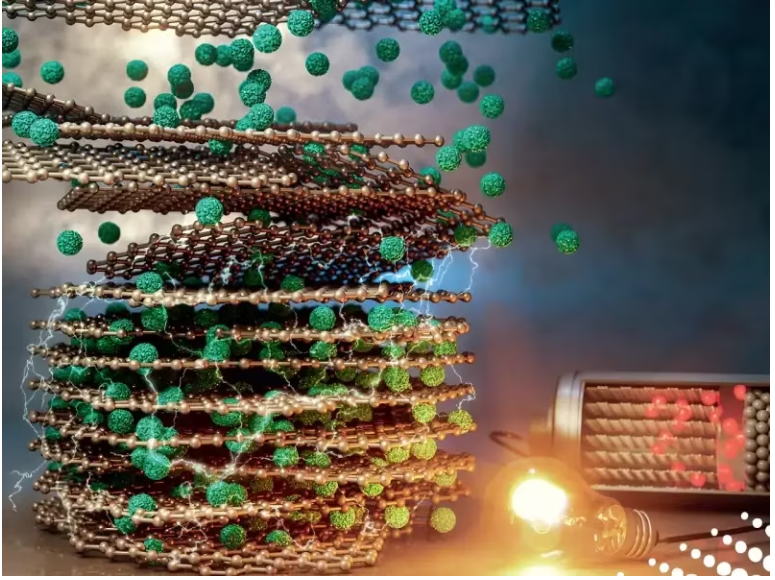
Electric field- and pressure-assisted fast sintering to control graphene alignment in thick composite electrodes for boosting lithium storage performance. Credit: Hongtao Sun, Penn State
Topics: Battery, Energy, Graphene, Green Tech, Lithium, Materials Science, Nanomaterials
The demand for high-performance batteries, especially for use in electric vehicles, is surging as the world shifts its energy consumption to a more electric-powered system, reducing reliance on fossil fuels and prioritizing climate remediation efforts. To improve battery performance and production, Penn State researchers and collaborators have developed a new fabrication approach that could make for more efficient batteries that maintain energy and power levels.
The improved method for fabricating battery electrodes may lead to high-performance batteries that would enable more energy-efficient electric vehicles, as well as such benefits as enhancing power grid storage, according to Hongtao Sun. Sun is an assistant professor of industrial and manufacturing engineering at Penn State and the co-corresponding author of the study, which was published in and featured on the front cover of Carbon.
“With current batteries, we want them to enable us to drive a car for longer distances, and we want to charge the car in maybe five minutes, 10 minutes, comparable to the time it takes to fill up for gas,” Sun said. “In our work, we considered how we can achieve this by making the electrodes and battery cells more compact, with a higher percentage of active components and a lower percentage of passive components.”
If an electric car maker wants to improve the driving distance of their vehicles, they add more battery cells, numbering in the thousands. The smaller and lighter, the better, according to Sun.
“The solution for longer driving distances for an electric vehicle is just to add compact batteries, but with denser and thicker electrodes,” Sun said, explaining that such electrodes could better connect and power the battery’s components, making them more active. “Although this approach may slightly reduce battery performance per electrode weight, it significantly enhances the vehicle’s overall performance by reducing the battery package’s weight and the energy required to move the electric vehicle.”
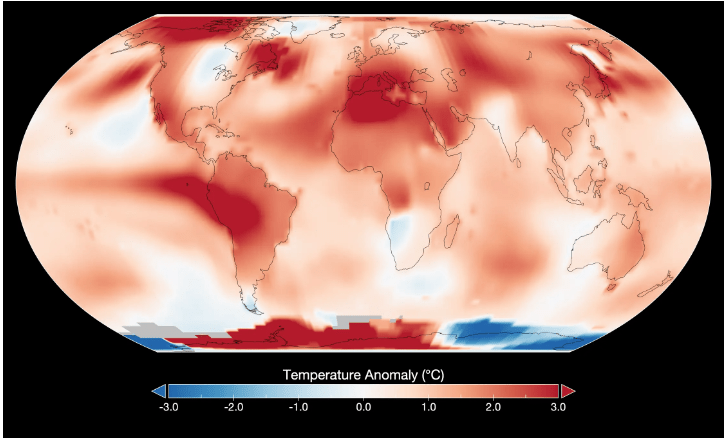
This map shows global temperature anomalies for July 2023 according to the GISTEMP analysis by scientists at NASA’s Goddard Institute for Space Studies. Temperature anomalies reflect how July 2023 compared to the average July temperature from 1951-1980. Credit: NASA’s Goddard Institute for Space Studies
Topics: Civilization, Climate Change, Existentialism, Global Warming, NASA
Editor’s Note: This release has been updated to add additional graphics and captions and to spell out the words degrees Fahrenheit and Celsius.
According to scientists at NASA’s Goddard Institute for Space Studies (GISS) in New York, July 2023 was hotter than any other month in the global temperature record.
“Since day one, President Biden has treated the climate crisis as the existential threat of our time,” said Ali Zaidi, White House National Climate Advisor. Against the backdrop of record-high temperatures, wildfires, and floods, NASA’s analysis puts into context the urgency of President Biden’s unprecedented climate leadership. From securing the Inflation Reduction Act, the largest climate investment in history, to invoking the Defense Production Act to supercharge domestic clean energy manufacturing, to strengthening climate resilience in communities nationwide, President Biden is delivering on the most ambitious climate agenda in history.”
Overall, July 2023 was 0.43 degrees Fahrenheit (F) (0.24 degrees Celsius (C)) warmer than any other July in NASA’s record, and it was 2.1 F (1.18 C) warmer than the average July between 1951 and 1980. The primary focus of the GISS analysis is long-term temperature changes over many decades and centuries, and a fixed base period yields anomalies that are consistent over time. Temperature “normals” are defined by several decades or more – typically 30 years.
The central role of HFIP: a solvent component that solvates POM. a. 1,1,1,3,3,3-Hexafluoro-2-propanol (HFIP): an effective solvent for polyoxymethylene (POM), the clustering of HFIP enabled the decrease of σ*OH energy38. b. Images of an undivided cell before (left) and after (right) the electrolysis. c. Reaction profile of POM bulk electrolysis at 3.5 V (60 °C), 0.1 M LiClO4 in CH3CN: HFIP (26:4). Credit: Nature Communications (2023). DOI: 10.1038/s41467-023-39362-z
Topics: Chemistry, Green Tech, Materials Science, Star Trek
A group of researchers at the University of Illinois Urbana-Champaign demonstrated a way to use the renewable energy source of electricity to recycle a form of plastic that’s growing in use but more challenging to recycle than other popular forms of plastic.
In their study recently published in Nature Communications, they share their innovative process that shows the potential for harnessing renewable energy sources in the shift toward a circular plastics economy.
“We wanted to demonstrate this concept of bringing together renewable energy and a circular plastic economy,” said Yuting Zhou, a postdoctoral associate, and co-author, who worked on this groundbreaking research with two professors in chemistry at Illinois, polymer expert Jeffrey Moore and electrochemistry expert Joaquín Rodríguez-López.
The project was conceived by Moore, who had experience working with Poly(phthalaldehyde), a form of polyacetal. Polyoxymethylene (POM) is a high-performance acetal resin that is used in a variety of industries, including automobiles and electronics. A thermoplastic, it can be shaped and molded when heated and hardens upon cooling with a high degree of strength and rigidity, making it an attractive lighter alternative to metal in some applications, like mechanical gears in automobiles. It is produced by various chemical firms with slightly different formulas and names, including Delrin by DuPont.
When recycling, those highly crystalline properties of POM make it difficult to break down. It can be melted and molded again, but POM’s original material properties are lost, limiting the usefulness of the recycled material.
“When the polymer was in use as a product, it was not a pure polymer. It will also have other chemicals like coloring additives and antioxidants. So, if you simply melt it and remold it, the material properties are always lost,” Zhou explained.
The Illinois research team’s method uses electricity, which can be drawn from renewable sources, and takes place at room temperature.
This electro-mediated process deconstructs the polymer, breaking it down into monomers—the molecules that are bonded to other identical molecules to form polymers.
The Herculoids were a Hanna-Barbara cartoon that only ran for two seasons, from 1967 to 1969. From ages five to seven, I didn’t demand much from my Saturday morning viewing pleasure: good guys, bad guys, action, good guys pummel bad guys, in this case, casting them off the planet. We landed on the Moon in their last year of air (it’s a shame that history is now controversial). Dr. King and Robert Kennedy were assassinated In Medias Res. My understanding of Physics and STEM came much later.
Zandor, Tara, and Domo were the human protagonists defending planet “Amzot” (the writers threw spaghetti at the wall on this name). In a tepid reboot, they called it Quasar, a little more astrophysical but nonetheless kooky. They had a laser ray dragon (Zot), a rock ape (Igo), and a ten-legged rhino/triceratops hybrid that shot energy rocks from his snout (Tondro, the Terrific, because, yeah). Gloop and Gleep were human-sized, protoplasmic creatures called “the formless, fearless wonders,” with eyes, and Gleep, was somehow the “son” of Gloop, without genitalia or gender (go with the bit?). The humans also shot energy rocks from slingshots at the foes too dumb to leave Zandor and his jungle planet alone. If the rocks were made of Lithium, they shouldn’t have lasted too long: one of its properties is its volatility in oxygenated atmospheres.
In 1967, I would have been five years old and not too demanding of my visual entertainment on Saturday Morning Cartoons, as this old form pastime was called.
Taking a few courses in Physics drives a probing question and observation:
Where were the flocks of laser ray dragons, the congress of rock apes, the herds of rhino/triceratops hybrids, and what marshy bog did the “formless, fearless wonders” ascend from? It seemed Zot, Igo, Tondro, Gloop, and Gleep were the only ones of their kind.
In “Sarko: The Arkman,” Sarko kidnaps Domo, Igo, and Tondro for his “collection” on another planet. Zandor rides Zot with Gloop to ANOTHER PLANET without the need of a spaceship, escape velocity, pressurized spacesuits, protection from radiation, or the friction of reentry to Sarko’s world. Even if the planet was in the same orbital plane as Amzot, it didn’t appear to take him long, and he wasn’t bruised by a single meteor during the trip nor tanned from radiation burns (or dead). Gleep clones five copies of himself to protect Tara then turns up in a scene making himself a pillow on Sarko’s world to catch Domo. Zot flew escort to Sarko’s ship on the way back to Amzot again, with no loss of life. Did you follow all that?
Five-year-olds don’t need Physics lessons, just a simple plot, a lot of action, and taking care of “evil-doers” before you play outside after Saturday cartoons.
It’s magical thinking, but not a way to run human society.
“The human understanding is no dry light but receives an infusion from the will and affections; whence proceed sciences which may be called ‘sciences as one would.’ For what a man had rather were true, he more readily believes. Therefore, he rejects difficult things from impatience of research; sober things because they narrow hope; the deeper things of nature, from superstition; the light of experience, from arrogance and pride; things not commonly believed, out of the deference to the opinion of the vulgar. Numberless, in short, are the ways, and sometimes imperceptible, in which the affections color and infect the understanding.”
Sir Francis Bacon, NOVUM ORGANON (1620)
Maui is a dystopian hellscape. It is now the deadliest wildfire in American history: until the next one. Reuters reports the cause of the fire is unknown, but 85% of all wildfires are caused by humans, as is the anthropogenic climate disruption that helped light the match. Hurricane Dora energized the spread, fanning the flames across the island that was experiencing a drought. Part of Maui’s problem is prior to the predictions of climate scientists coming true in recent real-time, Maui never had to prepare for drought conditions or massive wildfires. Did I mention the island chain is surrounded by the Pacific Ocean?
Maui was the Capitol of the old kingdom of Hawaii before colonization. It was a tourist attraction and the seat of culture. Maui is the place where the Hula dance and the Samoan language were reconstituted and practiced. A 150-year-old banyan tree burned in the flames. It will survive IF the roots survived the savage flames.
“Some 271 structures were destroyed or damaged, the Honolulu Star-Advertiser said, citing official reports from the U.S. Civil Air Patrol and Maui Fire Department.” Reuters
There is a throughline from Hurricane Katrina in Louisiana and Hurricane Dora in Maui. That throughline is climate change, gestated into the climate crisis, birthed into climate catastrophe. In eighteen years, we have shuffled, obfuscated, and kicked the can down the road right into our children’s and grandchildren’s future. We have allowed political operators and lobbyists for the fossil fuels industry to quote their “science as one would”: “It’s summer.” “There is no climate change.” “It’s a (fill in the blank) hoax.” “How can there be global warming if New York is blanketed in snow?”
The tobacco and fossil fuels industry used the same researchers and same lawyers to sway public opinion and sell their products. It is a myopic concentration on quarterly profits, not looking at the damage to the planet beneath them going forward. If Adam Smith’s capitalism is our “salvation,” there should be market-based solutions to ensure a functional civilization as corporations pursue profits and bought and paid-for politicians pursue policies that sustain both commerce and civilization.
Otherwise, their vulgar opinions have not offered solutions nor modeled societal collapse.
The Guardian reported from the National Academy of Science that more than 50% of life is in the soil beneath us. Life on Earth may survive our own hubris. It likely won’t be intelligent or anything resembling human civilization.
Cartoon Network Physics is only good for five-year-olds on Saturday morning cartoons. There are no laser dragons, rock apes, rhino/triceratops hybrids, and energy rocks to deploy to our rescue. It fails humanity in the long term. “Sciences as one would” has led us to this precipice. “Sciences as one acknowledges” will lead us away from it.
Note: The blog will resume Monday – Friday postings on August 21st (traveling for work).