"The one exclusive sign of thorough knowledge is the power of teaching." Aristotle | Disclaimer: The views and opinions expressed on this Wordpress website are the views and opinions of the content creator, Dr. Reggie Goodwin, and should not be construed as shared, or sourced from The Environmental Protection Agency, or any organizations with which they have cooperative, or business relationships.
Often referred to as the “dream batteries,” all-solid-state batteries are the next generation of batteries that many battery manufacturers are competing to bring to market. Unlike lithium-ion batteries, which use a liquid electrolyte, all components, including the electrolyte, anode, and cathode, are solid, reducing the risk of explosion, and are in high demand in markets ranging from automobiles to energy storage systems (ESS).
However, devices that maintain the high pressure (10s of MPa) required for stable operation of all-solid-state batteries have problems that reduce the battery performance, such as energy density and capacity, and must be solved for commercialization.
Dr. Hun-Gi Jung and his team at the Energy Storage Research Center at the Korea Institute of Science and Technology (KIST) have identified degradation factors that cause rapid capacity degradation and shortened lifespan when operating all-solid-state batteries at pressures similar to those of lithium-ion batteries. The research is published in the journal Advanced Energy Materials.
Unlike previous studies, the researchers confirmed for the first time that degradation can occur inside the cathode as well as outside, showing that all-solid-state batteries can be operated reliably even in low-pressure environments.
In all-solid-state batteries, the cathode and anode have a volume change during repeated charging and discharging, resulting in interfacial degradation, such as side reaction and contact loss between active materials and solid electrolytes, which increase the interfacial resistance and worsen cell performance.
To solve this problem, external devices are used to maintain high pressure, but this has the disadvantage of reducing energy density as the weight and volume of the battery increase. Research is being conducted on the inside of the all-solid-state cell to maintain the performance of the cell, even in low-pressure environments.
I can hear an irritated counterthrust already. The president has not driven the United States into a recession during his almost seven years in office. Unemployment stands at a respectable 4.6 percent. Well, fine. But the other side of the ledger groans with distress: a tax code that has become hideously biased in favor of the rich; a national debt that will probably have grown 70 percent by the time this president leaves Washington; a swelling cascade of mortgage defaults; a record near-$850 billion trade deficit; oil prices that are higher than they have ever been; and a dollar so weak that for an American to buy a cup of coffee in London or Paris—or even the Yukon—becomes a venture in high finance.
And it gets worse. After almost seven years of this president, the United States is less prepared than ever to face the future. We have not been educating enough engineers and scientists, people with the skills we will need to compete with China and India. We have not been investing in the kinds of basic research that made us the technological powerhouse of the late 20th century. And although the president now understands—or so he says—that we must begin to wean ourselves from oil and coal, we have become more deeply dependent on both on his watch.
Up to now, the conventional wisdom has been that Herbert Hoover, whose policies aggravated the Great Depression, is the odds-on claimant for the mantle of “worst president” regarding stewardship of the American economy. Once Franklin Roosevelt assumed office and reversed Hoover’s policies, the country began to recover. The economic effects of Bush’s presidency are more insidious than those of Hoover, harder to reverse, and likely to be longer-lasting. There is no threat of America’s being displaced from its position as the world’s richest economy. But our grandchildren will still be living with and struggling with the economic consequences of Mr. Bush.
I am enjoying the New York Times bestseller by former Congresswoman Liz Cheney, Oath and Honor: A Memoir and a Warning. The book was sold out, so I bought the CDs to play on my car’s player as I casually drive to and from work. There are 11 CDs, and from the few I’ve listened to, she has an hour’s worth of material for each. The book is 384 pages.
I enjoy her erudite writing and observations of our current moment and crisis. Though we probably don’t agree on many things, I admire her integrity, love of her parents (particularly her dad), her family, and demonstrated fidelity to the US Constitution.
However, her dad was a part of the administration that Nobel laureate Dr. Stiglitz discusses in his Vanity Fair article. It was her dad who, instead of searching for a VP candidate, nominated himself. It was her dad who championed the disastrous war in Iraq, a country that did not attack us on September 11, 2001. He didn’t just “sex up” the intelligence about weapons of mass destruction in Iraq; he lied. That license led to thousands of Iraqis killed and the fertile ground from which sprang Al-Qaeda in Iraq, followed by ISIS. That license led to pathological licentiousness to lie more than 30,000 times in a four-year presidential term. “Deficits don’t matter” leads to truth not mattering—Post hoc ergo proctor hoc.
It was her dad who said:
“You know, Paul, Reagan proved deficits don’t matter,” he said, according to excerpts. Cheney continued: “We won the midterms [congressional elections]. This is our due.” A month later, in December 2002, Cheney told the Treasury secretary he was fired.
I remember reading this on my Kindle: The Price of Loyalty: George W. Bush, the White House, and the Education of Paul O’Neill, Ron Suskind. For Liz’s dad, deficits didn’t matter. That drove the drunken stupor of tax cuts that led to the cliff we almost fell off in 2008. There was a real crisis when the Obama-Biden administration took office after the financial crash spawned by the “deficits don’t matter” philosophy.
Wall Street was, of course, bailed out over Main Street. COVID bailouts benefitted the rich. That’s why Wall Street is more than willing to do it again. Until we see some CEOs and Hedge Fund Managers frog-marched in shackles, what onus stops them?
The Dow Jones hit a record 37,000+ Thursday. Yet, we’re into how we “feel” about the economy. I don’t think it’s “feelings.”
Inflation soared across the globe last year, peaking near 11% in the eurozone and above 9% in the US.
The source of that high inflation has become a well-trodden line. Analysts have typically laid the blame on supply-chain bottlenecks created by excess demand during the COVID-19 pandemic and exacerbated by Russia’s invasion of Ukraine.
The war also increased energy prices, leading to further rises in inflation as suppliers factored in higher transport and running costs.
While this contributed to rising prices, the report finds that company profits increased at a much faster rate than costs did, in a process often dubbed “greedflation.”
Profits for companies in some of the world’s largest economies rose by 30% between 2019 and 2022, significantly outpacing inflation, according to the group’s research of 1,350 firms across the US, the UK, Europe, Brazil, and South Africa.
The biggest perpetrators were energy companies like Shell, Exxon Mobil, and Chevron, which were able to enjoy massive profits last year as demand moved away from Russian oil and gas.
A June study by the International Monetary Fund (IMF) found that 45% of eurozone inflation in 2022 could be attributed to domestic profits. Companies in a position to benefit most from higher commodity prices and supply-demand mismatches raised their profits by the most, the study found.
CEOs of the world’s biggest companies consistently sounded the alarm on inflation as a significant barrier to growth. Many blamed rising input costs on their own price hikes. However, lots of those CEOs appear to have instead used the panic of rising costs to pump up their balance sheet.
In essence, gaslighting is the psychological manipulation of a person, usually over an extended period of time, that causes the victim to question the validity of their own thoughts, perception of reality, or memories and typically leads to confusion, loss of confidence and self-esteem, uncertainty of one’s emotional or mental stability, and a dependency on the perpetrator—the act or practice of grossly misleading someone, especially for one’s own advantage. Election season can create emotions spanning from immense anxiety all the way to extreme apathy. The public arguing, divisiveness, and competition for votes, including political gaslighting, can be overwhelming and exhausting.—Vernita Perkins and Leonard A. Jason,Merriam-Webster.
Political gaslighting has one objective: to undermine the truth, or more accurately, to undermine objective truth.
“Freedom is the freedom to say that two plus two make four. If that is granted, all else follows.” Winston Smith, in “1984” by George Orwell. Under torture, O’Brien makes Winston say he sees five fingers when O’Brien is holding up four. The Party was the arbiter of truth, and “truth” was whatever the Party or O’Brien said it was.
“There are FOUR lights!” Jean Luc Picard shouted defiantly under torture by Gul Madred in Star Trek: The Next Generation: “Chain of Command, part II.”
There are strategies to combat gaslighting. Despair can be debilitating and a self-fulfilling prophecy if the worst possible outcome that you can think of happens.
The best strategy I know to combat despair is to work on a campaign that you’re passionate about. In 2012, it didn’t look like Barack Obama and Joe Biden would get re-elected against Mitt Romney and Paul Ryan (former Speaker of the House – remember him?). My wife and I volunteered to call from the campaign office of Sean Patrick Maloney, who we had never heard of. He won and became our Congressman as long as we lived in New York. He sadly lost his seat when congressional districts were redrawn, so he was competing for the same votes as another Democrat.
The best weapon against gaslighting is truth.
Liz Cheney is telling the truth and bringing receipts—truth matters.
She quotes her dad on the second CD, who admonished her to “save the republic, daughter,” missing the irony his “deficits don’t matter” rhetoric spawned what we’re all living through.
Take heart. Tell the truth. Truth matters in the face of lies. Grind it out next year and vote.
Chromatic imaging of white light with a single lens (left) and achromatic imaging of white light with a hybrid lens (right). Credit: The Grainger College of Engineering at the University of Illinois Urbana-Champaign
Topics: 3D Printing, Additive Manufacturing, Applied Physics, Materials Science, Optics
Using 3D printing and porous silicon, researchers at the University of Illinois Urbana-Champaign have developed compact, visible wavelength achromats that are essential for miniaturized and lightweight optics. These high-performance hybrid micro-optics achieve high focusing efficiencies while minimizing volume and thickness. Further, these microlenses can be constructed into arrays to form larger area images for achromatic light-field images and displays.
This study was led by materials science and engineering professors Paul Braun and David Cahill, electrical and computer engineering professor Lynford Goddard, and former graduate student Corey Richards. The results of this research were published in Nature Communications.
“We developed a way to create structures exhibiting the functionalities of classical compound optics but in highly miniaturized thin film via non-traditional fabrication approaches,” says Braun.
In many imaging applications, multiple wavelengths of light are present, e.g., white light. If a single lens is used to focus this light, different wavelengths focus at different points, resulting in a color-blurred image. To solve this problem, multiple lenses are stacked together to form an achromatic lens. “In white light imaging, if you use a single lens, you have considerable dispersion, and so each constituent color is focused at a different position. With an achromatic lens, however, all the colors focus at the same point,” says Braun.
The challenge, however, is that the required stack of lens elements required to make an achromatic lens is relatively thick, which can make a classical achromatic lens unsuitable for newer, scaled-down technological platforms, such as ultracompact visible wavelength cameras, portable microscopes, and even wearable devices.
Thomas Piketty wrote “Capital in the 21st Century” in 2013 centered on the wealth inequality we can see all around us. I can see more house-less citizens on the streets of North Carolina and Texas (on a recent visit) than I can remember from my youth because back then, we didn’t have 8 billion inhabitants on the planet. There is a documentary of the same title on Amazon Prime video. The premise is ominous, and it bears witness to the stress that our world system is undergoing.
Dr. Piketty suggests that the rise of fascism around the world is because of income inequality. The climate crisis only exacerbates the supply chain, as thousand-year weather events are now more frequent than we would like.
Fascism is on the rise globally, but it is for lazy people. Propping up a so-called “strongman” gives a fall guy: if he (usually a “he”) is right, he gets all the praise. If he’s wrong, there can be one of two reactions: a coup (a coup, political, physical, or both is usually how they came to power in the first place), or a flaccid, impotent collective powerless shrug by the populace. So-called “strongmen” (an ever-oxymoron) are preferred when there is uncertainty, supplies are scarce, and people are fleeing wars, biblical tsunamis, and isolated by pandemics. When people are afraid, they are ripe for conmen and charlatans who will “fix” what is wrong and reflect back to halcyon days that never existed.
Democracy requires a shared reality, upon which sides debate and come to a consensus for the betterment of the electorate. Consensus means that you and your side won’t get your “laundry list” after laying out your arguments, at least in that particular debate. It requires compromise and logic to be successful. It also helps that you are sane.
Whether you set your government framework on capitalism, communism, republicanism, or socialism, the divine right of kings, each has a hierarchy decided long ago of those who deserve the wealth and riches, and those pariahs at the base of the pyramid that do not.
Russian aggression in Ukraine, Hamas attacks in Israel; and Somali refugees in Europe are all because we are on the same volume of a planet that existed 43 years ago when we were only 4.4 billion people, and the American military after Vietnam was licking its wounds, reframing around an “all-volunteer force.” The Soviet Union still existed as an existential boogie-man. Now, that remnant interferes in democratic elections worldwide, because the notion of participation in a stable world order is anathema to a kleptocracy.
Modern-day robber barons are no different than their ancestors, who met untimely ends in the French Revolution. Since we fought a Revolutionary War to depart the authoritarian crown of King George, the word sounds adventurous, avant-garde; “cool.” Revolutions are bloody, and they aren’t always for noble reasons.
“We tolerate no one in our ranks who attacks the ideas of Christianity. Our movement is Christian.” Adolph Hitler, 1928, Snopes
The current status quo is unsustainable. We can’t keep siphoning up (“trickledown” is gaslighting) tax breaks to American oligarchs and tax shelters in America and Europe for Russian oligarchs. It is thermodynamically impossible to “consume our way to utopia,” and colonizing Mars is a pipedream by Elmo Musk, whose plan to terraform the Red Planet is impractical, impossible, unworkable, and dangerous. I’m not against space exploration. Far from it. Seeing the runaway Greenhouse Gas Emissions on Venus informed our models on Earth. Mars at one time probably had an atmosphere, water, and life about four billion years ago. The point is, the planet doesn’t have either now, and the closest planet to terraform is right under our feet, without a requirement of VTOL (vertical takeoff and landing), rockets, or superluminal star drives. It merely requires something we should have learned to do in kindergarten: sharing resources with one another for the “common good” of continuance.
Cooperation is survival. Hoarding is death.
“Last year, I had a life-changing experience at 90 years old. I went to space, after decades of playing an iconic science-fiction character who was exploring the universe. I thought I would experience a deep connection with the immensity around us, a deep call for endless exploration.
“I was absolutely wrong. The strongest feeling, that dominated everything else by far, was the deepest grief that I had ever experienced.
“I understood, in the clearest possible way, that we were living on a tiny oasis of life, surrounded by an immensity of death. I didn’t see infinite possibilities of worlds to explore, adventures to have, or living creatures to connect with. I saw the deepest darkness I could have ever imagined, contrasting so starkly with the welcoming warmth of our nurturing home planet.
“This was an immensely powerful awakening for me. It filled me with sadness. I realized that we had spent decades, if not centuries, being obsessed with looking away, with looking outside. I did my share in popularizing the idea that space was the final frontier. But I had to get to space to understand that Earth is and will stay our only home. And that we have been ravaging it, relentlessly, making it uninhabitable.” — William Shatner, actor
Researchers at Tufts University and Harvard University’s Wyss Institute have created tiny biological robots that they call Anthrobots from human tracheal cells that can move across a surface and have been found to encourage the growth of neurons across a region of damage in a lab dish.
The multicellular robots, ranging in size from the width of a human hair to the point of a sharpened pencil, were made to self-assemble and shown to have a remarkable healing effect on other cells. The discovery is a starting point for the researchers’ vision to use patient-derived biobots as new therapeutic tools for regeneration, healing, and treatment of disease.
The work follows from earlier research in the laboratories of Michael Levin, Vannevar Bush Professor of Biology at Tufts University School of Arts & Sciences, and Josh Bongard at the University of Vermont in which they created multicellular biological robots from frog embryo cells called Xenobots, capable of navigating passageways, collecting material, recording information, healing themselves from injury, and even replicating for a few cycles on their own.
At the time, researchers did not know if these capabilities were dependent on their being derived from an amphibian embryo, or if biobots could be constructed from cells of other species.
In the current study, published in Advanced Science, Levin, along with Ph.D. student Gizem Gumuskaya discovered that bots can in fact be created from adult human cells without any genetic modification and they are demonstrating some capabilities beyond what was observed with the Xenobots.
The discovery starts to answer a broader question that the lab has posed—what are the rules that govern how cells assemble and work together in the body, and can the cells be taken out of their natural context and recombined into different “body plans” to carry out other functions by design?
Quantum scientists have discovered a rare phenomenon that could hold the key to creating a ‘perfect switch’ in quantum devices, which flips between being an insulator and a superconductor.
The research, led by the University of Bristol and published in Science, found these two opposing electronic states exist within purple bronze, a unique one-dimensional metal composed of individual conducting chains of atoms.
Tiny changes in the material, for instance, prompted by a small stimulus like heat or light, may trigger an instant transition from an insulating state with zero conductivity to a superconductor with unlimited conductivity and vice versa. This polarized versatility, known as “emergent symmetry,” has the potential to offer an ideal On/Off switch in future quantum technology developments.
Lead author Nigel Hussey, Professor of Physics at the University of Bristol, said, “It’s a really exciting discovery that could provide a perfect switch for quantum devices of tomorrow.
“The remarkable journey started 13 years ago in my lab when two Ph.D. students, Xiaofeng Xu, and Nick Wakeham, measured the magnetoresistance—the change in resistance caused by a magnetic field—of purple bronze.”
In the absence of a magnetic field, the resistance of purple bronze was highly dependent on the direction in which the electrical current was introduced. Its temperature dependence was also rather complicated. Around room temperature, the resistance is metallic, but as the temperature is lowered, this reverses and the material appears to be turning into an insulator. Then, at the lowest temperatures, the resistance plummets again as it transitions into a superconductor.
Despite this complexity, surprisingly, the magnetoresistance was found to be extremely simple. It was essentially the same irrespective of the direction in which the current or field was aligned and followed a perfect linear temperature dependence all the way from room temperature down to the superconducting transition temperature.
Topics: Astronomy, Astrophysics, Dark Matter, Research, Theoretical Physics
Dark matter, composed of particles that do not reflect, emit, or absorb light, is predicted to make up most of the matter in the universe. However, its lack of interactions with light prevents its direct detection using conventional experimental methods.
Physicists have been trying to devise alternative methods to detect and study dark matter for decades, yet many questions about its nature and its presence in our galaxy remain unanswered. Pulsar Timing Array (PTA) experiments have been trying to probe the presence of so-called ultralight dark matter particles by examining the timing of an ensemble of galactic millisecond radio pulsars (i.e., celestial objects that emit regular millisecond-long radio wave pulses).
The European Pulsar Timing Array, a multinational team of researchers based at different institutes that are using 6 radio-telescopes across Europe to observe specific pulsars, recently analyzed the second wave of data they collected. Their paper, published in Physical Review Letters, sets more stringent constraints on the presence of ultralight dark matter in the Milky Way.
“This paper was basically the result of my first Ph.D. project,” Clemente Smarra, co-author of the paper, told Phys.org. “The idea arose when I asked my supervisor if I could carry out research focusing on gravitational wave science, but from a particle physics perspective. The main aim of the project was to constrain the presence of the so-called ultralight dark matter in our galaxy.”
Ultralight dark matter is a hypothetical dark matter candidate, made up of very light particles that could potentially address long-standing mysteries in the field of astrophysics. The recent study by Smarra and his colleagues was aimed at probing the possible presence of this type of dark matter in our galaxy via data collected by the European Pulsar Timing Array.
“We were inspired by previous efforts in this field, especially by the work of Porayko and her collaborators,” Smarra said. “Thanks to the longer duration and the improved precision of our dataset, we were able to put more stringent constraints on the presence of ultralight dark matter in the Milky Way,”
The recent paper by the European Pulsar Timing Array makes different assumptions than those made by other studies carried out in the past. Instead of probing interactions between dark matter and ordinary matter, it assumes that these interactions only occur via gravitational effects.
“We assumed that dark matter interacts with ordinary matter only through gravitational interaction,” Smarra explained. “This is a rather robust claim: in fact, the only sure thing we know about dark matter is that it interacts gravitationally. In a few words, dark matter produces potential wells in which pulsar radio beams travel. But the depth of these wells is periodic in time; therefore, the travel time of the radio beams from pulsars to the Earth changes with a distinctive periodicity as well.”
The Bulletin of the Atomic Scientists shifted the Doomsday Clock to 90 seconds to midnight at a news conference in January 2023. From left, Siegfried Hecker, Daniel Holz, Sharon Squassoni, Mary Robinson and Elbegdorj Tsakhia (Photo credit: Patrick Semansky).
Topics: Astrobiology, Civilization, Existentialism, Science Fiction, SETI, Space Exploration
A few weeks ago, I posted “Wine of Consciousness” on Friday without commentary. There were many directions I could have taken. I did want to see how readers would react. As I postulated, the viewership was limited. There were many directions that I COULD have taken the post. Still, I decided every iteration was getting a little too “pop science” for my taste, and that can quickly cross over into pseudo without critical thinking.
Avi Loeb is popularly known for his hypothesis that Oumuamua (“scout” in Polynesian) wasn’t a meteor or comet but a possible extraterrestrial probe sent by an intelligence with a similar understanding of physics and the limitations of intergalactic travel: without something like 99% the speed of light (warp velocity is still the providence of science fiction), such journeys are not possible within the normal span of lifetimes. Dr. Loeb is a theoretical physicist in the Department of Astronomy at Harvard.
I’m from the generation that grew up hearing about “UFOs” (unidentified flying objects), “flying saucers,” and “little green men.” Green succumbed to gray, grey, or “the grays/greys” (E.T.: The Extra-Terrestrial), and now we’re discussing UAPs (unidentified aerial phenomena).
When someone asks me if I believe there is life elsewhere in the universe, I will say yes. Amoeba is life, bacteria is life, viruses: the jury is still out on whether or not they are alive in the biological sense.
I have often wondered if intelligence is its own Entropy: that the very systems any sentient species would create for itself in governing resources, governments, commerce, and space exploration would be its undoing, which might answer The Fermi Paradox.
The hope of extraterrestrials existing and interacting with Earth mortals might be a cultural wish: a hope that despite our alarming tendency to screw things up, we either might survive our boundless hubris, or SOMEONE will save us from our stupidity, Deus ex machina, or benevolent Vulcans.
Topics: Civilization, Climate Change, Energy, Environment, Existentialism, Global Warming
Another week, another catastrophic, record-setting, history-making flood, this time in Kentucky.
Preliminary assessments indicate rainfall in Graves County last week likely set a new record for most precipitation in a 24-hour period, with 11.28 inches of rain. This would make it yet another “1,000-year” flood event, which had, according to historical projections, less than a 0.1 percent chance of occurring in any given year. One of the towns that experienced flash flooding was Mayfield, a community still rebuilding from a 2021 tornado that killed 57 people.
This was just one of the 11 flash flood emergencies in as many days in the United States, according to Weather Channel meteorologist Heather Zons. These events have claimed multiple lives: 2-year-old Mattie Shiels, 9-month-old brother, Conrad, and their mother, Katie Seley drowned after getting swept away by flash flooding in Pennsylvania, during an event that killed at least four others. In New York earlier this month, 43-year-old Pamela Nugent was swept away trying to evacuate a flooded area; 63-year-old Stephen Davoll drowned in his home in Vermont.
Other catastrophic, deadly flooding events have occurred almost simultaneously around the globe. Just this weekend, 10 inches of rain fell on parts of Nova Scotia, Canada, which is about as much as the region experiences over a period of three months. Four people, including two children, are still missing.
A mathematical tool called a fast Fourier transform maps the structure in a way that reveals the 12-fold symmetry of the quasicrystal. The fast Fourier transform of the electron microscope image of the quasicrystal is shown on the left, while the transform of the simulated crystal is shown on the right. Image credit: Mirkin Research Group, Northwestern University, and Glotzer Group, University of Michigan.
ANN ARBOR—Nanoengineers have created a quasicrystal—a scientifically intriguing and technologically promising material structure—from nanoparticles using DNA, the molecule that encodes life.
The team, led by researchers at Northwestern University, the University of Michigan, and the Center for Cooperative Research in Biomaterials in San Sebastian, Spain, reports the results in Nature Materials.
Unlike ordinary crystals, which are defined by a repeating structure, the patterns in quasicrystals don’t repeat. Quasicrystals built from atoms can have exceptional properties—for example, absorbing heat and light differently, exhibiting unusual electronic properties such as conducting electricity without resistance, or their surfaces being very hard or very slippery.
Engineers studying nanoscale assembly often view nanoparticles as a kind of ‘designer atom,’ which provides a new level of control over synthetic materials. One of the challenges is directing particles to assemble into desired structures with useful qualities, and in building this first DNA-assembled quasicrystal, the team entered a new frontier in nanomaterial design.
“The existence of quasicrystals has been a puzzle for decades, and their discovery appropriately was awarded a Nobel Prize,” said Chad Mirkin, the George B. Rathmann Professor of Chemistry at Northwestern University and co-corresponding author of the study. “Although there are now several known examples, discovered in nature or through serendipitous routes, our research demystifies their formation and, more importantly, shows how we can harness the programmable nature of DNA to design and assemble quasicrystals deliberately.”
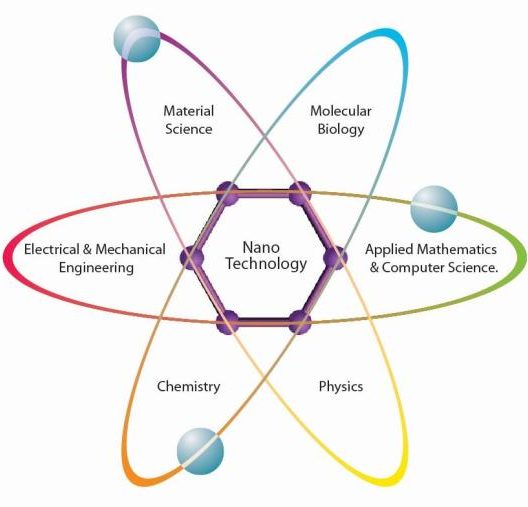







 Physics and Nano