"The one exclusive sign of thorough knowledge is the power of teaching." Aristotle | Disclaimer: The views and opinions expressed on this Wordpress website are the views and opinions of the content creator, Dr. Reggie Goodwin, and should not be construed as shared, or sourced from The Environmental Protection Agency, or any organizations with which they have cooperative, or business relationships.
A novel semiconducting material with high thermal conductivity can be integrated into high-power computer chips to cool them down and so improve their performance. The material, boron arsenide, is better at removing heat than the best thermal-management devices available today, according to the US-based researchers who developed it.
The size of computer chips has been shrinking over the years and has now reached the nanoscale, meaning that billions of transistors can be squeezed onto a single computer chip. This increased density of chips has enabled faster, more powerful computers, but it also generates localized hot spots on the chips. If this extra heat is not dealt with properly during operation, computer processors begin to overheat. This slows them down and makes them inefficient.
Defect-free boron arsenide
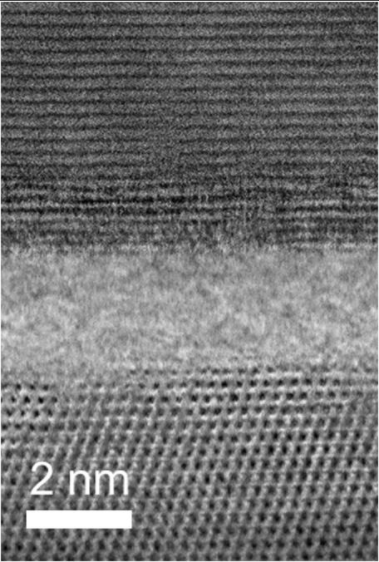
Researchers led by Yongjie Hu at the University of California, Los Angeles, recently developed a new thermal-management material that is much more efficient at drawing out and dissipating heat than other known metals or semiconducting materials such as diamond and silicon carbide. This new material is known as defect-free boron arsenide (BAs), and Hu and colleagues have now succeeded in interfacing it with computer chips containing wide-bandgap high-electron-mobility gallium nitride (GaN) transistors for the first time.
Using thermal transport measurements, the researchers found that processors interfaced with BAs and running at near maximum capacity had much lower hot-spot temperatures than other heat-management materials at the same transistor power density. During the experiment, the temperature of the BAs-containing devices increased from room temperature to roughly 360 K, compared to around 410 K and 440 K, respectively, for diamond and silicon carbide.
Topics: Climate Change, Existentialism, Global Warming
The hundreds of climate experts who compiled the mammoth new climate report released today by the U.N. Intergovernmental Panel on Climate Change (IPCC) had to work under unprecedented pandemic conditions. At vast meetings forced online, scientists wrestled with how to convey the extent of the global crisis and the urgent need to act. It was uncanny to see “the echoes of one crisis in another,” says Claudia Tebaldi, a climate scientist at Pacific Northwest National Laboratory and one of the authors of the report.
The report paints an alarming picture but emphasizes there is still time for swift action to mitigate the worst of the projected impacts of climate change. Current average warming is now estimated at 1.1°C compared to preindustrial records, a revision based on improved methods and data that adds 0.1°C to previous estimates. Under every emissions scenario explored by the report, average warming of 1.5°C—a major target of the Paris climate accord—will very likely be reached within the next 20 years.
That timetable “underscores a sense of urgency for immediate and decisive action by every country, especially the major economies,” says Jane Lubchenco, deputy director for climate and the environment at the White House Office of Science and Technology Policy. “This is a critical decade for keeping the 1.5°C target within reach.” And the projections mean countries should come to the United Nations Climate Change Conference, scheduled for November, with the most “aggressive, ambitious” targets possible, she says.
A team of researchers created a new method to capture ultrafast atomic motions inside the tiny switches that control the flow of current in electronic circuits. Pictured here are Aditya Sood (left) and Aaron Lindenberg (right). Courtesy: Greg Stewart/SLAC National Accelerator Laboratory
A new ultrafast imaging technique that captures the motion of atoms in nanoscale electronic devices has revealed the existence of a short-lived electronic state that could make it possible to develop faster and more energy-efficient computers. The imaging technique, which involves switching the devices on and off while taking snapshots of them with an electron diffraction camera, could also help researchers probe the limits of electronic switching.
“In general, we know very little about the intermediate phases materials pass through during electronic switching operations,” explains Aditya Sood, a postdoctoral research at the US Department of Energy’sSLAC National Accelerator Laboratory and lead author of a paper in Science about the new method. “Our technique allows for a new way to visualize this process and therefore address what is arguably one of the most important questions at the heart of computing – that is, what are the fundamental limits of electronic switches in terms of speed and energy consumption?”
Ultrafast electron diffraction camera
Sood and colleagues at SLAC, Stanford University, Hewlett Packard Labs, Pennsylvania State University and Purdue University chose to study devices made from vanadium dioxide (VO2) because the material is known to transition between insulating and electrically conducting states near room temperature. It thus shows promise as a switch, but the exact pathway underlying electric field-induced switching in VO2 has long been a mystery, Sood tells Physics World.
To take snapshots of VO2’s atomic structure, the team used periodic voltage pulses to switch an electronic device made from the material on and off. The researchers synchronized the timing of these voltage pulses with the high-energy electron pulses produced by SLAC’s ultrafast electron diffraction (UED) camera. “Each time a voltage pulse excited the sample, it was followed by an electron pulse with a delay that we could tune,” Sood explains. “By repeating this process many times and changing the delay each time, we created a stop-motion movie of the atoms moving in response to the voltage pulse.”
This is the first time that anyone has used UED, which detects tiny atomic movements in a material by scattering a high-energy beam of electrons off a sample, to observe an electronic device during operation. “We started thinking about this subject three years ago and soon realized that existing techniques were simply not fast enough,” says Aaron Lindenberg, a professor of materials science and engineering at Stanford and the study’s senior author. “So we decided to construct our own.”
Flatland: “The book used the fictional two-dimensional world of Flatland to comment on the hierarchy of Victorian culture, but the novella’s more enduring contribution is its examination of dimensions.” Source: Wikipedia
After decades of exploration in nature’s smallest domains, physicists have finally found evidence that anyons exist. First predicted by theorists in the early 1980s, these particle-like objects only arise in realms confined to two dimensions, and then only under certain circumstances — like at temperatures near absolute zero and in the presence of a strong magnetic field.
Physicists are excited about anyons not only because their discovery confirms decades of theoretical work, but also for practical reasons. For example: Anyons are at the heart of an effort by Microsoft to build a working quantum computer.
This year brought two solid confirmations of the quasiparticles. The first arrived in April, in a paper featured on the cover of Science, from a group of researchers at the École Normale Supérieure in Paris. Using an approach proposed four years ago, physicists sent an electron gas through a teeny-tiny particle collider to tease out weird behaviors — especially fractional electric charges — that only arise if anyons are around. The second confirmation came in July, when a group at Purdue University in Indiana used an experimental setup on an etched chip that screened out interactions that might obscure the anyon behavior.
MIT physicist Frank Wilczek, who predicted and named anyons in the early 1980s, credits the first paper as the discovery but says the second lets the quasiparticles shine. “It’s gorgeous work that makes the field blossom,” he says. Anyons aren’t like ordinary elementary particles; scientists will never be able to isolate one from the system where it forms. They’re quasiparticles, which means they have measurable properties like a particle — such as a location, maybe even a mass — but they’re only observable as a result of the collective behavior of other, conventional particles. (Think of the intricate geometric shapes made by group behavior in nature, such as flocks of birds flying in formation or schools of fish swimming as one.)
The known universe contains only two varieties of elementary particles. One is the family of fermions, which includes electrons, as well as protons, neutrons, and the quarks that form them. Fermions keep to themselves: No two can exist in the same quantum state at the same time. If these particles didn’t have this property, all matter could simply collapse to a single point. It’s because of fermions that solid matter exists.
The rest of the particles in the universe are bosons, a group that includes particles like photons (the messengers of light and radiation) and gluons (which “glue” quarks together). Unlike fermions, two or more bosons can exist in the same state at the same time. They tend to clump together. It’s because of this clumping that we have lasers, which are streams of photons all occupying the same quantum state.
Topics: Civics, Civil Rights, COVID-19, Existentialism, Fascism, Human Rights
I read Mary Trump’s book “Too Much, and Never Enough,” feeling a chill when in the epilogue she predicted: “my uncle is going to get a lot of people killed.” Realize, when those words were typed on presumably her laptop, she, and all of us were not wearing masks, washing hands, or standing six feet from each other in public places. Our garden-variety doomsday centered on mushroom clouds, and nuclear codes. I have preordered “Reckoning.”
The fetishization of guns in America, the violence in popular entertainment, online and streaming, the rationalization of every gory and gruesome mass killing has left the public numb, and conditioned to death on a massive scale. It is no wonder we’re so nonchalant about the Coronavirus: “they probably had to die of something” — this is systemic sadism.
Governor Asa Hutchinson in Arkansas looked so nonplussed at the lectern as he tried to explain to his constituents that he had been wrong to sign an anti-mask executive order, that he was beyond just “owning the libs.” With the Delta variant, and Delta plus up to bat in South Korea, conditions on the ground had decisively changed. The fact that they were shouting the latest conspiracy theories gleaned from the Internet shouldn’t have surprised him: he was the source of their original gaslighting. Alabama Governor Kay Ivey admitted the unvaccinated are making the pandemic more prolonged, and worse, without a shred of guilt at her previous anti-mask stance, or irony. Leave it to Death Santis to double-down, despite falling poll numbers. His go-to stance: attack Biden, pivot to brown migrants on the border; hope for racism. He’s really using that Harvard law degree.
You can’t have reparations without a reckoning.
According to Jacqueline Battalora, MD, JD, in “Birth of a White Nation: The Invention of White People and Its Relevance Today,” white people became an official thing in America in 1681. Dr. Gerald Horne makes similar points in his book “Race to Revolution: The U.S. and Cuba during Slavery and Jim Crow.” Prior to this legislative fiat, Europeans knew each other by their home nations, in essence, their tribes. The European continent was soaked in the blood, not of Moors, but other Europeans. America organized American society as “us,” and “them,” the civilized, and the savages, the “correct” ethos to enslave the kidnapped, and genocide the native. It’s the perfect crime that has turned a profit for a small family of the wealthy for four centuries, the “vast sucking sound,” to coin a phrase from Ross Perot. All they have to do is keep us at each other’s throats. We now have the pejorative “RINOs,” and “DINOs,” when an earlier descriptor labeled such politicians “moderates.” There are litmus tests of loyalty to tribes driven by cults of personality, but tribesmen didn’t make laws, moderates did. It’s how things got done, or euphemistically “how the sausage got made.”
We need to teach beyond the poetry of “Manifest Destiny,” that the expansion and founding of the United States were for a created class: American oligarchs. They initially just didn’t want to pay taxes to their benefactor, England. Thomas Paine clarified and made the reasons to break away from Europe profound, and noble, but his progressive ideas like equal education for men, and women, a progressive income tax, welfare for the poor, and the canard that could unravel the budding dominant world economy: he opposed slavery. It’s probably why you haven’t heard a thing about him.
Without a reckoning, there can be no healing, no atonement, or reconciliation. Without a reckoning of January 6, there can be no justice, and the “rule of law” is meaningless. Without a reckoning, that attempted coup was practice for the next. There can be no reckoning without accurate history. Eighteen states have passed interposition, and nullification laws to keep black, indigenous people of color (BIPOC) from exercising the voting franchise, in addition to overturning elections whose outcomes they don’t like. If Republicans don’t want to be called fascists, they should stop acting like them.
A reckoning will enable the next reconstruction since the first one after the Civil War was interrupted by white supremacy; the second – 1964 Civil Rights Act, 1965 Voting Rights Act, 1968 Fair Housing Act – by a relentless, fifty-year right-wing backlash. History told right tends to make readers uncomfortable, but information can and should change the reader or student for the better. Showing our flaws, and blemishes should make us strive to do better, not hide our past that can easily be sourced within a few clicks, hypocrisy laid bare.
The future is mist and mystery. It doesn’t exist, except for the decisions we make today. One of those is what the fictional Vulcans of Star Trek called O’thia: reality-truth. For us to build the future, we have to reckon with our past, our real past, where we’re not always the heroes of a mythologized story we’ve gaslighted over four centuries.
Reckoning: the action or process of calculating or estimating something; the moment of truth.
Ragnarok: the final destruction of the world in the conflict between the Aesir and the powers of Hel led by Loki, the god of lies and chaos — also called Twilight of the Gods.
In what could prove to be a momentous accomplishment for fundamental physics and quantum physics, scientists say they’ve finally figured out how to manufacture a scientific oddity called a time crystal.
Time crystals harness a quirk of physics in which they remain ever-changing yet dynamically stable. In other words, they don’t give off energy as they change conformation, making them an apparent violation of the natural law that all things gradually turn towards entropy and disorder.
Now, it seems like it’s possible for these things to exist after all, Quanta Magazine reports. At least, that’s according to what a massive team of researchers from Stanford, Princeton, and elsewhere working with Google’s quantum computing labs claimed in preprint research shared online last week. Aside from being an incredible scientific discovery in abstract — time crystals represent a new, bizarre phase of matter — the discovery could have profound implications for the finnicky world of quantum computing.
“The consequence is amazing: You evade the second law of thermodynamics,” study coauthor and Max Planck Institute for the Physics of Complex Systems director Roderich Moessner told Quanta.
When we gaze up at the night sky, we might be accidentally eavesdropping on an alien conversation.
At least, that’s according to Imperial College London quantum physicist Terry Rudolph, who last week published preprint research theorizing that an advanced extraterrestrial civilization might alter the light coming off stars in order to communicate across great distance, almost like a series of interstellar smoke signals.
The physics of the ordeal get a bit dense — which is probably reasonable if aliens are rapidly communicating across star systems — but the basic idea is to use entangled photons from different stars to transmit messages that appear to be random twinkling to any nosy onlookers.
Roaming Charges
The idea, Rudolph notes, is technically possible as far as the physics are concerned, but pure speculation when it comes to any discussion of alien technology. But as he writes in the paper, any entangled communication among stars “can be rendered in principle indiscernible to those of us excluded from the conversation.”
So if there were a mega-advanced civilization out there colonizing the Milky Way galaxy, communication along the lines of what Rudolph has proposed could explain why we haven’t found any evidence of life beyond Earth.
Your desk is made up of individual, distinct atoms, but from far away its surface appears smooth. This simple idea is at the core of all our models of the physical world. We can describe what’s happening overall without getting bogged down in the complicated interactions between every atom and electron.
So when a new theoretical state of matter was discovered whose microscopic features stubbornly persist at all scales, many physicists refused to believe in its existence.
“When I first heard about fractons, I said there’s no way this could be true, because it completely defies my prejudice of how systems behave,” said Nathan Seiberg, a theoretical physicist at the Institute for Advanced Study in Princeton, New Jersey. “But I was wrong. I realized I had been living in denial.”
The theoretical possibility of fractons surprised physicists in 2011. Recently, these strange states of matter have been leading physicists toward new theoretical frameworks that could help them tackle some of the grittiest problems in fundamental physics.
Fractons are quasiparticles — particle-like entities that emerge out of complicated interactions between many elementary particles inside a material. But fractons are bizarre even compared to other exotic quasiparticles, because they are totally immobile or able to move only in a limited way. There’s nothing in their environment that stops fractons from moving; rather it’s an inherent property of theirs. It means fractons’ microscopic structure influences their behavior over long distances.
“That’s totally shocking. For me it is the weirdest phase of matter,” said Xie Chen, a condensed matter theorist at the California Institute of Technology.
Australian metals mining wastes (top) and the metal hyperaccumulator plants Alyssum murale and Berkheya coddii (bottom). The former plant can take up 1–3% of its weight in nickel. It has demonstrated yields of up to 400 kg of nickel per hectare annually, worth around $7000 at current prices, excluding processing and production costs. (Images adapted from A. van der Ent, A. Parbhakar-Fox, P. D. Erskine, Sci. Total Environ.758, 143673, 2021, doi:10.1016/j.scitotenv.2020.143673.)
Topics: Climate Change, Green Tech, Materials Science, Research
When it comes to making steel greener, “only the laws of physics limit our imagination,” says Christina Chang of the Advanced Research Projects Agency–Energy (ARPA–E). Chang, an ARPA–E fellow, is seeking public input on a potential new agency program titled Steel Made via Emissions-Less Technologies. During her two-year tenure, she will guide program creation, agency strategy, and outreach. Steelmaking currently accounts for about 7% of the world’s carbon dioxide emissions, and demand for steel is expected to double by 2050 as low-income countries’ economies grow, according to the International Energy Agency.
Founded in 2009, ARPA–E is a tiny, imaginative office within the Department of Energy. SMELT is one part of a three-pronged thrust by ARPA–E to green up processes involved in producing steel and nonferrous metals, from the mine through to the finished products. Another program seeks ways to make use of the vast volumes of wastes that accumulate from mining operations around the globe—and reduce the amounts generated in the future. The agency is also exploring the feasibility of deploying plants that suck up from soils elements such as cobalt, nickel, and rare earths. Despite being essential ingredients in electric vehicles, batteries, and wind turbines, the US has little or no domestic production of them. (See Physics Today, February 2021, page 20.)
Steelmaking
The first step in steelmaking is separating iron ore into oxygen and iron metal, which produces CO2 through both the reduction process and the fossil-fuel burning necessary to create high heat. An ARPA–E solicitation for ideas to clean up that process closed on 14 June. The agency is looking to replace the centuries-old blast furnace with greener technology that can work at the scale of 2 gigatons of steel production annually. It may or may not follow up with a request for research proposals to fund.
Like his more famous contemporary, Spencer was enamored with the idea of evolution. But where Darwin focused on biology, Spencer imagined that evolutionary thinking could be applied much more broadly. In his mind, it governed entire societies. Today, when Spencer is remembered at all, it is usually for inspiring the ideology known as “social Darwinism”: roughly, the idea that the successful deserve their success while those who fail deserve their failure.
Modern scholars, and the public at large, understandably view this idea with disdain. Philosopher Daniel Dennett has described social Darwinism as “an odious misapplication of Darwinian thinking in defense of political doctrines that range from callous to heinous,” while the journalist Robert Wright said that social Darwinism “now lies in the dustbin of intellectual history.” Today, few read Spencer’s dense and ponderous books, and his ideas are rarely taught. Gregory Claeys, a historian at the University of London, writes that of all the great Victorian thinkers, it is Spencer whose “reputation has now indisputably fallen the farthest.”
Spencer’s view, though mostly anathema now, appealed to influential conservatives and laissez-faire capitalists—among them, the industrialist Andrew Carnegie—just as it angered the socialists of the time. “Spencer hated socialism because he thought socialism was all about protecting the weak,” Lightman says. “To him, that was intervening in the natural unfolding of the evolutionary process.”
According to Michael Price in Science Magazine, humans changed from hunter-gatherer (and presumably, wanderer) to communal living about 10,000 years ago. We seemed to vacillate between extremes, and each time, our back-and-forth switch could be traced through the common house mouse (like it or not, we appear stuck with them). Whether we wandered about or gathered harvests, we seemed to fair better with less Ayn Randian selfish worldviews, and more indigenous communal living philosophies.
An article published on the website Earthday.org is more explicit:
Humans and climate change are driving species to extinction at unprecedented rates. To slow or eventually reverse these declines, we need to better manage our land to preserve habitats and secure biodiversity – the variety of life on Earth. To that end, a study published this week confirms what many communities have known for years: To preserve biodiversity, we must turn to indigenous peoples for guidance and management.
The study, published in the journal Environmental Science and Policy, compared levels of biodiversity in thousands of areas in Australia, Brazil, and Canada and was the first of its kind to compare biodiversity and land management on such a large scale. Researchers from the University of British Columbia (UBC) compared 15,621 geotropical areas across three continents, with great variations across climate, species, and geography.
We have been ravaged by climate events since Hurricane Katrina in 2005, and have ignored them all. Ebola was the first epidemic we paid attention to and mitigated at its point of origin so that only two Americans died from it. It is therefore unconscionable that the current death toll of the Coronavirus is 623,353, as of this writing. It’s likely to be higher when this post appears. 675,000 died during the 1918 flu pandemic. We’re not far behind.
Speaking of Ayn Rand: the main idea of “The Fountainhead” was individualism vs. collectivism, or selfishness, versus community. Also, in “Atlas Shrugged,” so beloved that former Congressman, and conspiracy theorist Ron Paul and presumably his wife named their son, Senator Rand Paul. “Shrugged” was about “a dystopian United States in which private businesses suffer under increasingly burdensome laws and regulations.” “Looters” want to exploit the productivity of innovative industrialists has the not-too-subtle echo of “makers,” and “takers.”
GOP “leader,” Kevin McCarthy saying “85% of Congress is fully vaccinated,” so he says, we have no need for a mask mandate in the House. That declaration is a Freudian slip: that means 15% of 435 members of the House, or 65 members are unvaccinated by choice. 435 members of the House go back home sometimes, and presumably, many to Delta variant hot spots. The variant could then be weaponized on Capitol Hill where many of our lawmakers are in their seventies and eighties. The Delta variant can cause “breakthrough infections,” and most of the hospitalizations and deaths are from the unvaccinated. There are also long-haul COVID survivors, the severe ones will put a strain on public resources for rehabilitation, and lifetime care. Again, those 65 can carry the Delta variant back to the House, and turn Capitol Hill into a COVID hot spot. With the 1/6 hearings just starting, it might be a cynical, pathological ploy to delay or demolish any hearings on the terrorist insurrection going forward. Only sociopaths could be so diabolical.
Ten thousand years ago, it might have been prudent to identify someone by their tribal markings, dress, and appearance. If you “did not fit in,” there were no diversity, equity, and inclusion programs, only suspicion. “Fight, or flight” was wonderful against saber-tooth tigers, but terrible trying to espouse the tenets of a philosophy centered on E Pluribus Unum.
Borders are political constructs, just like race is a social construct. We are the byproduct of migration from the African continent to other areas, and adaption over hundreds of thousands of years. We look different because of the angle of incidence of ultraviolet light, the environment encountered, and the foods we consumed in those environs. We all for the most part have five fingers, five toes, and red blood in our veins. We all have the same needs on the Maslow hierarchy. It’s why the Overview effect has such a profound impact on the viewers, but 7.6 billion inhabitants don’t have a spare $250,000 for a ten-minute joy ride. The eviction moratorium expires Saturday, with no further extension. I don’t think soon-to-be homeless people will care for an Overview effect.
It has to be in our best interest to help developing countries and industrial countries with vaccination rates: every nation has to get to 70% herd immunity, or higher for the safety of the species. If there’s one hot spot in the world, there’s the possibility of many variants spreading across the globe. It has to be in our best interest to mitigate climate change, and if past the tipping point, or politically not expedient, design our civilization’s infrastructure to withstand the storms, power outages, freak winter freezes, floods, and raging fires.
Octavia Butler was an African American science fiction writer that didn’t envision starships, except the relativistic kind. Her “Parable of the Sower” did predict a dystopic America devastated by climate change, social unrest, water scarcity, but apparently, in all that dysfunction, in2024 we land on Mars, and discovered microbial life there. We are three years from the date of that fictional nightmare. In the midst of that eerily prescient novel, and series, there was a rediscovery of community, of people helping people, protecting one another.
Social media is a faux community; it has atomized humanity in echo silos. We were prepped for this when television and entertainment became “infotainment,” a bastardization, and a pariah to the body politic. BET, CMT, MTV is owned by Viacom, and caters to different audiences, cable news preceded it, and its digital extension is the oxymoron “social media” as humans stare blankly at their smartphones sucking time, and brain cells.
There is vaccine hesitancy among African Americans, decades stinging from the Tuskegee experiment. There is vaccine hesitancy from those who erroneously believe vaccines cause autism (that was refuted in a later paper). There are athletes who will eat what they are told, train as they are told, who now in the NFL have to decide whether to get a mandated COVID vaccine or forfeit games. Despite their nonprofit status, the NFL is a business, and businesses are not democratic.
The same people who deny climate change, are the same people who fought lockdowns. They are the same people who want Confederate monuments to insurrectionists, but history that would correct the record from obfuscations and mythology expunged, canceled. They are the same people who fought masks, and are the same people who don’t want to get vaccines because they believe in the “survival of the fittest” scenario, that they will miraculously be the fittest, the luckiest; the living. Like the Texas Lieutenant Governor Dan Patrick volunteering grandparents to die for the economy in the early days of the pandemic. (He’s probably not counting himself in that number on the altar of Moloch.)
To survive COVID, and climate change, E Pluribus Unum – out of many, one – has to be cosmopolitan, global. We are all Homo Sapiens, Earthlings, breathing the same air, using the same resources, and will expire on the same planet, as long as it’s here, and we are. The United Nations is supposed to be our governing body to do this, a concept that is with its political enemies, conspiracy theories that start with “new world order,” and authoritarian tyranny fears, that kind of falls hollow to the experiment in authoritarianism the United States made from 2017 to 2020. It was almost credibly sealed with a coup, on January 6, 2021, had it been competent. The next fascist might be more capable; the next coup might succeed.
For the survival of the species, “survival of the fittest” has to become a part of a selfish past and myth. It’s easier to mask, or vaccinate against a pandemic, and mitigate climate change than building superluminal starships defying laws of physics to “escape” our mistakes.
We have to get beyond our learned prejudices, responsible for so much selfishness, sickness, and bloodshed. We need to see each other’s survival in all of our best interests. Our empathy needs to evolve.
*****
“We have been forced to a point where we are going to have to grapple with the problems that men have been trying to grapple with through history, but the demands didn’t force them to do it. Survival demands that we grapple with them. Men for years now have been talking about war and peace. But now no longer can they just talk about it. It is no longer a choice between violence and nonviolence in this world; it’s nonviolence or nonexistence. That is where we are today.”Dr. Martin Luther King Jr.
*****
No man is an island, Entire of itself. Each is a piece of the continent, A part of the main. If a clod be washed away by the sea, Europe is the less. As well as if a promontory were. As well as if a manor of thine own Or of thine friend’s were. Each man’s death diminishes me, For I am involved in mankind. Therefore, send not to know For whom the bell tolls, It tolls for thee.