"The one exclusive sign of thorough knowledge is the power of teaching." Aristotle | Disclaimer: The views and opinions expressed on this Wordpress website are the views and opinions of the content creator, Dr. Reggie Goodwin, and should not be construed as shared, or sourced from The Environmental Protection Agency, or any organizations with which they have cooperative, or business relationships.
Topics: Cellular Service, Moonbase, NASA, Space Exploration, Spaceflight
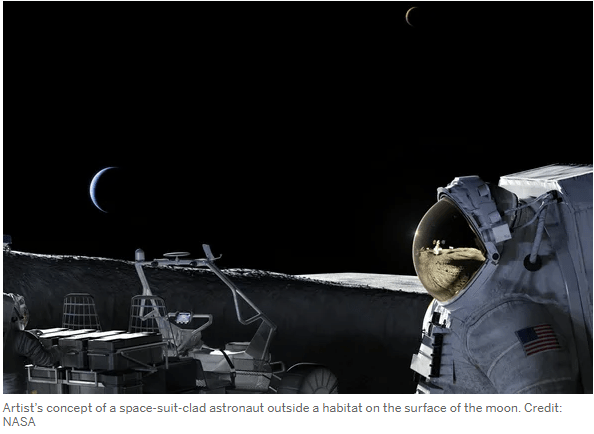
Telecom equipment supplier Nokia will use a $14.1 million grant to build the moon’s first wireless network as part of NASA’s plans to establish a human presence there.
NASA is investing the money in Nokia-owned American research company Bell Labs, which will build the 4G-LTE network, it said on Wednesday, October 14.
The improved data transmission will help astronauts control lunar rovers, navigate lunar geography in real time, and stream videos.
The mission ultimately will help show whether it’s possible to have “human habitation on the moon,” Bell Labs said.
Topics: Biology, Computer Modeling, COVID-19, Research
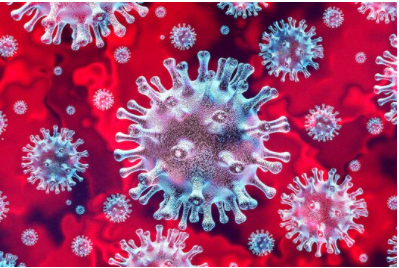
TOKYO (Reuters) – A Japanese supercomputer showed that humidity can have a large effect on the dispersion of virus particles, pointing to heightened coronavirus contagion risks in dry, indoor conditions during the winter months.
The finding suggests that the use of humidifiers may help limit infections during times when window ventilation is not possible, according to a study released on Tuesday by research giant Riken and Kobe University.
The researchers used the Fugaku supercomputer to model the emission and flow of virus-like particles from infected people in a variety of indoor environments.
Air humidity of lower than 30% resulted in more than double the amount of aerosolized particles compared to levels of 60% or higher, the simulations showed.
The study also indicated that clear face shields are not as effective as masks in preventing the spread of aerosols. Other findings showed that diners are more at risk from people to their side compared to across the table, and the number of singers in choruses should be limited and spaced out.
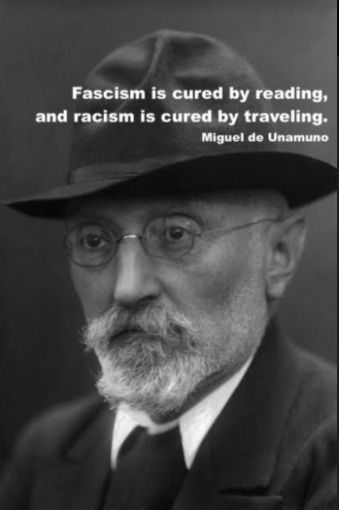
Although he also wrote poetry and plays, Unamuno was most influential as an essayist and novelist. If his vigorous and iconoclastic essays have any common theme, it is that of the need to preserve one’s personal integrity in the face of social conformity, fanaticism, and hypocrisy. Source: https://www.britannica.com/biography/Miguel-de-Unamuno
Topics: Civics, Civil Rights, Fascism, Human Rights, Politics
When the United States declared war on Germany 100 years ago, the impact on the news business was swift and dramatic.
In its crusade to “make the world safe for democracy,” the Wilson administration took immediate steps at home to curtail one of the pillars of democracy – press freedom – by implementing a plan to control, manipulate and censor all news coverage, on a scale never seen in U.S. history.
Following the lead of the Germans and British, Wilson elevated propaganda and censorship to strategic elements of all-out war. Even before the U.S. entered the war, Wilson had expressed the expectation that his fellow Americans would show what he considered “loyalty.”
Immediately upon entering the war, the Wilson administration brought the most modern management techniques to bear in the area of government-press relations. Wilson started one of the earliest uses of government propaganda. He waged a campaign of intimidation and outright suppression against those ethnic and socialist papers that continued to oppose the war. Taken together, these wartime measures added up to an unprecedented assault on press freedom.
The necessity for the Fairness Doctrine, according to proponents, arises from the fact that there are many fewer broadcast licenses than people who would like to have them. Unlike publishing, where the tools of the trade are in more or less endless supply, broadcasting licenses are limited by the finite number of available frequencies. Thus, as trustees of a scarce public resource, licensees accept certain public interest obligations in exchange for the exclusive use of limited public airwaves. One such obligation was the Fairness Doctrine, which was meant to ensure that a variety of views, beyond those of the licensees and those they favored, were heard on the airwaves. (Since cable’s infrastructure is privately owned and cable channels can, in theory, be endlessly multiplied, the FCC does not put public interest requirements on that medium.)
The Fairness Doctrine had two basic elements: It required broadcasters to devote some of their airtime to discussing controversial matters of public interest and to air contrasting views regarding those matters. Stations were given wide latitude as to how to provide contrasting views: It could be done through news segments, public affairs shows, or editorials.
Formally adopted as an FCC rule in 1949 and repealed in 1987 by Ronald Reagan’s pro-broadcaster FCC, the doctrine can be traced back to the early days of broadcast regulation.
Couple this with the invention of the Internet, Netscape, AOL, Facebook, and Twitter; 24-hour CNN “infotainment,” the rise of right-wing talk radio, the creation of Fox by Roger Ailes and MSNBC by Tom Rogers (coincidence): we are a nation in altered states. There is “spin” because of a particular slant of the news one consumes. There didn’t use to be when we had three main stations and a UHF channel. It is demonstrable; one side is positioned more clearly in reality and one in abject fantasy. There are echo chambers of truth and echo chasms of fiction. We get exactly what is programmed for us in our selective news feeds. One produces results that can be measured and judged; the other makes us scratch our heads and shrug. We are Pied Piper-ed by The Joker.
It was a matter of time’s arrow – Entropy – when we actually got a carnival barker to lead the cuckoo’s nest: Arkham Asylum for the Criminally Insane. The only thing that makes sense of their devotion to this devolved Neanderthal: agency. White evangelicals became numerical minorities in 2017. The demographics don’t support republicans winning a majority in any future elections: they just can’t convince a plurality of voters to buy their 80’s “trickle-down” bullshit, and the “loved uneducated” want what Lyndon Baines Johnson observed with “the lowest white man.” So you see fake boxes in California, one box per county in Texas; polling places in districts closed, predominately comprised of BIPOC. Paul Weyrich said it “way back when,” and it’s why I’ve stated, the “gang of Putin” has always been a criminal enterprise masquerading as a political party. Their patsies are the racists; their constituents are American oligarchs. With the appointment of Amy Coney Barrett, they are preparing for minority rule, not unlike South African Apartheid.
“We were keeping our eye on 1984. When the year came, and the prophecy didn’t, thoughtful Americans sang softly in praise of themselves. The roots of liberal democracy had held. Wherever else the terror had happened, we, at least, had not been visited by Orwellian nightmares.
“But we had forgotten that alongside Orwell’s dark vision, there was another – slightly older, slightly less well known, equally chilling: Aldous Huxley’s Brave New World. Contrary to common belief even among the educated, Huxley and Orwell did not prophesy the same thing. Orwell warns that we will be overcome by an externally imposed oppression. But in Huxley’s vision, no Big Brother is required to deprive people of their autonomy, maturity, and history. As he saw it, people will come to love their oppression, to adore the technologies that undo their capacities to think.
“What Orwell feared were those who would ban books. What Huxley feared was that there would be no reason to ban a book, for there would be no one who wanted to read one. Orwell feared those who would deprive us of information. Huxley feared those who would give us so much that we would be reduced to passivity and egoism. Orwell feared that the truth would be concealed from us. Huxley feared the truth would be drowned in a sea of irrelevance. Orwell feared we would become a captive culture. Huxley feared we would become a trivial culture, preoccupied with some equivalent of the feelies, the orgy porgy, and the centrifugal bumble-puppy. As Huxley remarked in Brave New World Revisited, the civil libertarians and rationalists who are ever on the alert to oppose tyranny “failed to take into account man’s almost infinite appetite for distractions.” In 1984, Huxley added, people are controlled by inflicting pain. In Brave New World, they are controlled by inflicting pleasure. In short, Orwell feared that what we hate will ruin us. Huxley feared that what we love will ruin us. This book is about the possibility that Huxley, not Orwell, was right.”
Topics: Aerodynamics, ESA, NASA, Space Exploration, Spaceflight
The pursuit, exploration and utilization of the space environment can be misinterpreted as a luxury. History portrays space as an exclusive domain for global powers looking to demonstrate their prowess through technological marvels, or the stage for far-off exploration and scientific endeavour with little impact on daily life. However, the benefits of space are already woven into our everyday routines and provide utilities and resources on which the society has grown dependent. If these were suddenly to disappear and the world were to experience just “a day without space”, the consequences would be evident to all.
The utilization of space is set to become more important still. A new vision for the future is starting to emerge that will feature even more innovative uses of space, ranging from space-based manufacturing and energy production to global Internet connectivity. Space-debris management is also receiving greater focus alongside lunar and Martian exploration, and even space tourism.
While some of these new innovations may sound like they are confined to the realm of science fiction, there are already companies furthering the technology to turn them into reality.
Conventional rocket vehicles are propelled by a fuel (liquid hydrogen, kerosene or methane) and an oxidizer (liquid oxygen) carried within the vehicle body. When the fuel and oxidizer combust, mass is projected out of the back of the rocket, creating thrust. However, this approach – and especially the use of heavy on-board liquid oxygen – is constrained by Tsiolkovsky’s rocket equation. It basically tells us that everything carried on board a vehicle has a penalty in the form of the additional propellant, and structural mass of the vehicle, needed to get it off the ground. In other words, this approach hampers mission performance, mission payload and mission time.
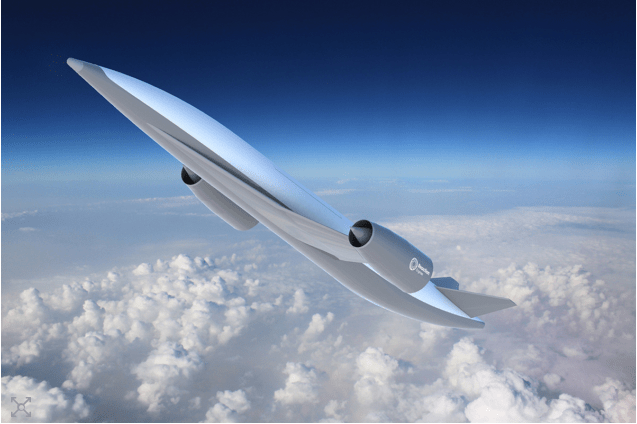
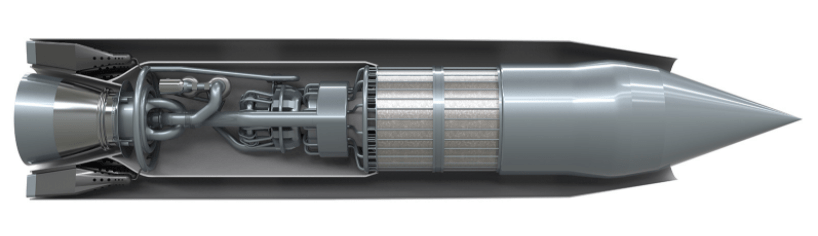
A concept image of Reaction Engine’s Synergetic Air Breathing Rocket Engine (SABRE).
SABRE, on the other hand, is a hybrid air-breathing rocket engine. During the atmospheric segment of its ascent, it will use oxygen from the atmosphere instead of carrying it inside the vehicle, before switching to on-board oxygen upon leaving the atmosphere. A SABRE-powered launch vehicle will therefore have lower mass for a given payload than a conventional rocket vehicle. This mass benefit can be traded for systems that will enable reusability and aircraft-like traits, such as wings, undercarriage and thermal-protection systems – all the features needed to fly the same vehicle over and over again, achieving hundreds of launches.
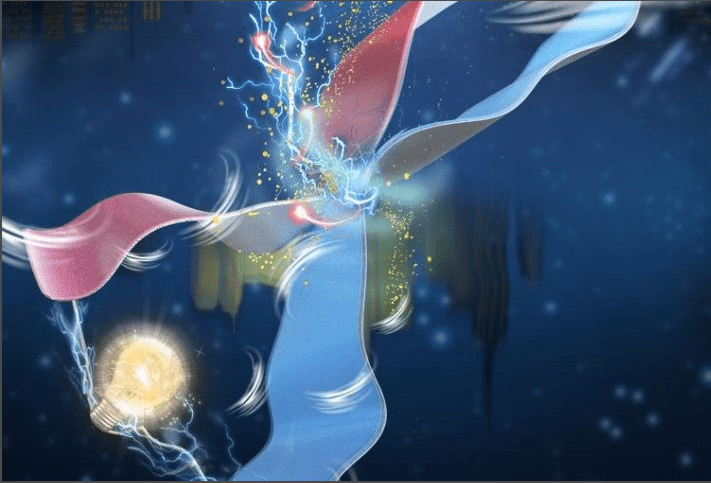
Gentle breeze: illustration of the B-TENG triboelectric nanogenerator, which harvests electricity that is generated by fluttering polymer strips. (Courtesy: Xin Chen/Xiaojing Mu/Ya Yang)
Topics: Applied Physics, Nanotechnology, Polymers, Research
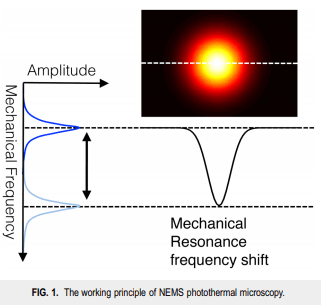
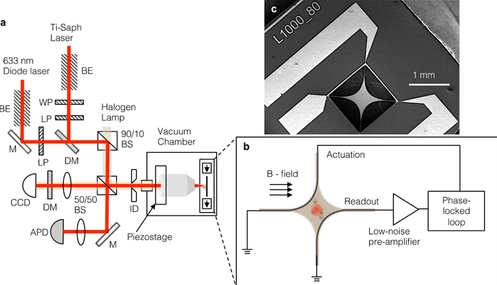
A new low-cost nanogenerator that can efficiently harvest electrical energy from ambient wind has been created by Ya Yang at the Beijing Institute of Nanoenergy and Nanosystems of the Chinese Academy of Sciences and colleagues. The team reports that the device achieves high electrical conversion efficiencies for breezes of 4–8 m/s (14–28 km/h) and say that it could be used to generate electricity in everyday situations, where conventional wind turbines are not practical.
As the drive to develop renewable sources of energy intensifies, there is growing interest in harvesting ambient energy in everyday environments. From breezes along city streets, to the airflows created as we walk, the mechanical energy contained in ambient wind is abundant. The challenge is to harvest this every in an efficient and practical way. This has proven difficult using existing technologies such as piezoelectric films, which operate at very low power outputs.
Yang’s team based their new design around two well-known phenomena in physics. The first is the Bernoulli effect, which causes the fluttering of two adjacent flags to couple. If separated by a very small gap, the flags will flutter in-phase, while at slightly larger separations, they flap out-of-phase, and symmetrically about a central plane. The second is the triboelectric effect – the familiar phenomenon behind the “static electricity” that is created when different objects are rubbed together and then separated – resulting in opposite electrical charges on the objects and a voltage between the two.
I assure you, I have been affected by this pandemic more than most. I am in a demographic that can experience deleterious effects from this virus. I have had friends and family affected directly. I have classmates that are struggling to survive. This is no hoax: it’s real.
My precautions are beyond anal.
I worked in cleanrooms in the semiconductor industry, the most stringent being Class 1. The old criteria meant 0.5 microns of particles per cubic feet of air. (The newest guidelines were adopted in 2001, metric and still pretty stringent.) Each employee passed through air showers to push off any particulates from their clothing. Smokers are encouraged not to indulge, and cologne was prohibited – smoke and scent are particles. We then put our street garb in a locker, putting on green hospital gowns and fab shoes that never left the site. Then we donned clean room gowns – “bunny suits” – before going into the alien, hepa-filtered environment, protecting it from any hair, skin, sweat or dirt we could shed that would inhibit the functionality of integrated circuits. I tried to drink as little water as possible before going on the floor. Going to the bathroom, or lunch was a pain.
I have developed a unique protocol for assaulting what used to be trivial things like: getting the mail, mowing the lawn – grass grows as rains falls during pandemics – or, going to the grocers for supplies.
1. I fashioned a mask from my father’s handkerchiefs and rubber bands per the CDC guidelines. (I now have a collection of 5).
2. I use cloth/rubber work gloves for mowing as the rubber is tactile enough for me to operate equipment and pay for items at the grocery store.
3. After I enter the house, I immediately put all clothing – including my gloves – in the washer. I proceed to the shower.
The confluence of misinformation and infectious disease isn’t unique to COVID-19. Misinformation contributed to the spread of the Ebola epidemic in West Africa, and it plagues efforts to educate the public on the importance of vaccinating against measles. But when it comes to COVID-19, the pandemic has come to be defined by a tsunami of persistent misinformation to the public on everything from the utility of masks and the efficacy of school closures, to the wisdom behind social distancing, and even the promise of untested remedies. According to a study published by the National Bureau of Economic Research, areas of the country exposed to television programming that downplayed the severity of the pandemic saw greater numbers of cases and deaths—because people didn’t follow public health precautions.
In the United States, misinformation spread by elements of the media, by public leaders and by individuals with large social media platforms has contributed to a disproportionately large share of COVID-19 burden: we house 4 percent of the global population but account for 22 percent of global COVID-19 deaths. With winter around the corner and people spending more time indoors, it is more imperative than ever that we counter misinformation and clearly communicate risks to the public; in addition, as we await the arrival of a vaccine, it is equally important to arm the public with facts. We have work to do: a recent poll found that just half of the American public plans to get a COVID-19 vaccine.
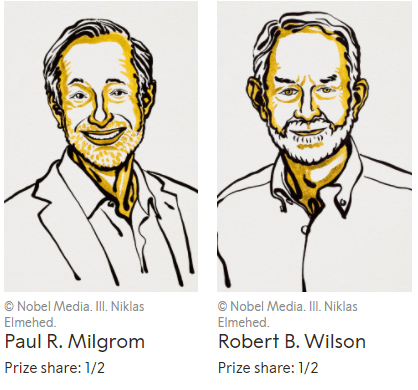
The Sveriges Riksbank Prize in Economic Sciences in Memory of Alfred Nobel 2020 was awarded jointly to Paul R. Milgrom and Robert B. Wilson “for improvements to auction theory and inventions of new auction formats.”
Announcement The need for international solidarity and multilateral cooperation is more conspicuous than ever. The Norwegian Nobel Committee has decided to award the Nobel Peace Prize for 2020 to the World Food Programme (WFP) for its efforts to combat hunger, for its contribution to bettering conditions for peace in conflict-affected areas and for acting as a driving force in efforts to prevent the use of hunger as a weapon of war and conflict.
The World Food Programme is the world’s largest humanitarian organisation addressing hunger and promoting food security. In 2019, the WFP provided assistance to close to 100 million people in 88 countries who are victims of acute food insecurity and hunger. In 2015, eradicating hunger was adopted as one of the UN’s Sustainable Development Goals. The WFP is the UN’s primary instrument for realizing this goal. In recent years, the situation has taken a negative turn. In 2019, 135 million people suffered from acute hunger, the highest number in many years. Most of the increase was caused by war and armed conflict.
The Nobel Prize in Literature 2020 was awarded to Louise Glück “for her unmistakable poetic voice that with austere beauty makes individual existence universal.”
The Nobel Prize in Chemistry 2020 was awarded jointly to Emmanuelle Charpentier and Jennifer A. Doudna “for the development of a method for genome editing.”