"The one exclusive sign of thorough knowledge is the power of teaching." Aristotle | Disclaimer: The views and opinions expressed on this Wordpress website are the views and opinions of the content creator, Dr. Reggie Goodwin, and should not be construed as shared, or sourced from The Environmental Protection Agency, or any organizations with which they have cooperative, or business relationships.
Topics: African Americans, Astronautics, Black History Month, Diversity in Science, NASA, Space Shuttle, Spaceflight
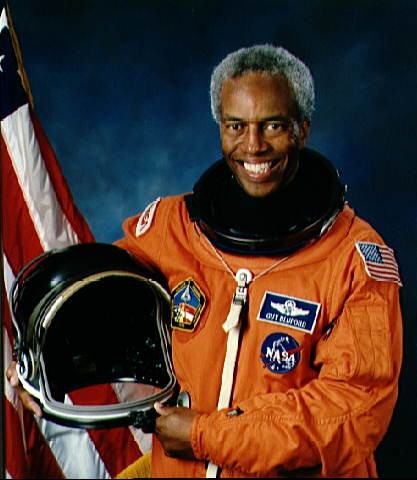
Dr. Guion “Guy” S. Bluford Jr. (Colonel, USAF, Ret.) was the first African American to fly in space. He was also the first African American to return to space a second, third and fourth time. As the first African American to be awarded United States Air Force Command Pilot Astronaut Wings, he has logged over 5200 hours in high performance jet aircraft and has flown 688 hours in space.
Bluford was born in Philadelphia, PA in 1942 and received a bachelor of science degree in aerospace engineering from the Pennsylvania State University in 1964, a master of science degree in aerospace engineering with distinction from the Air Force Institute of Technology in 1974, a doctor of philosophy degree in aerospace engineering with a minor in laser physics from the Air Force Institute of Technology in 1978 and a master in business administration from the University of Houston, Clear Lake in 1987.
After graduating from Penn State, Bluford earned his Air Force pilot wings and then flew 144 combat missions in Southeast Asia as an F4C fighter pilot. From 1967 to 1972, he served as a T-38 instructor pilot at Sheppard Air Force Base in Texas.
Topics: African Americans, Applied Physics, Black History Month, Business Consulting, Cybersecurity, Diversity in Science, Economics, Physics, Semiconductor Technology, STEM, Women in Science
IMPACT areas and EXPERTISE o Training & EDU: Cyber Security – Block Chain – Artificial Intelligence o Business Strategy & Competitive Intelligence o Sales & Strategic Relationship Management o New Market Development & New Product Introduction o Diversity & Inclusion
INDUSTRY EXPERIENCE o Healthcare o Consumer Electronics o Communications o Semiconductor Manufacturing
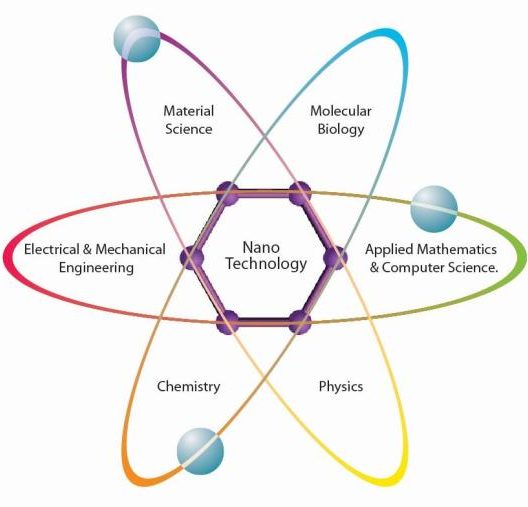
Topics: African Americans, Applied Physics, Black History Month, Cancer, Diversity in Science, Lasers, Nanotechnology, Physics, STEM, Women in Science
Dr. Hadiyah-Nicole Green is a STEM pioneer, leader, humanitarian, and entrepreneur introducing the world to the next generation of cancer treatments, charities, and affordable healthcare. She is one of the nation’s leading medical physicists and one of the first African American women to earn a Ph.D. in Physics. Dr. Green developed a revolutionary cancer treatment that uses lasers and nanotechnology to eliminate cancer in mice after only one 10-minute treatment in just 15 days with no observable side effects. To ensure the affordability of this treatment, she founded a 501(c)(3) non-profit organization, the Ora Lee Smith Cancer Research Foundation (OraLee.org), to raise funding for human clinical trials. Further, the U.S. Department of Veterans Affairs awarded her a $1.1 million grant for her research. Her story has been featured in a variety of media outlets, including ABC News, NBC News, New York Times, Forbes, The History Channel, PBS, and NPR. Dr. Green has been distinguished as one of the 100 Most Influential African Americans in the U.S. by Ebony and The Root magazines, Top 30 Under 40 in Healthcare by Business Insider, 100 Women of the Century by USA Today, and 50 Champions by Forbes.
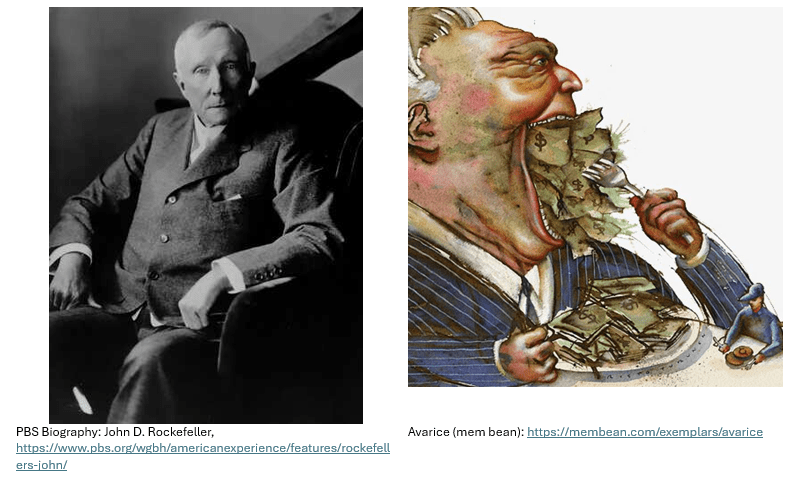
John D. Rockefeller, the founder of the Standard Oil Company, the first billionaire of the United States of America, and once the richest man on Earth was asked by a reporter, “How much money is enough?”
He calmly replied, “Just a little bit more.” Siddhartha Rastogi, CNBC TV18
A Body Mass Index is a rough estimate of body composition that is used to define an unhealthy versus healthy weight. It is body mass divided by height squared (kg/m2). A BMI under 18.5 is considered underweight, whereas, a BMI of 25.0 to 29.9 is considered overweight, and a BMI over 30.0 is considered obese.
Fifty percent of the United States population is now considered obese; they have accumulated too much body mass, most specifically fat, and this has placed them at risk for illness, disease, and death. Only 1.5 percent of the United States population lacks adequate body mass and qualifies as underweight and unhealthy. They, too, are at increased risk for illness, disease, and death.
Some wealth is clearly protective and leads to better health and more happiness, but there is a paucity of information regarding the physical and mental health of the ultrarich. Subjectively, we see the ultrarich and their descendents suffer from such things as anxiety, depression, addiction, and loss of meaning and purpose. The individuals and their families appear to have an increased level of dysfunction, but it is unclear whether the dysfunction is greater, less than, or the same as in the general population.
Notably, the ultrarich suffer from the trappings of their wealth. They have more to track, manage, and protect. Their wealth can become isolating for them, as well. They can be resented by many and targeted by others. Healthy and meaningful relationships can be hard to find for the ultrarich. Their wealth can also precipitate and facilitate their seeking of pleasure over happiness, a formula for addiction and dysfunction. The ultrarich have some increased risk factors for illness and disease.
Morbid Wealth, David R. Clawson M.D., Psychology Today
“Just a little bit more.” The current richest man on Earth (at least, on paper) is poised to be the world’s first trillionaire, according to Fortune magazine. After him, Amazon’s and the Washington Post’s CEO will likely come. As the title “trillionaire” becomes passe, quadrillionaire is the next obvious goal, and the gulf of wealth inequality will become a bottomless ocean that a nonexistent middle class cannot cross. That is peonage. That is serfdom. For “just a little bit more,” democracy becomes a fairy tale.
Remember the rich that were caricatured in these Sci-Fi movies and stories:
“Don’t Look Up?” “Elysium?” “The Handmaid’s Tale?” “The Hunger Games?” “Parable of the Sower?” “Parable of the Talents?” The wealthy were depicted as callous, dismissive, and unfeeling. Note that they own the corporations that produced them. This was them blatantly shoving their resumes in our faces, so we shouldn’t be at all surprised that “life imitates art.” Now, the South African “Ketamine Kid” has six teenage mutant Ninja turtles sifting through our personal identifying information doing God knows what, without background checks and without security clearances, but, we’re supposed to “trust them!”
“Who controls the past controls the future. Who controls the present controls the past.”
“Now I will tell you the answer to my question. It is this. The Party seeks power entirely for its own sake. We are not interested in the good of others; we are interested solely in power, pure power. What pure power means you will understand presently. We are different from the oligarchies of the past in that we know what we are doing. All the others, even those who resembled ourselves, were cowards and hypocrites. The German Nazis and the Russian Communists came very close to us in their methods, but they never had the courage to recognize their own motives. They pretended, perhaps they even believed, that they had seized power unwillingly and for a limited time, and that just around the corner there lay a paradise where human beings would be free and equal. We are not like that. We know that no one ever seizes power with the intention of relinquishing it. Power is not a means; it is an end. One does not establish a dictatorship in order to safeguard a revolution; one makes the revolution in order to establish the dictatorship. The object of persecution is persecution. The object of torture is torture. The object of power is power. Now you begin to understand me.” ― George Orwell, 1984
“Separate but equal” was always an oxymoron, like “military intelligence” or “United States” of America. My kindergarten was Bethlehem Community Center, still in Winston-Salem, and still on the east side. I found out later that the name was given by the Wesleyan Methodists because of its location and clientele: “Bethlehem” was for black kids, and “Wesleyan” was reserved for the better/whiter side of town. I remember the signs for water fountains.
My kindergarten graduation was on April 5, 1968, the day after the assassination of Dr. King. I remember crying a lot and not a single child smiling in our photo. I remember the thought “We’re not kids anymore!” I don’t know what the kids at Wesleyan were thinking, but I will bet that the Klan wasn’t outside shooting in the air, celebrating.
“All deliberate speed” did not occur for me until 1971 in Winston-Salem, North Carolina: 17 years after Brown v Board, and three years after Dr. King’s death. I was bussed across town to the suburbs of Rural Hall. The night before, my parents watched the news nervously as riots broke out at the high schools, attackers bringing chains, and bats. It didn’t help that my bus was to pick me up before sunrise: Pop waited until I got on the bus before he drove off. I was going to the 4th grade. We grouped by complexion at first, calling each other names: white crackers, and “black crackers” (which wasn’t then or ever has been, a “thing”). We were unconsciously imitating the rioting high school students with a limited vocabulary of epithets. We became friends with a game of football during recess. I assume now in our sixth decade, if they’re still alive, many of those friends now wear red hats.
The books were newer at Rural Hall Elementary: no torn pages, no written epithets in spelling, and math books clearly out of date. My first-grade teacher, Ms. Samuel was my third-grade teacher, Mrs. Perry, and she could “pass” to go to bookstores near Wesleyan Community Center, and purchase the actual books they stencil-copied, and taught us from. I felt like we were moving toward Dr. King’s “beloved community,” and closer to Star Trek without the need for their fictional (and our un-survivable) World War III.
“The Corporation” was a 2003 documentary that asked the question “If corporations are people (by the misapplication of the 14th Amendment), what KIND of persons are they?” The answer was a psychopath: “a person having an egocentric and antisocial personality marked by a lack of remorse for one’s actions, an absence of empathy for others, and often criminal tendencies.” That aptly describes the moment that we find ourselves in.
Harry Belafonte describes a conversation with Dr. King the night before he died and Dr. King “feared that he was integrating his people into a burning house.” If there had been no assassination, the next sermon that he relayed by phone to his mother was going to be “Why America May Go To Hell,” a warning to the nation that if we didn’t repent for our sins of militarism, and capitalism with no other thought other than profit for corporations/psychopaths and shareholders, the planet be damned.
Topics: African Americans, Black History Month, Civics, Civil Rights, Computer Science, Diversity in Science, Mathematics, Physics, Women in Science
Evelyn Granville (born May 1, 1924, Washington, D.C., U.S.—died June 27, 2023, Silver Spring, Maryland) was an American mathematician who was one of the first African American women to receive a doctoral degree in mathematics.
Boyd received an undergraduate degree in mathematics and physics from Smith College, Northampton, Massachusetts, in 1945. She received a doctoral degree in mathematics in 1949 from Yale University, New Haven, Connecticut, where she studied under Einar Hille. She was the second African American woman to receive a doctorate in mathematics. From 1949 to 1950 she had a postdoctoral fellowship at New York University, and from 1950 to 1952 she was an associate professor of mathematics at Fisk University, Nashville, Tennessee.
In 1952 Boyd became a mathematician at the National Bureau of Standards (NBS) in Washington, D.C., where she worked on missile fuses. Her division of NBS was later absorbed by the United States Army and became the Diamond Ordnance Fuze Laboratories. There she became interested in the new field of computerprogramming, which led her to the corporation International Business Machines (IBM) in 1956. She worked on programs in the assembly language SOAP and later in FORTRAN for the IBM 650, which was the first computer intended for use in businesses, and the IBM 704. In 1957 she joined IBM’s Vanguard Computing Center in Washington, D.C., where she wrote computer programs that tracked orbits for the uncrewed Vanguard satellite and the crewed Mercury spacecraft. She left IBM in 1960 to move to Los Angeles, where she worked at the aerospace firm Space Technology Laboratories; there she did further work on satellite orbits. In 1962 she joined the aerospace firm North American Aviation, where she worked on celestial mechanics and trajectory calculations for the Apollo project. She returned to IBM to its Federal Systems Division in 1963 as a senior mathematician.
Topics: African Americans, Black History Month, Civil Rights, Diversity in Science, Education, NASA, Space Exploration, STEM, Women in Science
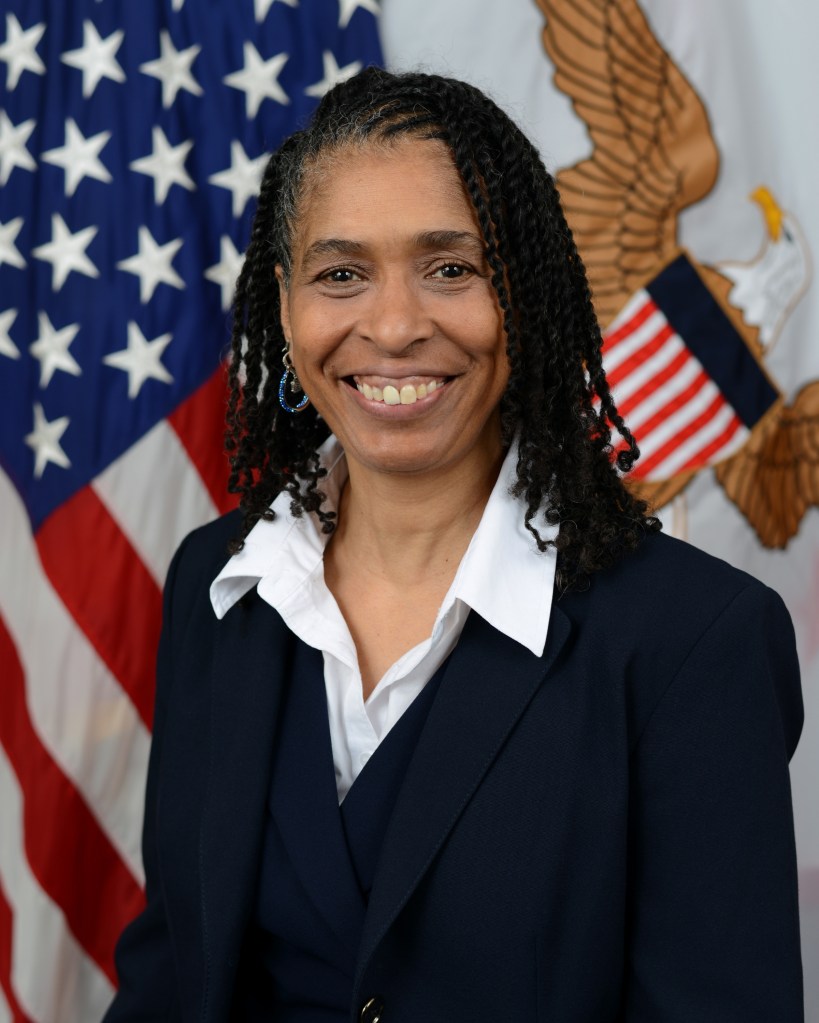
The Honorable Aprille J. Ericsson was the Assistant Secretary of Defense for Science and Technology (S&T). In this role, she directed an organization responsible for the oversight, advocacy, and policy for the Department of Defense (DoD) S&T enterprise, including S&T workforce and laboratory infrastructure, Federally Funded Research and Development Centers, and University-Affiliated Research Centers. The ASD(S&T) office oversees a broad portfolio of S&T programs, including basic research, Small Business Innovation Research/Small Business Technology Transfer (SBIR/STTR), DoD Manufacturing Technology, and nine Manufacturing Innovation Institutes. Focused emerging technology areas include: advanced materials, biotechnology, quantum science, and FutureG, along with developing system capabilities for hypersonics, PNT, nuclear delivery, and human and unmanned platforms. Additionally, the ASD(S&T) office encourages inclusion, diversity, and equity through focused outreach and interaction with Historically Black Colleges & Universities, Minority Institutions, community colleges, and K-12 programs. Furthermore, the ASD(S&T) office is responsible for technology and program intellectual property protection.
Before joining the DoD, Dr. Ericsson worked in various positions for 30+ years at the National Aeronautics and Space Administration (NASA). Her last NASA role was the New Business Lead for the NASA Goddard Space Flight Center (GSFC) Instrument Systems and Technology Division. In this role, she fostered technical federal partnerships that enabled industry, small businesses, and academia collaborate for competitive opportunities to solve strategic R&D, technological, and space science challenges. Dr. Ericsson also served as the NASA GSFC program manager for SBIR/STTR within the Innovative Technology and Partnerships Office. Her additional roles at NASA include: GSFC Deputy to the Chief Technologist for the Engineering and Technology Directorate; HQs Program Executive for Earth Science; HQs Business Executive for Space Science, and GSFC Instrument Project Manager for missions that include the James Webb Space Telescope and ICESat-2. Her engineering roles include design, analysis, and build of attitude control systems, instruments, and robotics.
Dr. Ericsson is a champion for STEM education and the future workforce. Throughout her career, she has sat on many academic boards for the National Academies, universities, and K-12 institutions, mentored many NASA interns and students, been a college professor, and led the advisor for a National Society Black Engineers Jr. Chapter.
Dr. Ericsson received her Bachelor of Science in aeronautical and astronautical engineering from the Massachusetts Institute of Technology. She received a masters and doctorate in mechanical engineering, aerospace option from Howard University. Dr. Ericsson has obtained leadership and management certificates from Radcliffe University and John Hopkins University.
Dr. Philip Emeagwali, who has been called the “Bill Gates of Africa,” was born in Nigeria in 1954. Like many African schoolchildren, he dropped out of school at age 14 because his father could not continue paying his school fees. However, his father continued teaching him at home, and every day, Emeagwali performed mental exercises such as solving 100 math problems in one hour. His father taught him until Philip “knew more than he did.”
Growing up in a country torn by civil war, Emeagwali lived in a building crumbled by rocket shells. He believed his intellect was a way out of the line of fire, so he studied hard and eventually received a scholarship to Oregon State University when he was 17, where he obtained a BS in mathematics. He also earned three other degrees—a Ph.D. in scientific computing from the University of Michigan and two Master’s degrees from George Washington University.
The noted black inventor received acclaim based, at least in part, on his study of nature, specifically bees. Emeagwali saw an inherent efficiency in the way bees construct and work with honeycombs and determined computers that emulate this process could be the most efficient and powerful. In 1989, emulating the bees’ honeycomb construction, Emeagwali used 65,000 processors to invent the world’s fastest computer, which performs computations at 3.1 billion calculations per second.
Dr. Philip Emeagwali’s resume is loaded with many other such feats, including ways of making oil fields more productive – which has resulted in the United States saving hundreds of millions of dollars each year. As one of the most famous African-American inventors of the 20th century, Dr. Emeagwali also won the Gordon Bell Prize – the Nobel Prize for computation. His computers are currently being used to forecast the weather and to predict the likelihood and effects of future global warming.
Topics: African Americans, Biology, Black History Month, Civics, Civil Rights, Civilization, Diversity in Science, Medicine
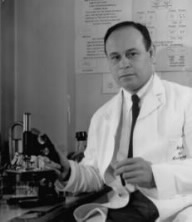
“Father of the Blood Bank” June 3, 1904 – April 1, 1950 Renowned surgeon and pioneer in the preservation of life-saving blood plasma Major scientific achievements:
Discovered method for long-term storage of blood plasma
Organized America’s first large-scale blood bank
Dr. Charles Richard Drew broke barriers in a racially divided America to become one of the most important scientists of the 20th century. His pioneering research and systematic developments in the use and preservation of blood plasma during World War II not only saved thousands of lives but innovated the nation’s blood banking process and standardized procedures for long-term blood preservation and storage techniques adapted by the American Red Cross.
A native Washingtonian, Drew was an average student but gifted athlete recruited in 1922 on a football and track and field scholarship by Amherst College in Massachusetts. He was one of only 13 African Americans in a student body of 600, where the racial climate exposed him to hostility from opposing teams. His own football team passed him over as captain his senior year even though he was the team’s best athlete.
Beyond sports, Drew didn’t have a clear direction until a biology professor piqued his interest in medicine. Like many other fields, medicine was largely segregated, greatly limiting education and career options for African Americans. For Drew, the narrowed road would lead him to McGill University College of Medicine in Montréal. There, he distinguished himself, winning the annual scholarship prize in neuroanatomy; becoming elected to the medical honor society Alpha Omega Alpha; and staffing the McGill Medical Journal. He also won the J. Francis Williams Prize in medicine after beating the top 5 students in an exam competition. In 1933, Drew received his MD and CM (Master of Surgery) degrees, graduating second in a class of 137.
Drew’s interest in transfusion medicine began during his internship and surgical residency at Montreal Hospital (1933-1935) working with bacteriology professor John Beattie on ways to treat shock with fluid replacement. Drew aspired to continue training in transfusion therapy at the Mayo Clinic, but racial prejudices at major American medical centers barred black scholars from their practices. He would instead join the faculty at Howard University College of Medicine, starting as a pathology instructor, and then progressing to surgical instructor and chief surgical resident at Freedmen’s Hospital.
Topics: African Americans, Black History Month, Chemistry, Civil Rights, Diversity in Science, Education, Women in Science
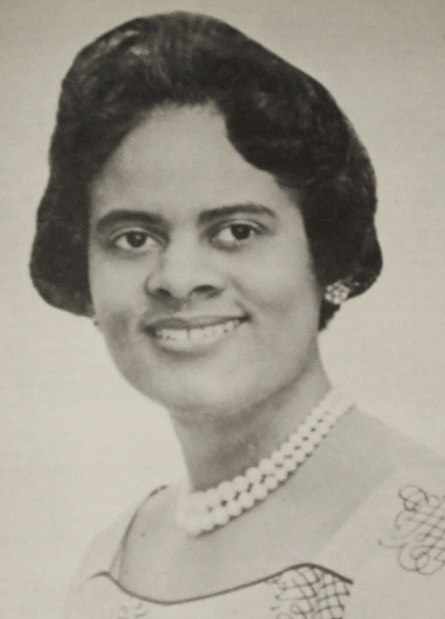
Overcoming the dual hurdles of racial and gender bias, Marie Maynard Daly (1921–2003) conducted influential studies on proteins, sugars, and cholesterol. In 1947 she became the first Black woman to receive a PhD in chemistry in the United States. In addition to her research, she was committed to developing programs to increase the participation of minority students in medical schools and graduate science programs. Daly’s biography helps us understand how individual curiosity, social support, historical circumstances, and professional dedication can foster social and scientific breakthroughs.
Daly was born in Queens, New York, on April 16, 1921. Her mother, Helen Page, encouraged her children’s academic interests early on, reading at length to Daly and her younger twin brothers. Daly was fascinated, in particular, by Paul De Kruif’s popular 1926 book, Microbe Hunters, a collection of “high adventure” stories about scientists who discovered a “new world under the microscope.”
She was also inspired by her father, Ivan C. Daly, who loved science. Though he had received a scholarship to study chemistry at Cornell University, he could not afford to finish the program.
Daly went to Hunter College High School, an all-women’s institution that selectively admitted students based on merit alone. Here, women teachers were positive role models: they supported and encouraged her ambition to become a chemist. After her brothers enlisted to fight in World War II, she enrolled at Queens College in Flushing, New York, which opened in 1937 and was free of charge to students from the community.
Like other schools, Queens College was adjusting to wartime conditions: roughly 1,200 students from the college enlisted in the U.S. military during World War II, which created new openings for women and minorities. Daly graduated in 1942 with numerous honors and a bachelor’s degree in chemistry.
World War II motivated U.S. governmental interest in science and technology, which was crucial to the war effort and revitalized the national economy. It also spurred new workforce initiatives that opened doors for women chemists like Daly. But women and minority scientists were often seen as “reservists” who were merely expected to provide temporary and relatively low-ranking support. Daly’s 1942 yearbook profile reflects this understanding, where she is described as having chosen a career as a “laboratory technician.”
Daly did not have to wait long to step into this role: the chemistry department at Queens offered her a job as a part-time laboratory assistant upon her graduation. But rather than stop there, she used the income from this position, along with a series of fellowships, to continue her graduate education. She completed her master’s degree at New York University in just one year, followed by a PhD at Columbia University in 1947.
World War II was ending when Daly entered Columbia. By this time, she was one of several women studying graduate-level chemistry there, many of whom were working with Mary L. Caldwell. Caldwell had developed a strong research profile in the biochemistry of nutrition. This was a prominent arena for women scientists during the first half of the 20th century, an essential part of the war effort, and something widely supported by grants from the business world. Under Caldwell, who was well known for her work on the digestive enzyme amylase, Daly researched how compounds produced in the body participate in digestion.
The title of Daly’s dissertation was “A Study of the Products Formed by the Action of Pancreatic Amylase on Corn Starch.” In her acknowledgments, she indicates that she benefitted from a strong network of women researchers who provided mutual intellectual support. She was awarded her doctoral degree just three years after enrolling in the program.
Eugenics is an immoral and pseudoscientific theory that claims it is possible to perfect people and groups through genetics and the scientific laws of inheritance. Eugenicists used an incorrect and prejudiced understanding of the work of Charles Darwin and Gregor Mendel to support the idea of “racial improvement.”
In their quest for a perfect society, eugenicists labeled many people as “unfit,” including ethnic and religious minorities, people with disabilities, the urban poor, and LGBTQ individuals. Discussions of eugenics began in the late 19th century in England and then spread to other countries, including the United States. Most industrialized countries had organizations devoted to promoting eugenics by the end of World War I.
Occam’s razor, principle stated by the Scholastic philosopher William of Ockham (1285–1347/49) that pluralitas non est ponenda sine necessitate, “plurality should not be posited without necessity.” The principle precedes simplicity: of two competing theories, the simpler explanation of an entity is to be preferred. The principle is also expressed as “Entities are not to be multiplied beyond necessity.”
Moving fast enables us to build more things and learn faster. However, as most companies grow, they slow down too much because they’re more afraid of making mistakes than they are of losing opportunities by moving too slowly. We have a saying: ‘Move fast and break things.’ The idea is that if you never break anything, you’re probably not moving fast enough.
The callousness of the wrecking ball that is pulverizing USAID, threatening the lives of children in Sudan, and AIDS vaccination protocols that will keep the virus from metastasizing into something worse, but it doesn’t matter when you don’t think that Sudanese children are humans and that the United States Agency for International Development is the extension of soft power. The agency was created in 1961 under the Kennedy administration to counteract the spread of communism (when the Republican Party cared about that sort of thing). Particularly, Ketamine DOGE and the six Teenage Mutant Ninja Turtles might have something against the agency aiding in the dismantling of Apartheid. I can see his sensitivity in this area could send him into “full demon mode.” Minus one MNT because of racist posts online (I thought that was a qualifier for the job).
I also thought we were afraid of TikTok and the Chinese government stealing our information? We’re apparently cool with man-sized (not sure of their genitalia) mutant-shelled reptiles with grandma’s social security number. After “saving” it for Gen Alpha (who will be eighteen in 2028), it’s suddenly unavailable in at least the Apple App Stores.
Seizing our social security numbers could be valuable for feeding into a social media AI shredder. Think of an online world where you exhaustively have to question reality.
But in full demon mode, why would you care when your beliefs stem from the belief that resources are only due to a select few, and the undeserving “others,” the aliens, and the “feebleminded” should be “pruned” out of the human family. That is eugenics.
“Move fast and break things” is a phrase that comes from privilege. It became a Silicon Valley idiom the moments after Zuckerberg uttered the phrase. It means that you’re comfortable flying by the seat of your pants, with a minimal or zero business plan, because you have relatives (usually, a deep-pocketed “daddy”) who can clean up your screw-ups. Be the “bull in the China shop” – smash things galore. The well-heeled “clean up on aisle five” also connects with traditional media, giving you favorable coverage in print, cable, and Internet media. Or, just own a platform or two. Thus, you’re not an emotionally cold sociopath, you’re a titan of industry, a genius.
You become famous for cooking up a cockamamie scheme to place a billion people on Mars: a planet with no oxygen, two years travel at current rocket speeds, if you survive the small asteroids or meteors colliding with your spaceship, or the radiation shielding, or the stir-craziness of floating for two years straight. Mars is 38% of Earth’s gravity, thus the new Martians could never come back home and stand up on whatever is LEFT of Mother Earth. After a generation of deadly radiation that if they survive it, will change their DNA to something truly alien, so a Martian and an Earthling could not plan a family. Lastly, sandstorms and Mars quakes. This great exodus idea had to be after the ketamine kicked in.
Pluralitas non est ponenda sine necessitate, “plurality should not be posited without necessity.” Of two competing theories, the simplest one is preferable.
Elizabeth Willing Powel’s question: “Well, Doctor, what have we got, a republic or a monarchy?”
Benjamin Franklin’s reply: “A republic, if you can keep it.”
Perhaps, in this case, the simplest explanation is not preferable.




 Physics and Nano