"The one exclusive sign of thorough knowledge is the power of teaching." Aristotle | Disclaimer: The views and opinions expressed on this Wordpress website are the views and opinions of the content creator, Dr. Reggie Goodwin, and should not be construed as shared, or sourced from The Environmental Protection Agency, or any organizations with which they have cooperative, or business relationships.
Topics: Diversity in Science, Education, Medicine, Research, STEM
AAAS will bring together a diverse group of professionals in science, technology, engineering, mathematics, and medicine (STEMM) to tackle the barriers to individuals entering and staying in careers in those fields.
The first Multidisciplinary Working Group (MWG), called Empowering Career Pathways in STEMM (ECP), will focus on developing recommendations that acknowledge and value the variety of professional journeys that contribute equally to the scientific enterprise.
“We need to abandon the idea of a so-called gold standard for what a STEMM career looks like and outdated notions of success that have resulted in excluding and losing talent and, more importantly, potential,” said Julie Rosen, AAAS’ director of strategic initiatives, who was brought on board to launch and oversee the MWGs.
Some of the major barriers to individuals entering STEMM careers and challenges to retaining talent include exclusionary practices that limit access to career opportunities, disincentives for those wanting to make career changes, unrealistic goals for success, and disconnects between formal training and on-the-job competencies.
“The landscape that early-career scientists are facing is nebulous and, for those coming from communities or backgrounds that are underrepresented in STEMM, it can seem insurmountable,” said Gilda Barabino, chair of the AAAS Board of Directors and president of Olin College of Engineering. “By identifying ways to reimagine how a career in science or engineering may play out, the first AAAS working group will empower multiple paths that can help strengthen the STEMM enterprise.”
Topics: Civics, Civil Rights, Civilization, Existentialism, Fascism, Human Rights
Under laws enacted specifically to intimidate blacks, tens of thousands of African Americans were arbitrarily arrested, hit with outrageous fines, and charged for the costs of their own arrests. With no means to pay these ostensible “debts,” prisoners were sold as forced laborers to coal mines, lumber camps, brickyards, railroads, quarries, and farm plantations. Thousands of other African Americans were simply seized by southern landowners and compelled into years of involuntary servitude. Government officials leased falsely imprisoned blacks to small-town entrepreneurs, provincial farmers, and dozens of corporations—including U.S. Steel—looking for cheap and abundant labor. Armies of “free” black men labored without compensation, were repeatedly bought and sold and were forced through beatings and physical torture to do the bidding of white masters for decades after the official abolition of American slavery.
The neo-slavery system exploited legal loopholes and federal policies that discouraged the prosecution of whites for continuing to hold black workers against their wills. As it poured millions of dollars into southern government treasuries, the new slavery also became a key instrument in the terrorization of African Americans seeking full participation in the U.S. political system.
Based on a vast record of original documents and personal narratives, Slavery by AnotherName unearths the lost stories of slaves and their descendants who journeyed into freedom after the Emancipation Proclamation and then back into the shadow of involuntary servitude. It also reveals the stories of those who fought unsuccessfully against the re-emergence of human labor trafficking, the modern companies that profited most from neo-slavery, and the system’s final demise in the 1940s, partly due to fears of enemy propaganda about American racial abuse at the beginning of World War II.
Slavery by Another Name is a moving, sobering account of a little-known crime against African Americans and the insidious legacy of racism that reverberates today.
Ta-Nehisi Coates penned “The Case for Reparations” for The Atlantic in June of 2014. The country was in the lame-duck of the second term of a political miracle: Barack Hussein Obama carried the popular vote and the electoral college TWICE, despite a blowhard asking for his birth certificate, despite a blowhard asking for his grades at Harvard, then commissioning his then-lawyer, Michael Cohen to threaten his high schools and colleges mob-style if they dared release any of his grades from his “great brainwork.” One would think that he had something to hide.
We crossed the Rubicon of 8 billion souls on Terra Firma last November, and we’re showing the signs of strain: Candida auris is spreading in healthcare and nursing facilities alarming the CDC: it could easily become more dangerous to the general population. climate change is exacerbating weather patterns, thus affecting food supplies. The thawing permafrost is wakening Paleolithic viruses that haven’t seen the light of day (or 8 billion vectors) in several millennia. The brunt of the crisis is being felt by the countries – so-called third world – without enough industry that would create the problem. This is destabilizing governments and fostering authoritarian nationalism, nativism, and xenophobia. The US President and Canadian Prime Minister reached an agreement to reject asylum seekers at their respective borders. As we whistle through graveyards, Waiting for Godot and Deas Ex Machina to resolve our issues. Where are these fellow humans supposed to go, other than open earth in whistled graveyards voluntarily? It is eerie, sadistic eugenics in slow motion.
The estimated cost to pay reparations is ~$14 Trillion dollars. The cost would be from the government, not individual “white” taxpayers. We can literally print money out of thin air when we want to do something, proposing austerity measures for things that used to be referred to as the “common good.”
Broken down in the documentary, The Big Payback, the estimated bill due (as Dr. King said) for uncompensated labor that built the United States is $14 Trillion Dollars. $14 Trillion Dollars is about $350,000 per African American.
The government keeps from paying what’s owed us by stirring divisions: Black Lives Matter are “black identity extremists,” but the Klan, Neo Nazis, Boogaloo Boys, Proud Boys, and Oath Keepers are NOT to date classified as domestic terrorists.
Reparations would also include levying taxes on the extremely wealthy, who got rich off of Reagan lowering their taxes to 28%. He had to raise taxes periodically when the math and reality came crashing down in the form of a recession. It’s why endless tax cuts as a solution have always been a bureaucratic form of magical thinking.
“Trickledown” was always a boondoggle and maintained by always having an “other” to blame for the nation’s problems. Before Trump, who is about as subtle as a farting rhinoceros, Reagan’s “wink and nod” genteel racism was a form of soft fascism in our faces. The function of fascist hierarchies has always been to separate the Earth’s resources from those deemed “undesirable” to those deemed “desirable,” “genius,” and “blessed” by a deity. India had the Dalets, the base of their hierarchy, and Germany prior to and in WWII had Jews, Gypsies, artists, intellectuals, homosexuals, or as “woke is the new n-word,” anything fascists then and now didn’t like about modernity. Rinsed, lathered, and repeated, it, along with enslavement, is the oldest grift in the world and probably predates prostitution.
Isabel Wilkerson’s Caste: The Origins of Our Discontents is a 2020 historical and narrative nonfiction work about the nature of inequality in the United States, India, and Nazi Germany. Wilkerson is a writer and former journalist best known for her work in the New York Times, for which she received a Pulitzer Prize. She achieved further acclaim with her 2010 work, The Warmth of Other Suns. Wilkerson has also taught journalism at many colleges and universities, including Princeton and Emory.
Caste describes the United States from the arrival of the first enslaved people in 1619 to the current Covid-19 pandemic to explain the nature and consequences of inequality. In the book’s first part, Wilkerson notes that many people were shaken and surprised by the results of the 2016 presidential election. Still, the outcome was really the result of long-buried issues, and she, therefore, calls for a deep dive into the structures of American life. She argues that the key to understanding America is its caste system, a commitment to structures that assign some lives more valuable than others; in the United States, it is based on skin color.
It would depend on whether we value people or the toys of billionaires: golf courses consuming copious amounts of water to maintain; mansions, yachts, yachts for helicopters, and penis rockets.
Hoesung Lee, chair of the Intergovernmental Panel on Climate Change, speaking at the global climate talks on Nov. 6 in Sharm el Sheikh, Egypt. Credit…Sean Gallup/Getty Images
A new report says it is still possible to hold global warming to relatively safe levels, but doing so will require global cooperation, billions of dollars, and big changes.
Earth is likely to cross a critical threshold for global warming within the next decade, and nations will need to make an immediate and drastic shift away from fossil fuels to prevent the planet from overheating dangerously beyond that level, according to a major new report released on Monday.
The report, by the Intergovernmental Panel on Climate Change, a body of experts convened by the United Nations, offers the most comprehensive understanding to date of ways in which the planet is changing. It says that global average temperatures are estimated to rise 1.5 degrees Celsius (2.7 degrees Fahrenheit) above preindustrial levels sometime around “the first half of the 2030s” as humans continue to burn coal, oil, and natural gas.
That number holds a special significance in global climate politics: Under the 2015 Paris climate agreement, virtually every nation agreed to “pursue efforts” to hold global warming to 1.5 degrees Celsius. Beyond that point, scientists say, the impacts of catastrophic heat waves, flooding, drought, crop failures, and species extinction become significantly harder for humanity to handle.
But Earth has already warmed an average of 1.1 degrees Celsius since the industrial age, and with global fossil-fuel emissions setting records last year, that goal is quickly slipping out of reach.
There is still one last chance to shift course, the new report says. But it would require industrialized nations to join together immediately to slash greenhouse gases roughly in half by 2030 and then stop adding carbon dioxide to the atmosphere altogether by the early 2050s. If those two steps were taken, the world would have about a 50 percent chance of limiting warming to 1.5 degrees Celsius.
Delays of even a few years would most likely make that goal unattainable, guaranteeing a hotter, more perilous future.
“The pace and scale of what has been done so far and current plans are insufficient to tackle climate change,” said Hoesung Lee, the chair of the climate panel. “We are walking when we should be sprinting.”
Divine light The Dean of Gloucester Cathedral, Stephen Lake, blesses the cathedral’s solar panels after the solar-energy firm MyPower installed them in November 2016. The array of PV panels generates just over 25% of the building’s electricity. (Courtesy: MyPower)
Topics: Alternate Energy, Applied Physics, Battery, Chemistry, Economics, Solar Power
With energy bills on the rise, plenty of people are interested in ditching the fossil fuels currently used to heat most UK homes. The question is how to make it happen, as Margaret Harris explains.
Deep beneath the flagstones of the medieval Bath Abbey church, a modern marvel with an ancient twist is silently making its presence felt. Completed in March 2021, the abbey’s heating system combines underfloor pipes with heat exchangers located seven meters below the surface. There, a drain built nearly 2000 years ago carries 1.1 million liters of 40 °C water every day from a natural hot spring into a complex of ancient Roman baths.
By tapping into this flow of warm water, the system provides enough energy to heat not only the abbey but also an adjacent row of Georgian cottages used for offices. No wonder the abbey’s rector praised it as “a sustainable solution for heating our beautiful historic church.”
But that wasn’t all. Once efforts to decarbonize the abbey’s heating were underway, officials in the £19.4m Bath Abbey Footprint project turned their attention to the building’s electricity. Like most churches, the abbey runs from east to west, giving its roof an extensive south-facing aspect. At the UK’s northerly latitudes, such roofs are bathed in sunlight for much of the day, making them ideal for solar photovoltaic (PV) panels. Gloucester Cathedral – an hour’s drive north of Bath – has already taken advantage of this favorable orientation, becoming – in 2016 – the UK’s first major ancient cathedral to have solar panels installed on its roof.
To find out if a similar set-up might be suitable at Bath Abbey, the Footprint project worked with Ph.D. students in the University of Bath-led Centre for Doctoral Training (CDT) in New and Sustainable Photovoltaics. In a feasibility study published in Energy Science & Engineering (2022 10 892), the students calculated that a well-designed array of PV panels could supply 35.7% of the abbey’s electricity, plus 4.6% that could be sold back to the grid on days when a surplus was generated. The array would pay for itself within about 13 years and generate a total profit of £139,000 ± £12,000 over its 25-year lifetime.
Topics: Civics, Civil Rights, Civilization, Existentialism, Fascism, Human Rights
Framework (noun): (a) a basic conceptional structure (as of ideas), (b) a skeletal, openwork, or structural frame, FRAME OF REFERENCE (Merriam-Webster); ACADEMIC: The theoretical framework is the structure that can hold or support a theory of a research study. The theoretical framework introduces and describes the theory, which explains why the research problem under study exists. https://library.sacredheart.edu/c.php?g=29803&p=185919
“In this present crisis, [the] government is not the solution to our problem; government is the problem.”Ronald W. Reagan, 40th President of the United States’ inaugural address.
Those who refer to themselves as moderate republicans or “never Trumpers” conveniently forget that Reagan started his campaign spitting on the graves of Cheney, Goodman, and Schwerner at the Neshoba County Fair in Mississippi. “States rights” was always code for the right to own human beings for uncompensated, unending labor. Reagan said it specifically to pull in Southern Dixiecrats, the “wink and nod,” genteel, “aw, shucks” brand of feel-good racism with enough plausible denial for black conservatives that wanted on the train. The three Civil Rights workers were murdered by the Ku Klux Klan, who STILL, along with Incels, Neo-Nazis, Oath Keepers, Proud Boys, and QAnon, are NOT designated domestic terrorist organizations – the FBI reserves that for Black Lives Matter and similar groups who put their bodies on the line for justice and typically don’t carry AR15s, or AK47s.
The framework for “government is the problem” was the Lewis Powel memo. “Powell recommended a propaganda effort staffed with scholars and speakers, a propaganda effort to which American business should devote “10 percent of its total advertising budget,’” including an effort to review and critique textbooks, especially in economics, political science, and sociology.” (Senator Sheldon Whitehouse) Obviously, Rupert Murdoch, Rush Limbaugh, Tucker Carlson, Ronald Reagan, and the entire Reich Wing ecosystem echo chamber read the memo. It elevated Powell to Associate Justice on the Supreme Court, which, every day since Taney and the Dred Scott decision, is becoming its own oxymoron.
So it stands to reason if “government is the problem,” you CANNOT let the government be the solution. Every elected republican has one mission when getting to office: sabotage and cutting taxes for their wealthy benefactors. To perform this insurgency, you have to construct an ecosystem that echoes the same message and reinforces itself like a mantra at a MAGA monastery, musing on anger versus meditating on enlightenment. The fact that their favorite platform is now a proven liar is irrelevant: they haven’t been told yet, so it’s Troglodyte Nirvana. When you seize power, you must keep the Trogs angry even if you control all levels of government. You must keep the opposition – the “Democrat Party” (emphasis on “rat”), turning the adjective into a noun, using poor grammar as pejorative – on the defensive. It also helps that when you’re in power, you’re particularly bad at governing. “Government is the problem”: solutions are hard to come by, especially when it calls for concession and compromise, meaning giving a little to get a little and trying again later. “Owning the libs” and trending on Twitter is more fun than thinking. The goal is to wear us down, to make us give up on pursuing common interests, and to become complacent. The opposite of activism is apathy, and the vacuum abhorred by nature is filled with the first wad of filth to walk through.
Eventually, an echo chamber disciple descends from his bizarro Olympus, personified on a grifting, golden escalator, the embodiment or incarnation of Archie Bunker with a wallet.
In Timothy Snyder’s book, “The Road to Unfreedom: Russia, Europe, America,” his erudite analysis of Vladimir Putin gets into the man’s history, fears, and motivations. Ukraine’s “existing” is a threat to his power. Before the bombing, it was modern. It had functional nuclear power plants (with the noted exception of Chornobyl). Ukraine was the antithesis of Russia’s thesis of leadership by the reincarnation of Lenin and Stalin. It’s why the Russians have to interfere with democratic elections. If you’re trying to hold onto power until your last breath, it’s a good idea to sabotage democratic elections across the globe. When his people demand elections, demand representation, demand better for themselves, Putin can point to the “failures” of democratic systems, leaving out the part in his Orwellian Pravda news services that he is orchestrating the chaos he allows his 11-time zone subjects – they are not “citizens” – to see. People spontaneously falling out of windows, getting shot or poisoned, and being imprisoned for multiple years in gulags also bolsters his dark reign. The Russian people see where the wealth is: in Putin’s palaces and with his oligarchs. “Why don’t they protest in the streets?” Russians have no First Amendment Rights, and there, the Second Amendment is only for Putin’s hired thugs. Where republicans in America are a criminal enterprise masquerading as a political party, the Kremlin is a kleptocracy masquerading as a state.
People under such conditions, according to dystopian fiction author, Margaret Atwood, either become activists (which puts their lives in danger), collaborators, or complacent, keeping their heads down because they feel they have no power to change their conditions.
“In this present crisis, [the] government is not the solution to our problem; government is the problem.”Ronald W. Reagan, 40th President of the United States’ inaugural address.
Putin can point to the “failures” of democratic systems, leaving out the part in his Orwellian Pravda news services that he is orchestrating the chaos he allows his 11-time zone subjects – they are not “citizens” – to see.
Dominion voting systems are suing Fox Propaganda for $1.6 billion, and SmartMatics is suing for $2.7 billion. No one who watches American Pravda is the wiser because “truth is bad for business.”
And voila! You have a utopia for fascists and a dystopia for their subjects, who are either collaborators or exhausted. You have to enamor them to fascism, by comparison.
“For we are not contending against flesh and blood, but against the principalities, against the powers, against the world rulers of this present darkness, against the spiritual hosts of wickedness in the heavenly places.” Ephesians 6:12
“The tyranny of the many would be when one body takes over the rights of others and then exercises its power to change the laws in its favor.” Voltaire
Republicans and Putin are trying to defeat democracy by exhausting citizens and subjects. We can regulate women’s bodily autonomy, but not climate change or Wall Street. We can pull books from shelves, but not qualified immunity from bad police officers. We can threaten drag shows (a voluntary activity), but not make schools safe: a collapsible, laughable fold-out gun shelter in Alabama must have cost the district a small fortune that could have been remedied with background checks and red flag laws. “Woke” is their new n-word without saying the n-word for everything in modernity they do not like. Everything is, as Carl Sagan said in 1996, a “celebration of ignorance.”
“I have a foreboding of an America in my children’s or grandchildren’s time — when the United States is a service and information economy; when nearly all the manufacturing industries have slipped away to other countries; when awesome technological powers are in the hands of a very few, and no one representing the public interest can even grasp the issues; when the people have lost the ability to set their own agendas or knowledgeably question those in authority; when clutching our crystals and nervously consulting our horoscopes, our critical faculties in decline, unable to distinguish between what feels good and what’s true, we slide, almost without noticing, back into superstition and darkness…
“The dumbing down of American is most evident in the slow decay of substantive content in the enormously influential media, the 30-second sound bites (now down to 10 seconds or less), lowest common denominator programming, credulous presentations on pseudoscience and superstition, but especially a kind of celebration of ignorance.”
So long as the people do not care to exercise their freedom, those who wish to tyrannize will do so; for tyrants are active and ardent and will devote themselves in the name of any number of gods, religious and otherwise, to put shackles upon sleeping men. Voltaire
Atomic analog: when a beam of light is shone into a water droplet, the light is trapped inside. (Courtesy: Javier Tello Marmolejo)
Topics: Modern Physics, Optics, Quantum Mechanics, Quantum Optics, Research
Light waves confined in an evaporating water droplet provide a useful model of the quantum behavior of atoms, researchers in Sweden and Mexico have discovered. Through a simple experiment, a team led by Javier Marmolejo at the University of Gothenburg has shown how the resonance of light inside droplets of specific sizes can provide robust analogies to atomic energy levels and quantum tunneling.
When light is scattered by a liquid droplet many times larger than its wavelength, some of the light may reflect around the droplet’s internal edge. If the droplet’s circumference is a perfect multiple of the light’s wavelength inside the liquid, the resulting resonance will cause the droplet to flash brightly. This is an optical example of a whispering gallery mode, whereby sound can reflect around a circular room.
This effect was first described mathematically by the German physicist Gustav Mie in 1908 – yet despite the simplicity of the scenario, the rich array of overlapping resonances it produces can create some incredibly complex patterns, some of which have yet to be studied in detail.
Optical Tweezers
To explore the effect in more detail, Marmolejo and the team devised an experiment where they confined water droplets using optical tweezers. They evaporated the liquid by heating it with a fixed-frequency laser. As the droplets shrank, their circumferences will sometimes equal a multiple of the laser’s wavelength. At these “Mie resonances,” the droplets flashed brightly.
As they studied this effect, the researchers realized that the flashing droplets are analogous to the quantum behaviors of atoms. In these “optical atoms,” orbiting electrons are replaced with resonating photons. The electrostatic potential that binds electrons to the nucleus is replaced by the droplet’s refractive index, which tends to trap light in the droplet by internal reflection. The quantized energy levels of an atom are represented by the droplet sizes where Mie resonances occur.
Will a possible breakthrough for room-temperature superconducting materials hold up to scrutiny?
This week researchers claimed to have discovered a superconducting material that can shuttle electricity with no loss of energy under near-real-world conditions. But drama and controversy behind the scenes have many worried that the breakthrough may not hold up to scientific scrutiny.
“If you were to find a room-temperature, room-pressure superconductor, you’d have a completely new host of technologies that would occur—that we haven’t even begun to dream about,” says Eva Zurek, a computational chemist at the University at Buffalo, who was not involved in the new study. “This could be a real game changer if it turns out to be correct.”
Scientists have been studying superconductors for more than a century. By carrying electricity without shedding energy in the form of heat, these materials could make it possible to create incredibly efficient power lines and electronics that never overheat. Superconductors also repel magnetic fields. This property lets researchers levitate magnets over a superconducting material as a fun experiment—and it could also lead to more efficient high-speed maglev trains. Additionally, these materials could produce super strong magnets for use in wind turbines, portable magnetic resonance imaging machines, or even nuclear fusion power plants.
The only superconducting materials previously discovered require extreme conditions to function, which makes them impractical for many real-world applications. The first known superconductors had to be cooled with liquid helium to temperatures only a few degrees above absolute zero. In the 1980s, researchers found superconductivity in a category of materials called cuprates, which work at higher temperatures yet still require cooling with liquid nitrogen. Since 2015 scientists have measured room-temperature superconductive behavior in hydrogen-rich materials called hydrides. but they have to be pressed in a sophisticated viselike instrument called a diamond anvil cell until they reach a pressure of about a quarter to half of that found near the center of Earth.
The new material, called nitrogen-doped lutetium hydride, is a blend of hydrogen, the rare-earth metal lutetium, and nitrogen. Although this material also relies on a diamond anvil cell, the study found that it begins exhibiting superconductive behavior at a pressure of about 10,000 atmospheres—roughly 100 times lower than the pressures that other hydrides require. The new material is “much closer to ambient pressure than previous materials,” says David Ceperley, a condensed matter physicist at the University of Illinois at Urbana-Champaign, who was not involved in the new study. He also notes that the material remains stable when stored at a room pressure of one atmosphere. “Previous stuff was only stable at a million atmospheres, so you couldn’t really take it out of the diamond anvil” cell, he says. “The fact that it’s stable at one atmosphere of pressure also means that it’d be easier to manufacture.”
Topics: Diversity in Science, Education, Research, STEM, Theoretical Physics
The American Association for the Advancement of Science has announced the 2023 winners of eight longstanding awards that recognize scientists, engineers, innovators, and public servants for their contributions to science and society.
The awards honor individuals and teams for a range of achievements, from advancing science diplomacy and engaging the public in order to boost scientific understanding to mentoring the next generation of scientists and engineers.
The 2023 winners were first announced on social media between Feb. 23 and Feb. 28; see the hashtag #AAASAward to learn more. The winners were also recognized at the 2023 AAAS Annual Meeting, held in Washington, D.C., March 2-5. The winning individuals and teams were honored with tribute videos and received commemorative plaques during several plenary sessions.
Six of the awards include a prize of $5,000, while the AAAS David and Betty Hamburg Award for Science Diplomacy award the winning individual or team $10,000, and the AAAS Newcomb Cleveland Prize awards the winning individual or team $25,000.
Learn more about the awards’ history, criteria, and selection processes via the AAAS awards page, and read on to learn more about the individuals and teams who earned the 2023 awards.
*****
Sekazi Mtingwa is the recipient of the 2023 AAAS Philip Hauge Abelson Prize, which recognizes someone who has made significant contributions to the scientific community — whether through research, policy, or civil service — in the United States. The awardee can be a public servant, scientist, or individual in any field who has made sustained, exceptional contributions and other notable services to the scientific community. Mtingwa exemplifies a commitment to service and dedication to the scientific community, research workforce, and society. His contributions have shaped research, public policy, and the next generation of scientific leaders, according to the award’s selection committee.
As a theoretical physicist, Mtingwa pioneered work on intrabeam scattering that is foundational to particle accelerator research. Today a principal partner at Triangle Science, Education and Economic Development, where he consults on STEM education and economic development, Mtingwa has been affiliated during his scientific career with North Carolina A&T State University, Harvard University, the Massachusetts Institute of Technology, and several national laboratories.
His contributions to the scientific community have included a focus on diversity, equity, and inclusion in physics. He co-founded the National Society of Black Physicists, which today is a home for more than 500 Black physicists and students. His work has also contributed to rejuvenating university nuclear science and engineering programs and paving the way for the next generation of nuclear scientists and engineers. Mtingwa served as the chair of a 2008 American Physical Society study on the readiness of the U.S. nuclear workforce, the results of which played a key role in the U.S. Department of Energy allocating 20% of its nuclear fuel cycle R&D budget to university programs.
“I have devoted myself to being an apostle for science for those both at home and abroad who face limited research and training opportunities,” said Mtingwa. “Receiving the highly prestigious Philip Hauge Abelson Prize affirms that I have been successful in this mission. Moreover, it provides me with the armor to press onward to even greater contributions.”
Note: This is an advertisement on Nature Portfolio discussing that there may be a silver lining in the pandemic we’ve all experienced.
Lipid nanoparticles (LNPs) transport small molecules into the body. The most well-known LNP cargo is mRNA, the key constituent of some of the early vaccines against COVID-19. But that is just one application: LNPs can carry many different types of payload and have applications beyond vaccines.
Barbara Mui has been working on LNPs (and their predecessors, liposomes) since she was a Ph.D. student in Pieter Cullis’s group in the 1990s. “In those days, LNPs encapsulated anti-cancer drugs,” says Mui, who is currently a senior scientist at Acuitas. This company developed the LNPs used in the Pfizer-BioNTech mRNA vaccine against SARS-CoV-2. She says it soon became clear that LNPs worked even better as carriers of polynucleotides. “The first one that worked really well was encapsulating small RNAs,” Mui recalls.
But it was mRNA where LNPs proved most effective, primarily because LNPs are comprised of positively charged lipid nanoparticles that encapsulate negatively charged mRNA. Once in the body, LNPs enter cells via endocytosis into endosomes and are released into the cytoplasm. “Without the specially designed chemistry, the LNP and mRNA would be degraded in the endosome,” says Kathryn Whitehead, professor in the departments of chemical engineering and biomedical engineering at Carnegie Mellon University.
LNPs are an ideal delivery system for mRNA. “COVID accelerated the acceptance of LNPs, and people are more interested in them,” says Mui. LNP-mRNA vaccines for other infectious diseases, such as HIV or malaria, or for non-communicable diseases, such as cancer, could be next. And the potential doesn’t end with mRNA; there is even more scope to adapt LNPs to carry different types of cargo. But to realize these potential benefits, researchers first need to overcome challenges and decrease toxicity, increase their ability to escape from the endosomes, increase their thermostability, and work out how to effectively target LNPs to organs across the body.
Another potential application for LNPs is immunotherapy. Genetically modifying lymphocytes such as T cells or NK cells with chimeric antibody receptors (CARs) has proven useful in blood cancers. Often this process involves extracting lymphocytes from the blood of the person receiving the treatment, editing the cells in culture to express CARs, and then reintroducing them into the blood. However, LNPs could make it possible to express the desired CAR in vivo by shuttling CAR mRNA to the target lymphocytes. Mui has been involved in vivo studies showing this process works in mouse T cells (Rurik, J.G. et al. Science 375, 91-96, 2022). And Vita Golubovskaya, VP of research and development at ProMab Biotechnologies, presented preliminary data (available here) at the CAR-TCR Summit in September 2022 regarding LNPs that direct CAR-mRNA to NK cells, which can then kill target cells. “The RNA-LNP is a very exciting and novel technology that can be used for delivering CAR and bi-specific antibodies against cancer,” she says.
Judge Royce Lambert said Jacob Chansley’s role as a leader among those who went into the Senate chamber and disrupted the electoral vote tally compelled a serious prison sentence. | Photo by Win McNamee/Getty Images | Politico
Note: The title of this post is from the famous movie Apocalypse Now, which was popular during my senior year in high school.
Nathaniel P. Grimes is a Theologian, someone who “dedicates her or his life to the scholastic vocation of seeking after knowledge of God and the things of God.” In other words, graduate school. Dr. Grimes published a paper that I feel should have gotten much more traction and explains the abject lunacy on the right: “The Racial Ideology of Rapture.” In it, he posits that the viewpoint was not scriptural; it was political, as in an existential crisis for a South who had brainwashed themselves after losing the Civil War, or more aptly, mass cognitive dissonance before Leon Festinger.
Cognitive dissonance was first investigated by Leon Festinger, arising out of a participant observation study of a cult that believed that the earth was going to be destroyed by a flood, and what happened to its members — particularly the really committed ones who had given up their homes and jobs to work for the cult — when the flood did not happen.
While fringe members were more inclined to recognize that they had made fools of themselves and to “put it down to experience,” committed members were more likely to re-interpret the evidence to show that they were right all along (the earth was not destroyed because of the faithfulness of the cult members). Source: Simply Psychology
They lost the Civil War after Chief Justice Taney spouted the worst Supreme Court decision to Dred Scott that a black man “has no rights that a white man should respect.” The institution of slavery, whether they owned any or not, meant that due to a lack of Melanin, the so-called “white” peasantry was magically “superior” to enslaved Africans. They didn’t have to do anything to be superior. The society was exquisitely designed to reinforce the claptrap in the science of the day and from the pulpit that, upon further examination, was the framework for pseudoscience. As formerly enslaved Africans began running for office, gaining property, and establishing successful townships, [for] the psyche of the southern poor who risked life and limb to defend plantation oligarchs’ ownership of other humans was an existential crisis. If the “whites” were not “superior,” then what were they? The surviving confederate soldiers and their descendants got the battle ensign of Robert E. Lee (popularly, but inaccurately, the flag of the insurrectionist Confederacy) and shell shock.
The plantation oligarchs got reparations from the US government, the foundation for generational wealth passed down to their posterity. Equally, the descendants of potentates and peasants are hellbent on “conserving” the sadistic societal status quo.
Anglo-Futurism
John Nelson Darby was the “OG” of dispensationalism eschatology, or epochs in which humanity would be judged and punished, similar to the plagues of the Old Testament. John Scofield was a Confederate deserter (a broken clock can be right once or twice). After a conversion experience, he began writing dispensationalist literature, Rightly Dividing the Word of Truth, the foundation for the Dallas Seminary, and his Scofield’s Reference Bible, which many trained theologians used during their graduate studies. His 1917 reference Bible referenced Genesis 9 as a “prophetic declaration” that “Ham will descend an inferior and servile posterity,” probably the fanciest way I’ve seen someone use the n-word without using the n-word. Scofield’s reputation was built on an “anti-black, anti-Catholic, anti-Jewish theology.” Moody followed in his footsteps, as his vision of a “perfect, raptured Heaven” was of “the Scotsman, the Englishman, the Frenchman, the German, the Italian, the Russian”: all those who “hungered after righteousness.” It was White-topia before Levittown.
Rapture was the escape hatch from Reconstruction and the previously enslaved Africans, newly by the 14th Amendment African Americans, to gain genuine electoral power and some property. The paper mentioned a diagram of the Earth’s population in 1886 that I’ve seen in various forms. This was surrounding the International Prophetic Conference, showing the population of the world to premillennialists as “white squares” and “black squares,” the noir geometry representing “Jews, Catholics, Mohammedans, and Heathens.”
On page 219 of the paper: “in order to hasten Christ’s coming, **the conditions here on earth must decline dramatically.** So they chose to pull back from social reform not only because the conversion was deemed more important but because reform itself ‘delayed the Second Coming and deluded those who would be converted.”
“Conditions on earth must decline dramatically”:like climate change? Diversity, equity, and inclusions? Income inequality? Debt ceiling default? Social justice and police reform? Elections in a federal republic? Governing? Bodily autonomy for women, the transgender? What’s the reserve against prosecuting wars all over the globe? We relocated the US Embassy to Jerusalem in the last administration. The current administration hasn’t moved it back since there’s a sizeable percentage of the electorate that wants to hurry apocalypse like it’s a “GI Joe: Real American Hero” Saturday morning cartoon where we do battle with Cobra, lasers blasting, and no one really wounded or dying. If premillennialists apparently had the “mess up the room, so the parent shows up” theory of the Second Coming, their descendants still have it. There will definitely be a “new Heaven and a new Earth” as the first Heaven and first Earth (the current one) passes away (Revelation 21) after the throws of a nuclear exchange. Seas probably would dry up if they hadn’t overflowed from melted poles causing rising tides or becoming so irradiated for thousands of years. Your favorite salmon, lobster, or tilapia would, from then on, be aquatic SPAM.
This attitude fuels one political party currently in charge of the House of Representatives. The “weaponization of the government” hearings are going about, as well as Jim Jordan was in not protecting his athletes from sexual assault. Dr. Barbara Rossing, author of “The Rapture Exposed,” starts her first chapter with these words reminiscent of Smedley Butler: “The Rapture is a Racket.” Throughout the book, she shows that basing our Middle East strategy on “clean up on aisle 5” is part of why there hasn’t been a “two-state solution” in Israel/Palestine. “The conditions on earth must decline dramatically.”
People like Dr. Martin Luther King Jr used the Bible, the fact that pastors essentially had confidential meeting halls, to motivate a nonviolent movement to change the country for the better: “I want to go to Heaven, but I want some shoes down here!” He practiced “here-and-now” ministry and left it for history and the universe to judge him.
Or, we can have the eschatology of the insane. We can have faux theists that follow a cruel, psychopathic nincompoop that they’ve built a graven image while a disturbed man parades the Capitol in buffalo horns, war paint, and buckskin. Like QAnon, the eschatology of the insane “rationalizes the fantastical” and makes a few insurrectionists chairs of a “weaponization of government” committee, ignoring the last administration when the weaponization occurred.
The idea of white supremacy rests simply on the “fact” that white men are the creators of civilization (the present civilization, which is the only one that matters; all previous civilizations are simply “contributions” to our own) and are, therefore, civilization’s guardians and defenders. Thus, it was impossible for Americans to accept the black man as one of themselves, for to do so was to jeopardize their status as “white” men. But not so to accept him was to deny his human reality, his human weight and complexity, and the strain of denying the overwhelmingly undeniable forced Americans into rationalizations so fantastic that they approached the pathological. – James Baldwin, “Notes of a Native Son.”
Very soon in the founding of a new nation, however, White Christians began to establish their well-being by using the resources, bodies, and lives of others. Through their own “witchcraft,” European Christians employed a mysterious and threatening potency that was the practice of using the other for their own gain. In [James W.] Perkinson’s description, through the projects of modern Christian empire “a witchery” of heretofore unimaginable potency ravaged African and aboriginal cultures…For Perkinson, the witchcraft of White supremacy was conjured through racial discourse as an ideological and practical frame that he identifies as the ‘quintessential witchery of modernity.’… In Perkinson’s chilling words, “Whiteness, under the veneer of its ‘heavenly’ pallor, is a great grinding witch tooth, sucking blood and tearing flesh without apology.”
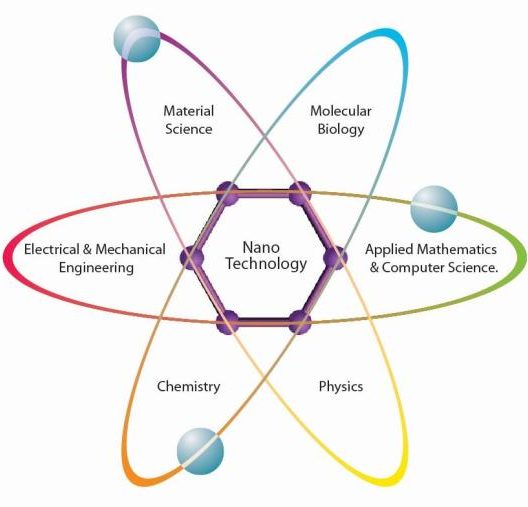










 Physics and Nano