"The one exclusive sign of thorough knowledge is the power of teaching." Aristotle | Disclaimer: The views and opinions expressed on this Wordpress website are the views and opinions of the content creator, Dr. Reggie Goodwin, and should not be construed as shared, or sourced from The Environmental Protection Agency, or any organizations with which they have cooperative, or business relationships.
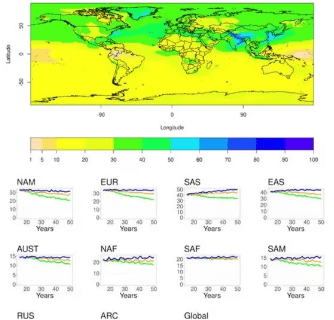
This map predicts how air pollution with fine particles will be in the future – according to Ulas Im’s computer simulation. The blue-colored areas show where the pollution is worst. Green is a little better, and yellow means almost no pollution. Credit: Journal for Environmental Research
Topics: Civilization, Environment, Existentialism
For many years now, we have known that air pollution is bad for our health. For example, American researchers have found that you have a 20% higher risk of dying prematurely if you live next to a big road.
In recent years, many countries—especially Western countries—have spent time and effort to come up with solutions to reduce air pollution. Particle filters and phasing out the use of the most polluting energy sources have helped. In Denmark, emissions of fine particles have been reduced by 48% since 1990.
But despite this progress, [even] more people will die prematurely from particulate air pollution in the future, according to model calculations performed by Ulas Im, Department of Environmental Science at Aarhus University, in collaboration with NASA.
Together, Im and NASA have developed a global model for air pollution that includes climate change, particle emission reduction measures, and changes in population composition. The model depicts a bleak future, especially for the countries in Asia.
“Even if they reduce air pollution significantly in Asia, the mortality rate will still be high. This is because their populations are aging. And you become more vulnerable to pollution with age,” Ulas Im says.
Extremely complicated calculations
Ulas Im from Aarhus University and NASA have come together in this project because both institutions have unique technology that—if combined—offers entirely new possibilities and perspectives.
The NASA Goddard Institute for Space Studies in New York has one of the most advanced climate models in the world, and Aarhus University has one of the best computer models for how air pollution affects human health.
By creating a hybrid of the two models and running the new model through Aarhus University’s supercomputer, Ulas Im and his partners from NASA could create three scenarios for how air pollution will affect human health in the future.
“We fed the model with three different scenarios: one in which most of the world continues to regulate and try to limit air pollution; one in which we do even more than we do today; and finally, one in which we do less,” he says.
But even in the most optimistic of the three scenarios, the result turned out to be bleak, especially for Asia.
“Although China has done much to reduce air pollution in recent decades, air pollution will have a dire impact in the future, even if they step up their efforts. This is because of their aging population. A greater share of the population will simply be more vulnerable,” he says.
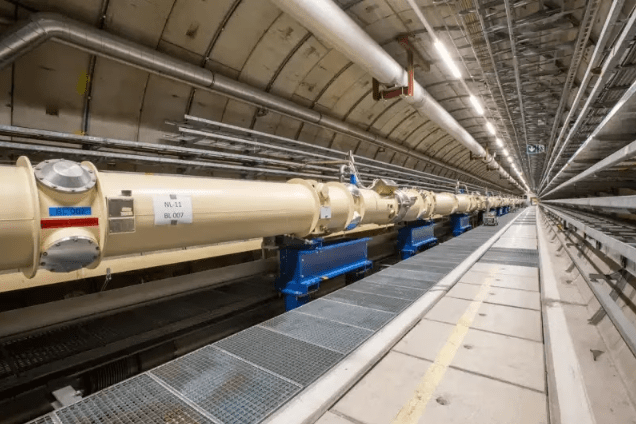
Magnet row of the ALPS experiment in the HERA tunnel: In this part of the magnets, intense laser light is reflected back and forth, from which axions are supposed to form. Credit: DESY, Marta Maye
Topics: Dark Matter, Materials Science, Particle Physics, Quantum Mechanics
The ALPS (Any Light Particle Search) experiment, which stretches a total length of 250 meters, is looking for a particularly light type of new elementary particle. Using twenty-four recycled superconducting magnets from the HERA accelerator, an intense laser beam, precision interferometry, and highly sensitive detectors, the international research team wants to search for these so-called axions or axion-like particles.
Such particles are believed to react only extremely weakly with known kinds of matter, which means they cannot be detected in experiments using accelerators. ALPS is therefore resorting to an entirely different principle to detect them: in a strong magnetic field, photons—i.e., particles of light—could be transformed into these mysterious elementary particles and back into [light] again.
“The idea for an experiment like ALPS has been around for over 30 years. By using components and the infrastructure of the former HERA accelerator, together with state-of-the-art technologies, we are now able to realize ALPS II in an international collaboration for the first time,” says Beate Heinemann, Director of Particle Physics at DESY.
Helmut Dosch, Chairman of DESY’s Board of Directors, adds, “DESY has set itself the task of decoding matter in all its different forms. So ALPS II fits our research strategy perfectly, and perhaps it will push open the door to dark matter.”
The ALPS team sends a high-intensity laser beam along a device called an optical resonator in a vacuum tube, approximately 120 meters in length, in which the beam is reflected backward and forwards and is enclosed by twelve HERA magnets arranged in a straight line. If a photon were to turn into an axion in the strong magnetic field, that axion could pass through the opaque wall at the end of the line of magnets.
Once through the wall, it would enter another magnetic track almost identical to the first. Here, the [axion] could then change back into a photon, which would be captured by the detector at the end. A second optical resonator is set up here to increase the probability of an [axion[ turning back into a photon by a factor of 10,000.
This means if [light] does arrive behind the wall, it must have been an axion in between. “However, despite all our technical tricks, the probability of a photon turning into an axion and back again is very small,” says DESY’s Axel Lindner, project leader and spokesperson of the ALPS collaboration, “like throwing 33 dice and them all coming up the same.”
In order for the experiment to actually work, the researchers had to tweak all the different components of the apparatus to maximum performance. The light detector is so sensitive that it can detect a single photon per day. The precision of the system of mirrors for the light is also record-breaking: the distance between the mirrors must remain constant to within a fraction of an atomic diameter relative to the wavelength of the laser.
Summary of Terrorism-Related Threat to the United States
The United States remains in a heightened threat environment. Lone offenders and small groups motivated by a range of ideological beliefs and personal grievances continue to pose a persistent and lethal threat to the Homeland. Both domestic violent extremists (DVEs) and those associated with foreign terrorist organizations continue to attempt to motivate supporters to conduct attacks in the Homeland, including through violent extremist messaging and online calls for violence. In the coming months, factors that could mobilize individuals to commit violence include their perceptions of the 2024 general election cycle and legislative or judicial decisions pertaining to sociopolitical issues. Likely targets of potential violence include US critical infrastructure, faith-based institutions, individuals or events associated with the LGBTQIA+ community, schools, racial and ethnic minorities, and government facilities and personnel, including law enforcement.
Duration
Issued: May 24, 2023, at 2:00 PM ET
Expires: November 24, 2023, at 2:00 PM ET
Roads, bridges, mall outlets, power stations; churches, mosques, synagogues, temples; drag shows, pride parades, nightclubs; K-12, community colleges and universities; every BIPOC, even those like the gunman in Allen, Texas, who was Hispanic and sympathized with white supremacist propaganda enough to kill; the Post Office, Police Departments, the FBI; and where you and I work.
A Big Lie about an election that was lost, not RIGGED, has put a target on all of our backs. Our so-called representatives only offer “thoughts and prayers” after every gun massacre, but will not propose legislation, will not even propose liability insurance, like the kind we have on cars, for the small percentage of us that insists on collecting arsenals. It’s as if they WANT this “American carnage” to usher in something darker, like Kristallnacht, like fascism. America was a refuge for Stephen Miller’s grandfather and Albert Einstein during the Nazi pogroms. Will Canada be a refuge for American Christian nationalist pogroms?
Here’s some thoughts I’ve been mulling for a while, and I would like to forward them now:
One: Fascism doesn’t stop with your favorite “out-group.”
I have African American friends in my community that use the Bible to legitimize their bigotry toward LGBTQ+ people. My own epiphany happened during a diversity class in the 1990s when the professor asked one of the attendees a question: “Mr. _______, do you CARE where Mr. ______’s spermatozoa are deposited tonight?”
The second Mr. ______ is me, to whom the blunt and salacious question was directed. The technique was to make the first man think: are you overconcerned with his sexual practices? My oldest son was 11, and my youngest son was 1 at the time. Continuing the thought experiment: Does it matter to your heterosexual relationship? If it does, either you or your wife is closeted. James Baldwin was a close friend of Medgar Evers, Malcolm X, and Dr. Martin Luther King Jr. Lorraine Hansberry, author of “A Raisin in the Sun,” was a closeted lesbian due to the times. Pauli Murray was also a closeted lesbian, lawyer, and civil rights activist. Bayard Rustin, a gay man, was one of Dr. King’s closest advisors and the chief organizer of the March on Washington in August 1963. See SPLC: Learning for Justice.
Two: Everyone needs a “green book” plan.
My mother graduated from a school in Philadelphia, Pennsylvania, for “Practical Nursing,” similar to an Associate’s Degree now. She. and my father used a green book, a guide to let them know on long trips where to get gas, where to stop to eat, where to go to the bathroom, and where to sleep. In the 1950s, they NEEDED this to get from Winston-Salem, North Carolina, to Philly and BACK. It worked because otherwise, I would not be typing this blog. Our risk is not due to a preponderance of Melanin only. It is all public places now.
Do you speak another language? Is your passport current or expired? Part of our “green book” may be in formulating an exit plan. When all “hell is breaking loose,” it’s a little late.
Three: The State owning women’s bodies is fascism.
The Nazi regime encouraged the birth of children deemed “racially valuable” in order to increase Germany’s “Aryan” population. This campaign closely reflected the regime’s racial ideology and theories of eugenics. The Lebensborn program was designed by the SS to increase Germany’s declining birthrate. It was originally intended to provide pregnant “Aryan” women with financial assistance, adoption services, and a series of private maternity homes where they could give birth. By the end of World War II, Lebensborn became involved in the Nazi regime’s systematic kidnapping of thousands of “biologically valuable” foreign children to be raised in German homes. Source: United States Holocaust Memorial Museum
In Russia, they are kidnapping Ukrainian children and spiriting them to Moscow. In America, six anti-Christian Mullahs overturned 50 years of precedent to induce forced births because of a demographic that is itself a chimera: if so-called “white” people had its origin in the Bacon’s Rebellion of 1681, codified in the first Census of 1790, counting “free whites, all other free persons, and slaves,” The Chinese Exclusion Act of 1882, barring their immigration to the United States for ten years, all categories of humans in the United States are the product of government fiat to justify hierarchy for the purpose of theft from the masses. Dr. Alan Goodman said “race is the power of an illusion.” For the Christian nationalists: “And He has made from one BLOOD every nation of men to dwell on all the face of the earth, and has determined their preappointed times and the boundaries of their dwellings,” Acts 17:26. Therefore, you cannot be “replaced” if you never really existed beyond being a variation of humans. This was the first Big Lie.
Four: Vote early; don’t show bumper stickers, flags, or paraphernalia.
In Austin, Texas, during the 2008 elections, a neighbor was such an Obama fan he paid $5,000 for him and his wife to shake the future president’s hand. He had as large a banner touting Obama-Biden on his front lawn as our neighbor (nearer me) did for the 2004 election with Bush-Cheney. The Obama-Biden sign was vandalized with the n-word and swastikas; nothing happened to Bush-Cheney (there’s a double entendre in there). Ahem: This happened in the waning days of the “compassionate conservatism” era, the gateway drug before Christian nationalism.
It’s obvious the incident was instructive to me. I give to the party I see upholding The Constitution, but I don’t sport the “swag.” Some might derisively call what I’m suggesting “respectability politics.” I have called it survival for my many trips around the sun, here billions of years before my birth, and will be here billions more after my death.
I appreciate the Department of Homeland Security’s warning, but I’ve been aware of this extremism since before one of the political parties nominated and elected a demagogue.
I have been on this Earth for sixty-one years. As a black man, I have never felt “free.”
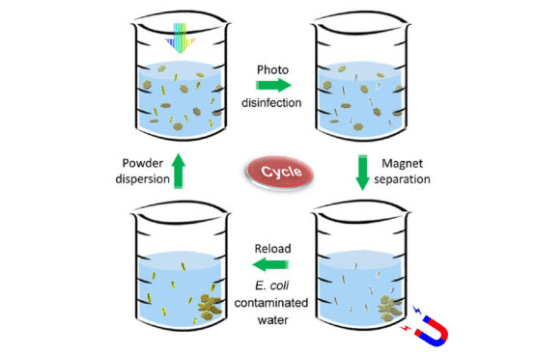
The disinfectant powder is stirred in bacteria-contaminated water (upper left). The mixture is exposed to sunlight, which rapidly kills all the bacteria (upper right). A magnet collects the metallic powder after disinfection (lower right). The powder is then reloaded into another beaker of contaminated water, and the disinfection process is repeated (lower left). (Image credit: Tong Wu/Stanford University)
When exposed to sunlight, a low-cost, recyclable powder can kill thousands of waterborne bacteria per second. Stanford and SLAC scientists say the ultrafast disinfectant could be a revolutionary advance for 2 billion people worldwide without access to safe drinking water.
At least 2 billion people worldwide routinely drink water contaminated with disease-causing microbes.
Now, scientists at Stanford University and SLAC National Accelerator Laboratory have invented a low-cost, recyclable powder that kills thousands of waterborne bacteria per second when exposed to ordinary sunlight. The discovery of this ultrafast disinfectant could be a significant advance for nearly 30 percent of the world’s population with no access to safe drinking water, according to the Stanford and SLAC team. Their results are published in a May 18 study in Nature Water.
“Waterborne diseases are responsible for 2 million deaths annually, the majority in children under the age of 5,” said study co-lead author Tong Wu, a former postdoctoral scholar of materials science and engineering (MSE) at the Stanford School of Engineering. “We believe that our novel technology will facilitate revolutionary changes in water disinfection and inspire more innovations in this exciting interdisciplinary field.”
Conventional water-treatment technologies include chemicals, which can produce toxic byproducts, and ultraviolet light, which takes a relatively long time to disinfect and requires a source of electricity.
The new disinfectant developed at Stanford is a harmless metallic powder that works by absorbing both UV and high-energy visible light from the sun. The powder consists of nano-size flakes of aluminum oxide, molybdenum sulfide, copper, and iron oxide.
“We only used a tiny amount of these materials,” said senior author Yi Cui, the Fortinet Founders Professor of MSE and of Energy Science & Engineering in the Stanford Doerr School of Sustainability. “The materials are low cost and fairly abundant. The key innovation is that, when immersed in water, they all function together.”
The LRESE parabolic dish: the solar reactor converts solar energy to hydrogen with an efficiency of more than 20%, producing around 0.5 kg of “green” hydrogen per day. (Courtesy: LRESE EPFL)
Topics: Applied Physics, Energy, Environment, Research, Solar Power
A new solar-radiation-concentrating device produces “green” hydrogen at a rate of more than 2 kilowatts while maintaining efficiencies above 20%. The pilot-scale device, which is already operational under real sunlight conditions, also produces usable heat and oxygen, and its developers at the École Polytechnique Fédérale de Lausanne (EPFL) in Switzerland say it could be commercialized in the near future.
The new system sits on a concrete foundation on the EPFL campus and consists of a parabolic dish seven meters in diameter. This dish collects sunlight over a total area of 38.5 m2, concentrates it by a factor of about 1000, and directs it onto a reactor that comprises both photovoltaic and electrolysis components. Energy from the concentrated sunlight generates electron-hole pairs in the photovoltaic material, which the system then separates and transports to the integrated electrolysis system. Here, the energy is used to “split” water that is pumped through the system at an optimal rate, producing both oxygen and hydrogen.
Putting it together at scale
Each of these processes has, of course, been demonstrated before. Indeed, the new EPFL system, which is described in Nature Energy, builds on previous research from 2019, when the EPFL team demonstrated the same concept at a laboratory scale using a high-flux solar simulator. However, the new reactor’s solar-to-hydrogen efficiency and hydrogen production rate of around 0.5 kg per day is unprecedented in large-scale devices. The reactor also produces usable heat at a temperature of 70°C.
The versatility of the new system forms a big part of its commercial appeal, says Sophia Haussener, who leads the EPFL’s Laboratory of Renewable Energy Science and Engineering (LRESE). “This co-generation system could be used in industrial applications such as metal processing and fertilizer manufacturing,” Haussener tells Physics World. “It could also be used to produce oxygen for use in hospitals and hydrogen for fuels cells in electric vehicles, as well as heat in residential settings for heating water. The hydrogen produced could also be converted to electricity after being stored between days or even inter-seasonally.”
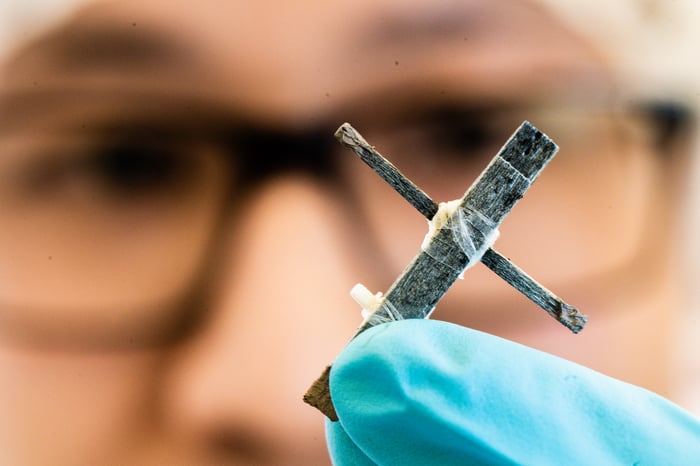
Modified wood modulates electrical current: researchers at Linköping University, together with colleagues from the KTH Royal Institute of Technology, have developed the world’s first electrical transistor made of wood. (Courtesy: Thor Balkhed)
Topics: Applied Physics, Biomimetics, Electrical Engineering, Materials Science, Research
Researchers in Sweden have built a transistor out of a plank of wood by incorporating electrically conducting polymers throughout the material in a way that retains space for an ionically conductive electrolyte. The new technique makes it possible, in principle, to use wood as a template for numerous electronic components, though the Linköping University team acknowledges that wood-based devices cannot compete with traditional circuitry on speed or size.
Led by Isak Engquist of Linköping’s Laboratory for Organic Electronics, the researchers began by removing the lignin from a plank of balsa wood (chosen because it is grainless and evenly structured) using a NaClO2 chemical and heat treatment. Since lignin typically constitutes 25% of wood, removing it creates considerable scope for incorporating new materials into the structure that remains.
The researchers then placed the delignified wood in a water-based dispersion of an electrically conducting polymer called poly(3,4-ethylene-dioxythiophene)–polystyrene sulfonate, or PEDOT: PSS. Once this polymer diffuses into the wood, the previously insulating material becomes a conductor with an electrical conductivity of up to 69 Siemens per meter – a phenomenon the researchers attribute to the formation of PEDOT: PSS microstructures inside the 3D wooden “scaffold.”
Next, Engquist and colleagues constructed a transistor using one piece of this treated balsa wood as a channel and additional pieces on either side to form a double transistor gate. They also soaked the interface between the gates and channels in an ion-conducting gel. In this arrangement, known as an organic electrochemical transistor (OECT), applying a voltage to the gate(s) triggers an electrochemical reaction in the channel that makes the PEDOT molecules non-conducting and therefore switches the transistor off.
Topics: Civics, Civil Rights, Civilization, Dark Side, Democracy, Existentialism, Fascism, Human Rights
2 Timothy 3:1 This know also, that in the last days perilous times shall come.
This is NOT an eschatology blog. The second verse is a common cudgel to the LGBT community, bellowed from the pulpits of soon-discovered closeted pastors. Several laws are passed to ban drag shows, as in North Carolina, but not a peep about gun massacres. Guns with muzzle velocities of 1,006 meters per second, or 3,300 feet per second, eviscerate human flesh to unrecognizability. There were two mass shootings back-to-back in San Antonio, Texas. Merriam-Webster list ominously 66 synonyms for “perilous,” some of which are: dangerous, serious, treacherous, unhealthy, grievous: and fatal.
Culture wars are NOT designed to solve anything. They are designed to concern, enrage, and engage the reptilian part of the brain that leaps at every shadow and requires long rifles to go into Starbucks, libraries, or drag shows because of “freedom.” Banning books, drag shows, and being anti “woke” are solutions in search of nonexistent problems.
What does a Constitutional Crisis look like? Yesterday, in the Orwellian committee, Jim Jordan ostensibly “leads,” is government-paid gaslighting. The whistleblowers brought before the sham committee lost their security clearances, each for a cause. One refused to arrest a January 6th terrorist because he “didn’t agree that he should be arrested.” Getting fired for cause in at-will states used to be a very Republican viewpoint. The current Congress majority in the House is not Republican.
As Representative Stacey Plaskett, the lawyer Jim Jordan pretends to be pointed out, he and the committee are the 45th president’s defense lawyers. His last one quit after dim bulb blurted out in the Cable, Not News fascist rally, “I took the documents; I’m allowed to,” oblivious to the fact every statement, every tweet, every “truth” on his knockoff website is a documented confession. Meanwhile, Jim Jordan screamed like a banshee when Representative Daniel Goldman, another lawyer Jim Jordan is not,read him the House rules on whistleblowers. Jim has a Juris Doctorate but never took the bar. It shows. He would have to study instead of ranting and Spitballing.
What does a Constitutional Crisis look like? Seventy-two percent of Americans feel birth control should be [a] legal right women in this nation should have. Seventy-one percent want gun laws to be stricter. In both cases, a majority of citizens want something that the bureaucracy of government hems up in red tape where it dies in committee.
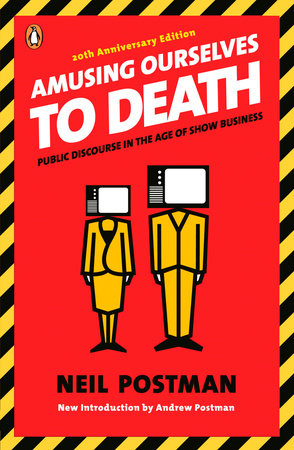
What does a Constitutional Crisis look like? Christiane Amanpour, in a commencement address to Columbia, blasted her employer’s decision in a proper British accent to platform a psychopathic fascist in prime time, as she said, respectfully disagreeing with clueless, paste-eating CEO Chris Licht. She showed more backbone than Anderson Cooper chastising his dwindling audience, and Jack Tapper, trying to make the Durham report more than the flaccid “bombshell” it was, to suck up to the Sith overlords of the Cable, Not News network. I’ve eliminated the app from my phone and blocked the CNN Politics alerts on my iPhone. I see no more reason to watch it than I saw to abuse myself on Fox with Bill O’Reilly, Glenn Beck, Meghan Kelly, Tucker Carlson, and soon Sean Hannity violated the third rule for Mogwai every night, instead of midnight, at 8:00 pm. When Amanpour is CEO, and CNN returns to being “the most trusted name in news,” maybe I’ll return. Neil Postman was a prophet.
We have a Supreme Court that is neither. Trust in our institutions is at an all-time low as John Roberts “whistles past the graveyard” of our federal republic, allowing the extremist more extreme than HIM to steamroll him from an intolerable 15-week ban to torching Stare decisis. When a small minority of gun owners holds the country in an ongoing hostage crisis, when women lose a right that’s been with them for two generations, when the highest court in the land might as well wear jerseys with logos from the billionaire who pay for their vacation junkets, we don’t have to keep asking what a Constitutional Crisis looks like. The crisis is staring us in the face as we look away from it.
If the current administration doesn’t win in 2024, the party that comes to power might shred what is left of The Constitution and declare it too “woke” for display, to follow, or study. At that point, we devolve from lawyers to Bronze Age Scribes. At that point: we’ve devolved from a republic to sovereignty and fascism. King George, in the end, would have won.
No need to study the LSAT or pass the bar: just Spitball.
2 Timothy 3:1 This know also, that in the last days perilous times shall come.
Synonyms of perilous: dangerous, serious, treacherous, unhealthy, grievous: fatal.
The new composition for fluorine-containing electrolytes promises to maintain high battery charging performance for future electric vehicles even at sub-zero temperatures. (Image by Shutterstock.)
Topics: Battery, Chemistry, Climate Change, Global Warming, Lithium, Materials Science
Scientists developed a new and safer electrolyte for lithium-ion batteries that work as well in sub-zero conditions as it does at room temperature.
Many owners of electric vehicles worry about how effective their batteries will be in very cold weather. Now new battery chemistry may have solved that problem.
In current lithium-ion batteries, the main problem lies in the liquid electrolyte. This key battery component transfers charge-carrying particles called ions between the battery’s two electrodes, causing the battery to charge and discharge. But the liquid begins to freeze at sub-zero temperatures. This condition severely limits the effectiveness of charging electric vehicles in cold regions and seasons.
To address that problem, a team of scientists from the U.S. Department of Energy’s (DOE) Argonne and Lawrence Berkeley national laboratories developed a fluorine-containing electrolyte that performs well even in sub-zero temperatures.
“Our research thus demonstrated how to tailor the atomic structure of electrolyte solvents to design new electrolytes for sub-zero temperatures.” — John Zhang, Argonne group leader.
“Our team not only found an antifreeze electrolyte whose charging performance does not decline at minus 4 degrees Fahrenheit, but we also discovered, at the atomic level, what makes it so effective,” said Zhengcheng “John” Zhang, a senior chemist and group leader in Argonne’s Chemical Sciences and Engineering division.
This low-temperature electrolyte shows promise of working for batteries in electric vehicles, as well as in energy storage for electric grids and consumer electronics like computers and phones.
Fractals are a never-ending pattern that you can zoom in on, and the image doesn’t change. Fractals can occur in two dimensions, like frost on a window, or in three dimensions, like the limbs of a tree. A recent discovery from Purdue University researchers has established that superconducting images, seen above in red and blue, are actually fractals that fill a three-dimensional space and are disorder driven rather than driven by quantum fluctuations as expected. Frost and tree images by Adobe. Superconducting image (center) from “Critical nematic correlations throughout the superconducting doping range in Bi2-xPbzSr2-yLayCuO6+x” in Nature Communications. Credit: Nature Communications (2023). DOI: 10.1038/s41467-023-38249-3
Meeting the world’s energy demands is reaching a critical point. Powering the technological age has caused issues globally. It is increasingly important to create superconductors that can operate at ambient pressure and temperature. This would go a long way toward solving the energy crisis.
Advancements with superconductivity hinge on advances in quantum materials. When electrons inside quantum materials undergo a phase transition, the electrons can form intricate patterns, such as fractals. A fractal is a never-ending pattern. When zooming in on a fractal, the image looks the same. Commonly seen fractals can be a tree or frost on a windowpane in winter. Fractals can form in two dimensions, like the frost on a window, or in three-dimensional space, like the limbs of a tree.
Dr. Erica Carlson, a 150th Anniversary Professor of Physics and Astronomy at Purdue University, led a team that developed theoretical techniques for characterizing the fractal shapes that these electrons make in order to uncover the underlying physics driving the patterns.
Carlson, a theoretical physicist, has evaluated high-resolution images of the locations of electrons in the superconductor Bi2-xPbzSr2-yLayCuO6+x (BSCO) and determined that these images are indeed fractal and discovered that they extend into the full three-dimensional space occupied by the material, like a tree filling space.
What was once thought of as random dispersions within the fractal images are purposeful and, shockingly, not due to an underlying quantum phase transition as expected but due to a disorder-driven phase transition.
Carlson led a collaborative team of researchers across multiple institutions and published their findings, titled “Critical nematic correlations throughout the superconducting doping range in Bi2-xPbzSr2-yLayCuO6+x,” in Nature Communications.
The team includes Purdue scientists and partner institutions. From Purdue, the team includes Carlson, Dr. Forrest Simmons, a recent Ph.D. student, and former Ph.D. students Dr. Shuo Liu and Dr. Benjamin Phillabaum. The Purdue team completed their work within the Purdue Quantum Science and Engineering Institute (PQSEI). The team from partner institutions includes Dr. Jennifer Hoffman, Dr. Can-Li Song, Dr. Elizabeth Main of Harvard University, Dr. Karin Dahmen of the University of Illinois at Urbana-Champaign, and Dr. Eric Hudson of Pennsylvania State University.
Topics: Modern Physics, Particle Physics, Quantum Mechanics, Theoretical Physics
Quantum entanglement is a complex phenomenon in physics that is usually poorly described as an invisible link between distant quantum objects that allows one to instantly affect the other. Albert Einstein famously dismissed this idea of entanglement as “spooky action at a distance.” In reality, entanglement is better understood as information, but that’s admittedly bland. So nowadays, every news article, explainer, opinion piece, and artistic interpretation of quantum entanglement equates the phenomenon with Einstein’s spookiness. The situation has only worsened with the 2022 Nobel Prize in Physics going to Alain Aspect, John F. Clauser, and Anton Zeilinger for quantum entanglement experiments. But it’s time to cut this adjective loose. Calling entanglement spooky completely misrepresents how it actually works and hinders our ability to make sense of it.
In 1935, physicist Erwin Schrödinger coined the term entanglement, emphasizing that it was “not one but rather the characteristic trait of quantum mechanics, the one that enforces its entire departure from classical lines of thought.” He was writing in response to a famous paper (known simply to physicists as the EPR argument) by Einstein, Boris Podolsky, and Nathan Rosen that claimed quantum physics was incomplete. The New York Times headline read, “Einstein attacks quantum theory,” which solidified the widespread perception that Einstein hated quantum physics.
The EPR argument concerns the everyday notion of reality as a collection of things in the world with physical properties waiting to be revealed through measurement. This is how most of us intuitively understand reality. Einstein’s theory of relativity fits into this understanding and says reality must be local, meaning nothing can influence anything else faster than the speed of light. But EPR showed that quantum physics isn’t compatible with these ideas—that it can’t account for a theory of local reality. In other words, quantum physics was missing something. To complete quantum physics, Einstein suggested scientists should look for a “deeper” theory of local reality. Many physicists responded in defense of quantum theory, but the matter remained unresolved until 1964 when physicist John S. Bell proposed an experiment that could rule out the existence of local reality. Clauser was the first to perform the test, which was later improved and perfected by Aspect and Zeilinger.





 Physics and Nano