PAC1R-expressing dorsal raphe neurons in the mouse brain (red) serve as the projection targets for PACAP parabrachial neurons to mediate panic-like behavioral and physical symptoms. Credit: Salk Institute Topics: Biology, Medicine, Research, Science Overwhelming fear, sweaty palms, shortness of breath, rapid heart rate—these are the symptoms of a panic attack, which people with panic disorderContinue reading “A Path From Panic…”
Category Archives: Research
Anthrobots…
An Anthrobot is shown, depth colored, with a corona of cilia that provides locomotion for the bot. Credit: Gizem Gumuskaya, Tufts University Topics: Applied Physics, Biology, Biomimetics, Biotechnology, Research, Robotics Researchers at Tufts University and Harvard University’s Wyss Institute have created tiny biological robots that they call Anthrobots from human tracheal cells that can moveContinue reading “Anthrobots…”
Dark Matter, Ordinary Matter…
Topics: Astronomy, Astrophysics, Dark Matter, Research, Theoretical Physics Dark matter, composed of particles that do not reflect, emit, or absorb light, is predicted to make up most of the matter in the universe. However, its lack of interactions with light prevents its direct detection using conventional experimental methods. Physicists have been trying to devise alternativeContinue reading “Dark Matter, Ordinary Matter…”
Pines’ Demon…
Lurking for decades: researchers have discovered Pines’ demon, a collection of electrons in a metal that behaves like a massless wave. It is illustrated here as an artist’s impression. (Courtesy: The Grainger College of Engineering/University of Illinois Urbana-Champaign) Topics: Particle Physics, Quantum Mechanics, Research, Solid-State Physics, Theoretical Physics For nearly seven decades, a plasmon knownContinue reading “Pines’ Demon…”
Polluting the Pristine…
The sea floor near Australia’s Casey station in Antarctica has been found to have levels of pollution comparable to those in Rio de Janeiro’s harbor. Credit: Torsten Blackwood/AFP via Getty Topics: Antarctica, Biology, Chemistry, Environment, Physics, Research Antarctica is often described as one of the most pristine places in the world, but it has aContinue reading “Polluting the Pristine…”
Quantum Vortexes…
A new study by KTH Royal Institute of Technology and Stanford University revises of our understanding of quantum vortices in superconductors. Pictured, an artist’s depiction of quantum vortices. Credit: Greg Stewart, SLAC National Accelerator Laboratory Topics: Modern Physics, Quantum Mechanics, Research, Superconductors Within superconductors little tornadoes of electrons, known as quantum vortices, can occur, whichContinue reading “Quantum Vortexes…”
X-rays, Bond Breaks, and Climate…
An X-ray flash illuminates a molecule. Credit: Raphael Jay Topics: Chemistry, Climate Change, Green Tech, High Energy Physics, Research, X-rays The use of short flashes of X-ray light brings scientists one big step closer to developing better catalysts to transform the greenhouse gas methane into a less harmful chemical. The result, published in the journal Science,Continue reading “X-rays, Bond Breaks, and Climate…”
Organic Solar Cells…
Prof. Li Gang invented a novel technique to achieve breakthrough efficiency with organic solar cells. Credit: Hong Kong Polytechnic University Topics: Chemistry, Green Tech, Materials Science, Photonics, Research, Solar Power Researchers from The Hong Kong Polytechnic University (PolyU) have achieved a breakthrough power-conversion efficiency (PCE) of 19.31% with organic solar cells (OSCs), also known asContinue reading “Organic Solar Cells…”
Solar…
The LRESE parabolic dish: the solar reactor converts solar energy to hydrogen with an efficiency of more than 20%, producing around 0.5 kg of “green” hydrogen per day. (Courtesy: LRESE EPFL) Topics: Applied Physics, Energy, Environment, Research, Solar Power A new solar-radiation-concentrating device produces “green” hydrogen at a rate of more than 2 kilowatts whileContinue reading “Solar…”
Balsa Chips…
Modified wood modulates electrical current: researchers at Linköping University, together with colleagues from the KTH Royal Institute of Technology, have developed the world’s first electrical transistor made of wood. (Courtesy: Thor Balkhed) Topics: Applied Physics, Biomimetics, Electrical Engineering, Materials Science, Research Researchers in Sweden have built a transistor out of a plank of wood byContinue reading “Balsa Chips…”
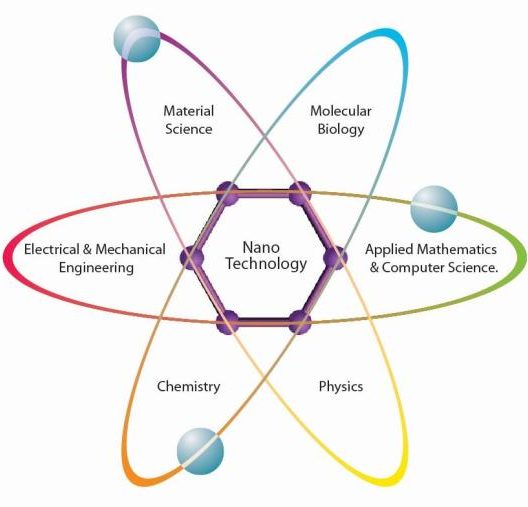
 Physics and Nano