"The one exclusive sign of thorough knowledge is the power of teaching." Aristotle | Disclaimer: The views and opinions expressed on this Wordpress website are the views and opinions of the content creator, Dr. Reggie Goodwin, and should not be construed as shared, or sourced from The Environmental Protection Agency, or any organizations with which they have cooperative, or business relationships.
Moungi G. Bawendi Massachusetts Institute of Technology (MIT), Cambridge, MA, USA
Louis E. Brus Columbia University, New York, NY, USA
Alexei I. Ekimov Nanocrystals Technology Inc., New York, NY, USA
“for the discovery and synthesis of quantum dots”
They planted an important seed for nanotechnology
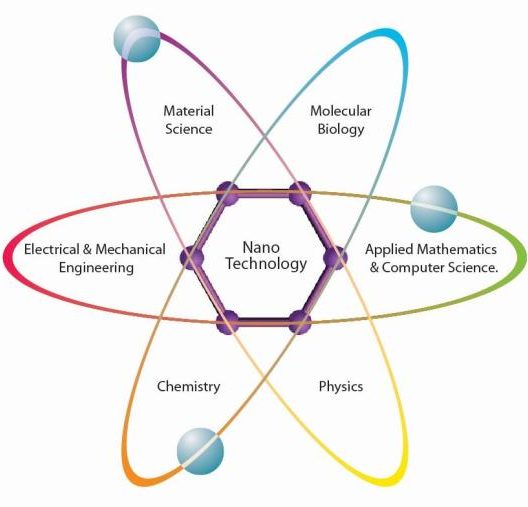
The Nobel Prize in Chemistry 2023 rewards the discovery and development of quantum dots, nanoparticles so tiny that their size determines their properties. These smallest components of nanotechnology now spread their light from televisions and LED lamps and can also guide surgeons when they remove tumor tissue, among many other things.
Everyone who studies chemistry learns that an element’s properties are governed by how many electrons it has. However, when matter shrinks to nano-dimensions, quantum phenomena arise; these are governed by the size of the matter. The Nobel Laureates in Chemistry 2023 have succeeded in producing particles so small that their properties are determined by quantum phenomena. The particles, which are called quantum dots, are now of great importance in nanotechnology.
“Quantum dots have many fascinating and unusual properties. Importantly, they have different colors depending on their size,” says Johan Åqvist, Chair of the Nobel Committee for Chemistry.
Physicists had long known that, in theory, size-dependent quantum effects could arise in nanoparticles, but at that time, it was almost impossible to sculpt in nanodimensions. Therefore, few people believed that this knowledge would be put to practical use.
However, in the early 1980s, Alexei Ekimov succeeded in creating size-dependent quantum effects in colored glass. The color came from nanoparticles of copper chloride, and Ekimov demonstrated that the particle size affected the color of the glass via quantum effects.
A few years later, Louis Brus was the first scientist in the world to prove size-dependent quantum effects in particles floating freely in a fluid.
In 1993, Moungi Bawendi revolutionized the chemical production of quantum dots, resulting in almost perfect particles. This high quality was necessary for them to be utilized in applications.
Pierre Agostini The Ohio State University, Columbus, USA
Ferenc Krausz Max Planck Institute of Quantum Optics, Garching and Ludwig-Maximilians-Universität München, Germany
Anne L’Huillier Lund University, Sweden
“for experimental methods that generate attosecond pulses of light for the study of electron dynamics in matter.”
Experiments with light capture the shortest of moments
The three Nobel Laureates in Physics 2023 are being recognized for their experiments, which have given humanity new tools for exploring the world of electrons inside atoms and molecules. Pierre Agostini, Ferenc Krausz, and Anne L’Huillier have demonstrated a way to create extremely short pulses of light that can be used to measure the rapid processes in which electrons move or change energy.
Fast-moving events flow into each other when perceived by humans, just like a film that consists of still images is perceived as a continual movement. If we want to investigate really brief events, we need special technology. In the world of electrons, changes occur in a few tenths of an attosecond – an attosecond is so short that there are as many in one second as there have been seconds since the birth of the universe.
The laureates’ experiments have produced pulses of light so short that they are measured in attoseconds, thus demonstrating that these pulses can be used to provide images of processes inside atoms and molecules.
In 1987, Anne L’Huillier discovered that many different overtones of light arose when she transmitted infrared laser light through a noble gas. Each overtone is a light wave with a given number of cycles for each cycle in the laser light. They are caused by the laser light interacting with atoms in the gas; it gives some electrons extra energy that is then emitted as light. Anne L’Huillier has continued to explore this phenomenon, laying the ground for subsequent breakthroughs.
In 2001, Pierre Agostini succeeded in producing and investigating a series of consecutive light pulses, in which each pulse lasted just 250 attoseconds. At the same time, Ferenc Krausz was working with another type of experiment, one that made it possible to isolate a single light pulse that lasted 650 attoseconds.
The laureates’ contributions have enabled the investigation of processes that are so rapid they were previously impossible to follow.
“We can now open the door to the world of electrons. Attosecond physics gives us the opportunity to understand mechanisms that are governed by electrons. The next step will be utilizing them,” says Eva Olsson, Chair of the Nobel Committee for Physics.
for their discoveries concerning nucleoside base modifications that enabled the development of effective mRNA vaccines against COVID-19
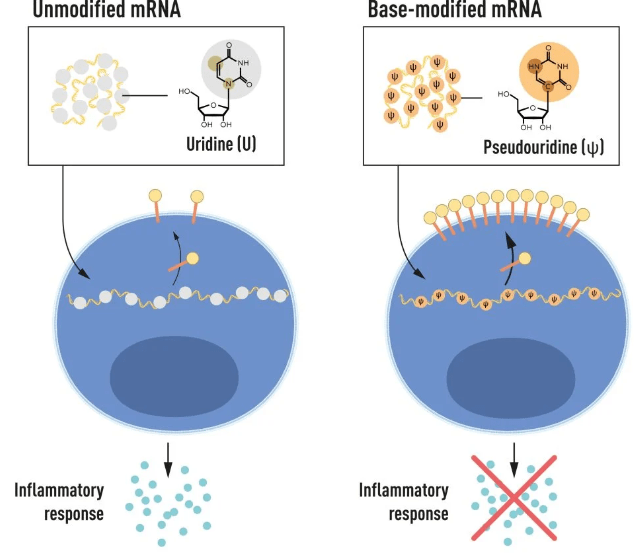
The discoveries by the two Nobel Laureates were critical for developing effective mRNA vaccines against COVID-19 during the pandemic that began in early 2020. Through their groundbreaking findings, which have fundamentally changed our understanding of how mRNA interacts with our immune system, the laureates contributed to the unprecedented rate of vaccine development during one of the greatest threats to human health in modern times.
mRNA vaccines: A promising idea
In our cells, genetic information encoded in DNA is transferred to messenger RNA (mRNA), which is used as a template for protein production. During the 1980s, efficient methods for producing mRNA without cell culture were introduced, called in vitro transcription. This decisive step accelerated the development of molecular biology applications in several fields. Ideas of using mRNA technologies for vaccine and therapeutic purposes also took off, but roadblocks lay ahead. In vitro transcribed mRNA was considered unstable and challenging to deliver, requiring the development of sophisticated carrier lipid systems to encapsulate the mRNA. Moreover, in vitro-produced mRNA gave rise to inflammatory reactions. Enthusiasm for developing the mRNA technology for clinical purposes was, therefore, initially limited.
These obstacles did not discourage the Hungarian biochemist Katalin Karikó, who was devoted to developing methods to use mRNA for therapy. During the early 1990s, when she was an assistant professor at the University of Pennsylvania, she remained true to her vision of realizing mRNA as a therapeutic despite encountering difficulties in convincing research funders of the significance of her project. A new colleague of Karikó at her university was the immunologist Drew Weissman. He was interested in dendritic cells, which have important functions in immune surveillance and the activation of vaccine-induced immune responses. Spurred by new ideas, a fruitful collaboration between the two soon began, focusing on how different RNA types interact with the immune system.
Note: The Nobel Prize will be awarded starting Monday in Physiology, then Physics (my admitted favorite), Chemistry, Literature, Peace, and Economics the following Monday. Thus, the concentration of the postings will be Nobel as they post. I will be “nerding out.”
“There is a cult of ignorance in the United States, and there has always been. The strain of anti-intellectualism has been a constant thread winding [its way] through our political and cultural life, nurtured by the false notion that democracy means that ‘my ignorance is just as good as your knowledge.”
This is an often-used quote for memes from a longer essay by Isaac Asimov, who was at the time a professor of biochemistry at Boston University and the author of 212 books of science and science fiction (an interesting “side hustle”). I provided the link above and below, highlighted with his name. Dr. Asimov had much to say about the state of affairs as he saw it during my freshman year at North Carolina A&T State University in 1980. It was also the year the New York Times reported more black males in college than in the prison industrial complex. It was an election year and the year for the inaugural of 24-hour news media in Ted Turner’s Cable News Network (CNN), which birthed copycats Fox and MSNBC in 1996. It’s hard to imagine that before Ted’s innovation, television wasn’t a profit-making enterprise as much as a public service. Pundits didn’t wear their party affiliations on their sleeves or give “opinions” on the “news.” Mostly, they did not lie to their audiences to goose ratings either.
Asimov’s poignant observation of the phrase “Don’t trust anyone over 30” had to morph to “Don’t trust the experts” since Neverland never existed. The Second Law of Thermodynamics (the “arrow of time”) does, and did, meaning that those who gave that warning eventually would be untrustworthy after the “big 3-0.” Therefore, “Don’t trust the experts” became the foundation for railing against elites, which means anyone who goes to a library, pursues an education up to a terminal degree, or reads a book.
Experts created the Internet. Experts like “Hidden Figures” Mary Jackson, Katherine Johnson, and Dorothy Vaughan enabled the United States to get to the Moon (there would be no “SpaceX” without them). Experts like Dr. Kizzmekia Corbett were one of many who helped to utilize the mRNA technology for the vaccines used to fight the COVID-19 pandemic.
But “Don’t trust the experts,” a vapid slogan or talking point if there ever was one.
Sloganeering in the Cambridge Dictionary has a succinct and to-the-point definition: “trying to persuade people by repeating phrases instead of explaining your ideas.” It means the absence of an argument. Thus, there is a deliberate absence and avoidance of thinking or outlining to formulate a cogent framework, relying on volume and repetition so that others will begin following your “lead” from the sheer exhaustion of gaslighting.
*****
“I have a foreboding of an America in my children’s or grandchildren’s time — when the United States is a service and information economy; when nearly all the manufacturing industries have slipped away to other countries; when awesome technological powers are in the hands of a very few, and no one representing the public interest can even grasp the issues; when the people have lost the ability to set their own agendas or knowledgeably question those in authority; when, clutching our crystals and nervously consulting our horoscopes, our critical faculties in decline, unable to distinguish between what feels good and what’s true, we slide, almost without noticing, back into superstition and darkness…
The dumbing down of Americans is most evident in the slow decay of substantive content in the enormously influential media, the 30-second sound bites (now down to 10 seconds or less), lowest common denominator programming, credulous presentations on pseudoscience and superstition, but especially a kind of celebration of ignorance.” ― Carl Sagan, The Demon-Haunted World: Science as a Candle in the Dark
*****
Dr. Sagan published these words in 1995. Both authors’ works are still available years after their deaths.
Celebrating ignorance invariably leads to a cult of ignorance.
It is a cult of ignorance when expertise is assailed as bullying.
It is a cult of ignorance when your side can’t admit to losing the Civil War or a presidential election.
It is a cult of ignorance when Dr. Fauci, Senator Romney, the FBI, the CDC, elected officials, and VOLUNTEER election workers must shell out dollars to protect their families from raving lunatics who believe every conspiracy tall tale printed, uttered, tweeted, or truth-ed.
Climate scientists are experts, yet they cannot be believed if the stupefying mantra is to be obeyed. The war against experts has always baffled me. No couple during Braxton Hicks contractions wants an Appalachian folk medicine doctor like Granny from the “Beverly Hillbillies” applying moonshine and a hacksaw or Norm, the mailman from the sitcom “Cheers” to start spitballing and wing it through the full delivery.
But, “it’s the weather,” following the “Don’t trust the experts” mantra, despite new Hurricane Katrinas repeated since 2005 across the globe, fire seasons in California and Canada, and women never having complications from ectopic pregnancies, high blood pressure, depression, stillbirths that need intervention by what is now illegal in most neo-confederate states (“conservative” they are not) because of the “sanctity of life” until the children are old enough to be lead-sprayed by psychopaths. Because in terms of climate, some wish to induce the apocalypse, and because in terms of bodily autonomy, the stork brings all babies alive and well as requested to cisgender parents, and no “others.”
*****
I contend that the slogan “America’s right to know” is [a] meaningless one when we have an ignorant population and that the function of a free press is virtually zero when hardly anyone can read.
What shall we do about it?
We might begin by asking ourselves whether ignorance is so wonderful after all and whether it makes sense to denounce “elitism.”
I believe that every human being with a physically normal brain can learn a great deal and be surprisingly intellectual. I believe that what we badly need is [a] social approval of learning and social rewards for learning.
We can all be members of the intellectual elite, and then, will a phrase like “America’s right to know” and, indeed, any true concept of democracy have any meaning.
The sample return capsule from NASA’s OSIRIS-REx mission is seen shortly after touching down in the desert at the Department of Defense’s Utah Test and Training Range. Keegan Barber/NASA
Topics: Asteroids, Astrobiology, Astrophysics, NASA, Space Exploration
Scientists are exulting over the safe arrival of a canister containing about a cup’s worth of asteroid rocks, collected 200 million miles away, that landed in a Utah desert after a 7-year NASA mission sent to retrieve them.
The black pebbles and dirt are older than Earth and are undisturbed remnants of the solar system’s early days of planet formation. As part of an asteroid named Bennu, these rocks traveled unsullied through space for eons.
While bits of asteroids regularly fall to our planet as meteorites, scientists want to study pristine asteroid material, stuff that’s uncontaminated by our planet, to understand the early chemistry that might have contributed to the emergence of life.
This essay is derived from a creative work of the same title, posted on my poetry blog Monday.
Happy birthday, mom. I miss you.
Sixty years ago, you were thirty-eight years old. I was one year, one month, and one day old. I was apparently potty-trained, which I didn’t know until my big sister told me after I bragged that my granddaughter, your great-granddaughter, was potty-trained at two.
“We had cloth diapers back then. No one was playing with you, Reggie.”
I took this to mean the task of changing cloth diapers, flushing the load, and WASHING them was probably unpleasant. It also subtly suggests that disposable diapers stifle our development.
Twenty-two years ago this past Monday, a Saudi Sheik, Osama Bin Ladin, trained by the CIA when he was in the Mujahadeen, fighting a proxy war with Russia in Afghanistan, convinced 19 hijackers, 15 from his nation, to plunge top-filled planes into the Twin Towers, the Pentagon: Flight 93 was supposed to hit the Capitol, except for the passengers who decided to intervene, “let’s roll.” 3,000+ people died. The nation was terrorized.
On your birthday, four little black girls were murdered for the crime of singing in a choir, or, correction, PRACTICING to sing in a choir for a performance. It happened on your thirty-eighth birthday. It was a Sunday.
Monday, you and Pop had to go to work like it was “normal.” Violence has been normal for African Americans since the 13th Amendment ended enslavement (EXCEPT as a punishment for a crime: “wiggle room” that has been abused), the 14th gave us birthright citizenship, and the 15th gave at least our men, the right to vote. That was immediately thwarted in the aftermath of the antebellum South by naming the number of coins/marbles/soap bubbles in a bottle, poll taxes, tests to recite The Constitution (when civics knowledge for the average citizen – then, and now – would likely fail miserably).
You both had to drop me off at the sitter and hope to see me alive again and pretend, like every black person at the time, that this was “normal.”
“Two medical professionals, Dr. Elizabeth H. Blackburn and Dr. Carol W. Greider, Shared the Nobel Prize in Physiology and Medicine with Dr. Jack W. Szostak in 2009 “for the discovery of how chromosomes are protected by telomeres and the enzyme telomerase.”
“The long, thread-like DNA molecules that carry our genes are packed into chromosomes, the telomeres being the caps on their ends. Elizabeth Blackburn and Jack Szostak discovered that a unique DNA sequence in the telomeres protects the chromosomes from degradation. Carol Greider and Elizabeth Blackburn identified telomerase, the enzyme that makes telomere DNA. These discoveries explained how the ends of the chromosomes are protected by the telomeres and that they are built by telomerase.
“If the telomeres are shortened, cells age. Conversely, if telomerase activity is high, telomere length is maintained, and cellular senescence is delayed.”
Telomeres are shorter for African Americans, a byproduct of 400 years of racial terrorism.
We were, and are, terrorized for being human, for wanting what’s in The Constitution, for exercising our birthright citizenship. They want to take that away, too., for undocumented immigrants, then probably selective brown people who won’t vote for them. The Growth and Opportunity Project said they should reach out to African Americans, Asian Americans, Hispanic/Latino Americans, the LGBT, Women, and Youth to expand the party. They instead engage in “culture wars” that are silly, like fighting the banning of gas stoves (there isn’t one), the replacement of incandescent lights with more climate-friendly fluorescent or LED lights, and somehow, it’s outrageous to suggest limiting beer consumption (no one did).
I’m tired, momma.
September 11, 2001, Pop had been dead for two years. The boys were in fourth grade and college. They had questions. I had no answers, and I wanted to talk to Pop, but I couldn’t. Now I can’t talk to you.
As Americans finally experienced, on September 11, 2001, the psychological effects of the horrific fear of not knowing what calamity would end your existence.
Living in fear of being killed for the “sin” of being alive shortens your telomeres.
As my big sister observed: This country needs more cloth diapers for our development.
Happy Heavenly birthday, momma. I miss you. Love, “Stink.”
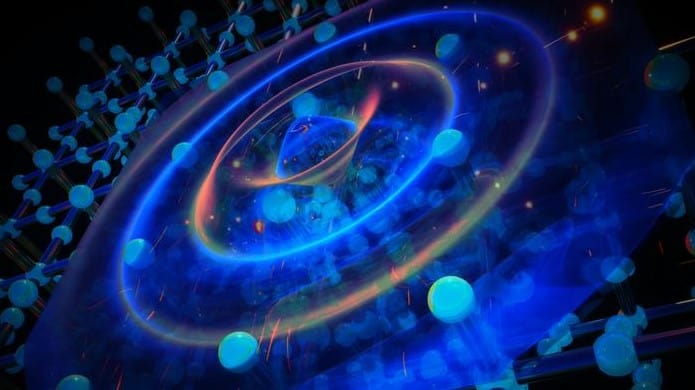
Lurking for decades: researchers have discovered Pines’ demon, a collection of electrons in a metal that behaves like a massless wave. It is illustrated here as an artist’s impression. (Courtesy: The Grainger College of Engineering/University of Illinois Urbana-Champaign)
For nearly seven decades, a plasmon known as Pines’ demon has remained a purely hypothetical feature of solid-state systems. Massless, neutral, and unable to interact with light, this unusual quasiparticle is reckoned to play a key role in certain superconductors and semimetals. Now, scientists in the US and Japan say they have finally detected it while using specialized electron spectroscopy to study the material strontium ruthenate.
Plasmons were proposed by the physicists David Pines and David Bohm in 1952 as quanta of collective electron density fluctuations in a plasma. They are analogous to phonons, which are quanta of sound, but unlike phonons, their frequency does not tend to zero when they have no momentum. That’s because finite energy is needed to overcome the Coulomb attraction between electrons and ions in a plasma in order to get oscillations going, which entails a finite oscillation frequency (at zero momentum).
Today, plasmons are routinely studied in metals and semiconductors, which have conduction electrons that behave like a plasma. Plasmons, phonons, and other quantized fluctuations are called quasiparticles because they share properties with fundamental particles such as photons.
In 1956, Pines hypothesized the existence of a plasmon which, like sound, would require no initial burst of energy. He dubbed the new quasiparticle a demon in honor of James Clerk Maxwell’s famous thermodynamic demon. Pines’ demon forms when electrons in different bands of metal move out of phase with one another such that they keep the overall charge static. In effect, a demon is the collective motion of neutral quasiparticles whose charge is screened by electrons from another band.
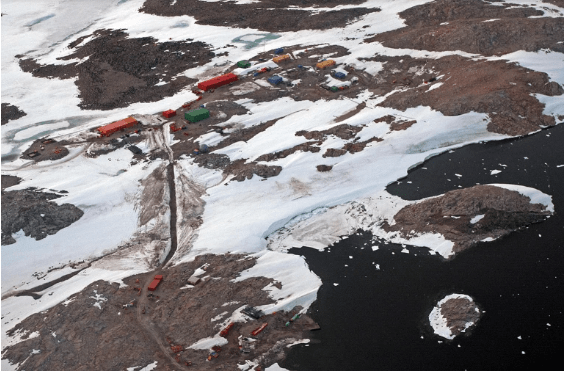
The sea floor near Australia’s Casey station in Antarctica has been found to have levels of pollution comparable to those in Rio de Janeiro’s harbor. Credit: Torsten Blackwood/AFP via Getty
Topics: Antarctica, Biology, Chemistry, Environment, Physics, Research
Antarctica is often described as one of the most pristine places in the world, but it has a dirty secret. Parts of the sea floor near Australia’s Casey research station are as polluted as the harbor in Rio de Janeiro, Brazil, according to a study published in PLoS ONE in August.
The contamination is likely to be widespread across Antarctica’s older research stations, says study co-author Jonathan Stark, a marine ecologist at the Australian Antarctic Division in Hobart. “These contaminants accumulate over long time frames and don’t just go away,” he says.
Stark and his colleagues found high concentrations of hydrocarbons — compounds found in fuels — and heavy metals, such as lead, copper, and zinc. Many of the samples were also loaded with polychlorinated biphenyls, highly carcinogenic chemical compounds that were common before their international ban in 2001.
When the researchers compared some of the samples with data from the World Harbor Project — an international collaboration that tracks large urban waterways — they found that lead, copper, and zinc levels in some cases were similar to those seen in parts of Sydney Harbour and Rio de Janeiro over the past two decades.
Widespread pollution
The problem of pollution is not unique to Casey station, says Ceisha Poirot, manager of policy, environment, and safety at Antarctica New Zealand in Christchurch. “All national programs are dealing with this issue,” she says. At New Zealand’s Scott Base — which is being redeveloped — contamination left from past fuel spills and poor waste management has been detected in soil and marine sediments. More of this historical pollution will emerge as the climate warms, says Poirot. “Things that were once frozen in the soil are now becoming more mobile,” she says.
Most of Antarctica’s contamination is due to historically poor waste management. In the old days, waste was often just dumped a small distance from research stations, says Terence Palmer, a marine scientist at Texas A&M University–Corpus Christi.
Research stations started to get serious about cleaning up their act in 1991. In that year, an international agreement known as the Protocol on Environmental Protection to the Antarctic Treaty, or the Madrid Protocol, was adopted. This designated Antarctica as a “natural reserve, devoted to peace and science,” and directed nations to monitor environmental impacts related to their activities. But much of the damage had already been done — roughly two-thirds of Antarctic research stations were built before 1991.
Scientists at the University of Sydney have, for the first time, used a quantum computer to engineer and directly observe a process critical in chemical reactions by slowing it down by a factor of 100 billion times.
Joint lead researcher and Ph.D. student Vanessa Olaya Agudelo said, “It is by understanding these basic processes inside and between molecules that we can open up a new world of possibilities in materials science, drug design, or solar energy harvesting.
“It could also help improve other processes that rely on molecules interacting with light, such as how smog is created or how the ozone layer is damaged.”
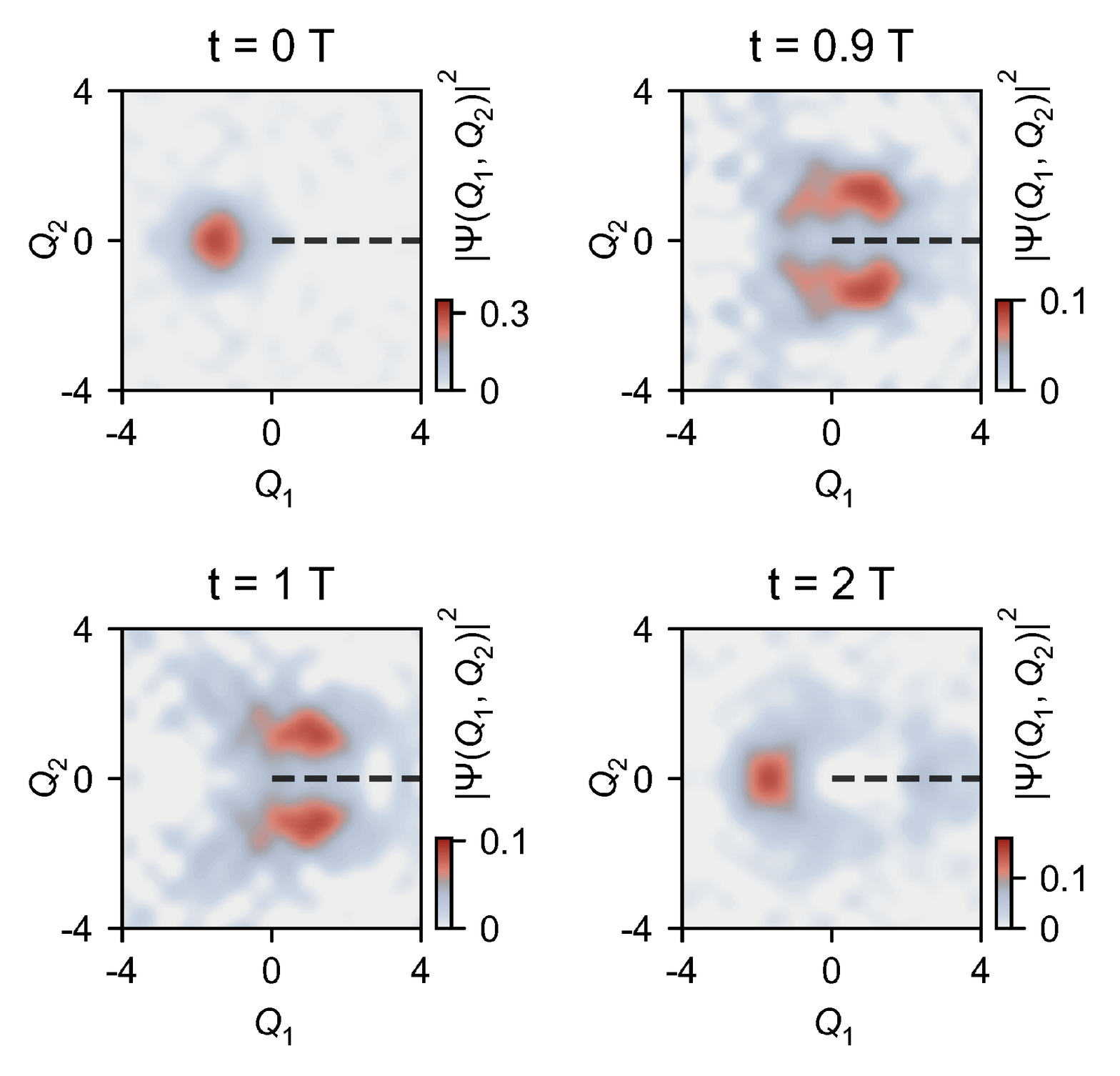
Specifically, the research team witnessed the interference pattern of a single atom caused by a common geometric structure in chemistry called a “conical intersection.”
Conical intersections are known throughout chemistry and are vital to rapid photochemical processes such as light harvesting in human vision or photosynthesis.
Chemists have tried to directly observe such geometric processes in chemical dynamics since the 1950s, but it is not feasible to observe them directly, given the extremely rapid timescales involved.
To get around this problem, quantum researchers in the School of Physics and the School of Chemistry created an experiment using a trapped-ion quantum computer in a completely new way. This allowed them to design and map this very complicated problem onto a relatively small quantum device—and then slow the process down by a factor of 100 billion. Their research findings are published August 28 in Nature Chemistry.
“In nature, the whole process is over within femtoseconds,” said Olaya Agudelo from the School of Chemistry. “That’s a billionth of a millionth—or one quadrillionth—of a second.
“Using our quantum computer, we built a system that allowed us to slow down the chemical dynamics from femtoseconds to milliseconds. This allowed us to make meaningful observations and measurements.
“This has never been done before.”
Joint lead author Dr. Christophe Valahu from the School of Physics said, “Until now, we have been unable to directly observe the dynamics of ‘geometric phase’; it happens too fast to probe experimentally.
“Using quantum technologies, we have addressed this problem.”





 Physics and Nano