"The one exclusive sign of thorough knowledge is the power of teaching." Aristotle | Disclaimer: The views and opinions expressed on this Wordpress website are the views and opinions of the content creator, Dr. Reggie Goodwin, and should not be construed as shared, or sourced from The Environmental Protection Agency, or any organizations with which they have cooperative, or business relationships.
“Laser” is an acronym for Light Amplification by the Stimulated Emission of Radiation. As the article alludes to, the concept existed before the actual device. We have Charles Hard Townes to thank for his work on the Maser (Microwave Amplification by the Stimulated Emission of Radiation) and the Laser. He won the Nobel Prize for his work in 1964. In a spirit of cooperation remarkable for the Cold War era, he was awarded the Nobel with two Soviet physicists, Aleksandr M. Prokhorov and Nikolay Gennadiyevich Basov. He lived from 1915 – 2015. The Doomsday Clock was only a teenager, born two years after the end of the Second World War. As it was in 2023, it is still 90 seconds to midnight. I’m not sure going “Buck Rogers” on the battlefield will dial it back from the stroke of twelve. Infrared lasers are likely going to be deployed in any future battle space, but infrared is invisible to the human eye, a weapon for which you only need a power supply and not an armory; it might appeal not only to knock drones out of the sky, but to assassins, contracted by governments who can afford such a powerful device, that will not leave a ballistic fingerprint, or depending on the laser’s power: DNA evidence.
Nations around the world are rapidly developing high-energy laser weapons for military missions on land and sea, and in the air and space. Visions of swarms of small, inexpensive drones filling the skies or skimming across the waves are motivating militaries to develop and deploy laser weapons as an alternative to costly and potentially overwhelmed missile-based defenses.
Laser weapons have been a staple of science fiction since long before lasers were even invented. More recently, they have also featured prominently in some conspiracy theories. Both types of fiction highlight the need to understand how laser weapons actually work and what they are used for.
A laser uses electricity to generate photons, or light particles. The photons pass through a gain medium, a material that creates a cascade of additional photons, which rapidly increases the number of photons. All these photons are then focused into a narrow beam by a beam director.
In the decades since the first laser was unveiled in 1960, engineers have developed a variety of lasers that generate photons at different wavelengths in the electromagnetic spectrum, from infrared to ultraviolet. The high-energy laser systems that are finding military applications are based on solid-state lasers that use special crystals to convert the input electrical energy into photons. A key aspect of high-power solid-state lasers is that the photons are created in the infrared portion of the electromagnetic spectrum and so cannot be seen by the human eye.
Based in part on the progress made in high-power industrial lasers, militaries are finding an increasing number of uses for high-energy lasers. One key advantage for high-energy laser weapons is that they provide an “infinite magazine.” Unlike traditional weapons such as guns and cannons that have a finite amount of ammunition, a high-energy laser can keep firing as long as it has electrical power.
The U.S. Army is deploying a truck-based high-energy laser to shoot down a range of targets, including drones, helicopters, mortar shells and rockets. The 50-kilowatt laser is mounted on the Stryker infantry fighting vehicle, and the Army deployed four of the systems for battlefield testing in the Middle East in February 2024.
A new image from the Event Horizon Telescope has revealed powerful magnetic fields spiraling from the edge of a supermassive black hole at the center of the Milky Way, Sagittarius A*.
Topics: Astrophysics, Black Holes, Cosmology, Einstein, General Relativity
Physicists have been confident since the 1980s that there is a supermassive black hole at the center of the Milky Way galaxy, similar to those thought to be at the center of most spiral and elliptical galaxies. It has since been dubbed Sagittarius A* (pronounced A-star), or SgrA* for short. The Event Horizon Telescope (EHT) captured the first image of SgrA* two years ago. Now the collaboration has revealed a new polarized image (above) showcasing the black hole’s swirling magnetic fields. The technical details appear in two new papers published in The Astrophysical Journal Letters.
“The new picture of Sgr A* compared to the old one shows the advantages of using a paintbrush rather than a crayon,” Maynooth University cosmologist Peter Coles said on BlueSky. The new image is also strikingly similar to another EHT polarized image of a larger supermassive black hole, M87*, so this might be something that all such black holes share.
The only way to “see” a black hole is to image the shadow created by light as it bends in response to the object’s powerful gravitational field. As Ars Science Editor John Timmer reported in 2019, the EHT isn’t a telescope in the traditional sense. Instead, it’s a collection of telescopes scattered around the globe. The EHT is created by interferometry, which uses light in the microwave regime of the electromagnetic spectrum captured at different locations. These recorded images are combined and processed to build an image with a resolution similar to that of a telescope the size of the most distant locations. Interferometry has been used at facilities like ALMA (the Atacama Large Millimeter/submillimeter Array) in northern Chile, where telescopes can be spread across 16 km of desert.
Avi Loeb, a Harvard University astrophysicist, displays a small vial of material recovered from the floor of the Pacific Ocean. The material, Loeb says, includes fragments of a meteorite that he claims came from another star system—and perhaps even from an alien spacecraft. Credit: Anibal Martel/Anadolu Agency via Getty Images
Reanalysis of a meteor that fell to Earth has cast some doubt on its origin—and its final destination.
This much is certain: on January 8, 2014, an object now catalogued as CNEOS 2014-01-08 entered Earth’s atmosphere somewhere overhead off the northern coast of Papua New Guinea in the South Pacific, heating to become a blazing, shockwave-generating fireball during its plunge from space. Such events are not rare; meteors enter our atmosphere all the time. But estimates of the object’s speed, touted at some 45 kilometers per second, led to suggestions that it might be interstellar in origin—a space rock from some alien and distant planetary system. While we have seen interstellar objects passing through our solar system before, no such objects were known to have ever made planetfall on Earth. So interest in CNEOS 2014-01-08 was piqued, given that its fragments could potentially offer a first direct sample of material sourced from another star.
In June 2023 Avi Loeb—a theoretical physicist at Harvard University—mounted a $1.5-million expedition to find pieces of the meteor. Loeb has been the leading proponent of the notion that this meteor was indeed interstellar in origin—and has even speculated that it may be linked to putative alien spacecraft. His recovery expedition—which was part of his UFO-studying Galileo Project—became a public sensation, further padding Loeb’s already long list of high-profile media spots, which included interviews on prime-time national television shows and with the easily enraptured podcast host Joe Rogan. Loeb has written countless blog posts and a bestselling book on his unorthodox approach to studying extraterrestrial life and intelligence. He has even gone so far as to appear on a giant billboard in Times Square promoting the Galileo Project’s efforts to find the interstellar meteor fragments.
His approach to the topic has, at times, been abrasive, and many other astrobiology-inclined researchers have found his sensational claims too difficult to parse and potentially damaging to their field. But as with any scientific investigation, particularly with findings as provocative as those suggested by Loeb, there is invariably interest in trying to find flaws in the methodology and to offer alternative, more plausible solutions. This latest episode is no exception; it focuses on one very specific data point from this purported interstellar object.
Loeb’s recovery expedition used a boat-dragged magnetic “sled” to scrape samples of sediments from strips of seafloor in an 11-kilometer-wide square where the team believed the meteor had fallen. That zone of inquiry primarily emerged from triangulating the meteor’s presumptive debris field using sensor data from a classified network of U.S. military satellites that were scrubbed of sensitive details and made public as part of NASA’s Center for Near Earth Object Studies (CNEOS). Loeb’s pinpointing also used a local seismometer on Manus Island, Papua New Guinea, which recorded vibrations from an event around the time the meteor supposedly entered the atmosphere to reduce the search area to a strip that was one-kilometer wide.
After studying those seismometer data, however, Benjamin Fernando, a planetary scientist at Johns Hopkins University, has concluded that Loeb’s analysis was flawed. The seismometer, Fernando says, recorded not a celestial object but something much more mundane and closer to home—a passing heavy truck—meaning that the location Loeb and his team searched would not have been in the path of the falling object. “We think that what they picked up from the seafloor is nothing to do with this meteor at all,” says Fernando, who posted the research on the preprint server arXiv.org and presented it at the Lunar and Planetary Science Conference (LPSC) in Texas on Tuesday, March 12.
Fernando and his colleagues maintain that the seismic spike used by Loeb’s team was decidedly similar to other signals likely caused by “cultural noise”—that is, vibrations from vehicles and other hefty, human-made sources. A signal’s polarization can be used to estimate the direction of the source, and in this case, it suggested a movement from “southwest to north over about 100 seconds,” Fernando says. That matches the orientation of a road near the seismometer that runs to a local hospital and aligns with another matching signal that perhaps came from the same vehicular source that was detected earlier in the day (when no known fireballs were overhead). “It’s actually just a truck driving by,” he says. Using information from a separate network of infrasound sensors meant to look for clandestine atomic explosions as part of the Comprehensive Nuclear-Test-Ban Treaty, Fernando and his team provide a different entry point for the meteor some 170 kilometers from where Loeb’s group searched. They also argue that the meteor mostly burned up in the atmosphere anyway, scattering few, if any, notable pieces onto the land or sea below. “You wouldn’t go looking for bits of a firework,” Fernando says.
In the list of logical fallacies, I found unfortunately two (depending on the source, the total list can number 20, 24, more, etc.), that I reflected on as I read this article: “Hasty Generalization,” and “Ought-Is.”
Hasty Generalization means what this looks like: drawing some really spectacular conclusions on what appears to be limited evidence. The second, “Ought-Is,” along with the recent scandal of 10,000 papers retracted in 2023 due to (I think) the pressure to “see your name(s)” in high-impact journals has taken on the similitude of getting “likes” on social media, and has put the scientific enterprise, the hallmark of the Enlightenment, in crisis. “Ought-Is” fallacies are another word for wishful thinking. At that point, scientific progress grinds to a halt, and we slowly start limping back to the dark ages.
Topics: Applied Physics, Chemistry, Energy, Green Tech, Materials Science, Photovoltaics
The energy transition is progressing, and photovoltaics (PV) is playing a key role in this. Enormous capacities are to be added over the next few decades. Experts expect several tens of terawatts by the middle of the century. That’s 10 to 25 solar modules for every person. The boom will provide clean, green energy. But this growth also has its downsides.
Several million tons of waste from old modules are expected by 2050—and that’s just for the European market. Even if today’s PV modules are designed to last as long as possible, they will end up in landfill at the end of their life, and with them some valuable materials.
“Circular economy recycling in photovoltaics will be crucial to avoiding waste streams on a scale roughly equivalent to today’s global electronic waste,” explains physicist Dr. Marius Peters from the Helmholtz Institute Erlangen-Nürnberg for Renewable Energies (HI ERN), a branch of Forschungszentrum Jülich.
Today’s solar modules are only suitable for this to a limited extent. The reason for this is the integrated—i.e., hardly separable—structure of the modules, which is a prerequisite for their long service life. Even though recycling is mandatory in the European Union, PV modules are, therefore, difficult to reuse in a circular way.
The current study by Dr. Ian Marius Peters, Dr. Jens Hauch, and Prof Christoph Brabec from HI ERN shows how important it is for the rapid growth of the PV industry to recycle these materials. “Our vision is to move away from a design for eternity towards a design for the eternal cycle,” says Peters “This will make renewable energy more sustainable than any energy technology before.
Plastic chokes a canal in Chennai, India. Credit: R. Satish Babu/AFP via Getty
Topics: Applied Physics, Biology, Chemistry, Environment, Medicine
People who had tiny plastic particles lodged in a key blood vessel were more likely to experience heart attack, stroke or death during a three-year study.
Now the first data of their kind show a link between these microplastics and human health. A study of more than 200 people undergoing surgery found that nearly 60% had microplastics or even smaller nanoplastics in a main artery1. Those who did were 4.5 times more likely to experience a heart attack, a stroke or death in the approximately 34 months after the surgery than were those whose arteries were plastic-free.
“This is a landmark trial,” says Robert Brook, a physician-scientist at Wayne State University in Detroit, Michigan, who studies the environmental effects on cardiovascular health and was not involved with the study. “This will be the launching pad for further studies across the world to corroborate, extend and delve into the degree of the risk that micro- and nanoplastics pose.”
But Brook, other researchers and the authors themselves caution that this study, published in The New England Journal of Medicine on 6 March, does not show that the tiny pieces caused poor health. Other factors that the researchers did not study, such as socio-economic status, could be driving ill health rather than the plastics themselves, they say.
― Gaylord Nelson, former Republican Governor and Senator of Wisconsin, Founder of Earth Day, April 20, 1970, which led to the formation of the U.S. EPA, December 2, 1970. Image: Nelson Institute of Environmental Science, University of Wisconsin-Madison
Robert Mueller was the subject of Internet memes as a 21st-century version of Joe Friday in “Dragnet.” There was going to be an arrest. The 45th Oval Office occupant was going to be put in handcuffs and “perp-walked” in full view and total embarrassment of the Troll-in-Chief who tormented them with his itchy, psychotic Twitter fingers.
Robert Mueller did not save us.
Jack Smith was appointed late in the game of criminality. He joined Alvin Bragg, Fani Willis, Letitia James, Shawn Crawley, and Roberta Kaplan after two impeachments and 91 federal indictments, trying to do justice, stymied by wealth and privilege that most of us will never have. He has been convicted twice in the E. Jean Carroll: the second time because he couldn’t keep his mouth shut. He owes over half a billion dollars between the two. But these are civil lawsuits. He owes money that he actually doesn’t have, so he has to go hat in hand to the faux Tony Stark to get a bailout, I guess because a check in Rubles would be to hard to gaslight, even for him.
Jack Smith will not save us.
Meme posting on Facebook, tweeting (or “X”), Threading, Snapchatting, Reddit posts with pithy commentary, and real clever zingers will not change anything. Hiding behind your laptop as a “keyboard warrior” is no different and no less cowardly than the trolls you get your blood pressure up over in their mom’s basements. Our democratic republic is “hanging by a thread.” We need your bodies, we need your commitment.
Focus your anger into action.
Out of circumstances due to a lot going on at work, I ended up voting on Super Tuesday. I did not encounter any resistance. The tape in the machine had to be replaced, so my ballot was counted some time later. I came back when my wife voted to get my sticker.
The candidates I voted for won in the primaries. I plan to volunteer for the campaigns that I want to be successful.
If you’re angry about the state of the world and your country, I quote the Honorable John Lewis, who joined the ancestors: “Get in good trouble, necessary trouble.”
It’s not just Civil Rights anymore. It’s Women’s Rights. It’s LGBTQ Rights. It’s Immigrant’s Rights. It’s the rights to just BE yourselves.
The Danger of Echo Chambers
The State of the Union started in the same pomp and circumstance of the Joint Chambers of Congress that is still post a crime scene. The current Speaker filed the Amicus Brief to overturn the results of the 2020 election. I am reminded however, of the 2012 election.
I see Senator Romney gladhanding everyone on the floor. I recall him so confident that he had won the 2012 election, he launched his transition website. It was because he consumed a lot of Fox (not) News, and they projected he would win, until he didn’t.
I recall Karl Rove making Meghan Kelly walk to the statisticians’ office at Fox (not) News, totally apoplectic that Obama/Biden had won re-election. The other persons utterly stunned were Mitt and Ann Romney. As Karl and Fox (not) News viewers, they absorbed a medium that made them feel better, but it did not, in fact, inform them, and still doesn’t.
The danger of echo chambers is like Narcissus, it only gives you the last thing that you might hear:
One day while hunting, Narcissus comes across an untouched, glassy spring. He is drawn to its beauty and lies down to take a drink, but what he sees in the still water enchants him. He is in love with what he sees and is inflamed by the features of the vision: the hair, his eyes, porcelain skin, and rosy cheeks. Attempts to kiss and hold the reflection are in vain, and Narcissus is only frustrated by the teasing reactions of the image. When Narcissus winks, the image winks back, when Narcissus waves, the image waves, and when he cries tears, he sees that the image also cries. Narcissus cannot understand why he cannot reach what he so desperately desires.
The tormented boy agonizes over his unrequited love. He cannot leave the spring and is trapped in his frozen gaze at his reflection, pining away for the boy in the water who rejects all advances. Then Narcissus realizes that the image is his, but it’s too late, as he has already fallen tragically in love with himself. Knowing that he can never have what he desires, his body withers away in despair. When Narcissus says “Goodbye” to the reflection, Echo’s voice says “Goodbye.” At that moment, Narcissus dies while peering into the spring.Historic Mysteries
The danger of echo chambers is adherence to narratives that do not exist in the real world. It is allegiance to “alternative facts,” crackpot conspiracy theories, Big Lies, horse manure, hoopla, and hogwash. It says climate change doesn’t exist in a deluge of evidence on a warming globe annually breaking its previous records. It is saying the Affordable Care Act was destined to “kill grandma,” when four years ago, we had refrigerator trucks as mobile morgues by ignoring a pandemic and promoting quackery like drinking bleach, shining lights up our rectums, ivermectin and hydroxychloroquine. It is putting on a Batman suit and thinking yourself an undefeatable martial artist, or a Superman suit and thinking you can fly. “Try that in Gotham,” or leap from the roof of a short house: the acceleration due to gravity is still 9.81 m/s2. Physics is reality, and it cannot be gaslighted.
Things like the Orwellian Citizen’s United have guaranteed that every election until capitalism itself is reformed is the “election of our lifetimes.” The American oligarchs today are the spiritual descendants of the fascists who tried to prop up Smedley Butler as their dictator. He balked, realizing that he was a “gangster for capitalism” and that “war is a racket.”
Time travel is a popular sci-fi trope, but backward travel is impossible due to the Second Law of Thermodynamics. But it is possible to shape the future we want to see for our children. To do that, we can’t listen to nymphs reflecting echoes.
“Our goal is not just an environment of clean air, water, and scenic beauty. The objective is an environment of decency, quality, and mutual respect for all other human beings and living creatures.”
“The ultimate test of man’s conscience may be his willingness to sacrifice something today for future generations whose words of thanks will not be heard.” ― Gaylord Nelson, former Republican Governor and Senator of Wisconsin, Founder of Earth Day, April 20, 1970, which led to the formation of the U.S. EPA, December 2, 1970.
A sample of the new titanium lattice structure 3D printed in cube form. Credit: RMIT. New titanium lattice structure 3D printed in cube form. Credit: RMIT
Topics: 3D Printing, Additive Manufacturing, Materials Science, Metamaterials
A 3D printed ‘metamaterial’ boasting levels of strength for weight not normally seen in nature or manufacturing could change how we make everything from medical implants to aircraft or rocket parts.
RMIT University researchers created the new metamaterial – a term used to describe an artificial material with unique properties not observed in nature – from common titanium alloy.
But it’s the material’s unique lattice structure design, recently revealed in the journal Advanced Materials, that makes it anything but common: tests show it’s 50% stronger than the next strongest alloy of similar density used in aerospace applications.
Nature-Inspired Designs and Innovations
Lattice structures made of hollow struts were originally inspired by nature: strong hollow-stemmed plants like the Victoria water lily or the hardy organ pipe coral (Tubipora musica) showed us the way to combine lightness and strength.
Scientists used samples from sclerosponges off the coast of Puerto Rico to calculate ocean surface temperatures going back 300 years. Douglas Rissing/iStockphoto/Getty Images
Topics: Climate Change, Existentialism, Global Warming, Research, Thermodynamics
CNN— Using sponges collected off the coast of Puerto Rico in the eastern Caribbean, scientists have calculated 300 years of ocean temperatures and concluded the world has already overshot one crucial global warming limit and is speeding toward another.
These findings, published Monday in the journal Nature Climate Change, are alarming but also controversial. Other scientists say the study contains too many uncertainties and limitations to draw such firm conclusions and could end up confusing public understanding of climate change.
Sponges — which grow slowly, layer by layer — can act like data time capsules, allowing a glimpse into what the ocean was like hundreds of years ago, long before the existence of modern data.
Using samples from sclerosponges, which live for centuries, the team of international scientists was able to calculate ocean surface temperatures going back 300 years.
They found human-caused warming may have started earlier than currently assumed and, as a result, global average temperature may have already warmed more than 1.5 degrees Celsius above pre-industrial levels. Researchers say the results also suggest global temperature could overshoot 2 degrees of warming by the end of the decade.
Under the 2015 Paris Agreement, countries pledged to restrict global warming to less than 2 degrees above pre-industrial levels, with an ambition to limit it to 1.5 degrees. The pre-industrial era — or the state of the climate before humans started burning large amounts of fossil fuels and warming the planet — is commonly defined as 1850-1900.
“While I was at the hotel today, an elderly gentleman called upon me to know whether I was really in favor of producing a perfect equality between the negroes and white people. [Great Laughter.] While I had not proposed to myself on this occasion to say much on that subject, yet as the question was asked me, I thought I would occupy perhaps five minutes in saying something in regard to it. I will say then that I am not, nor ever have been, in favor of bringing about in any way the social and political equality of the white and black races, [applause]—that I am not nor ever have been in favor of making voters or jurors of negroes, nor of qualifying them to hold office, nor to intermarry with white people; and I will say in addition to this that there is a physical difference between the white and black races which I believe will forever forbid the two races living together on terms of social and political equality. And inasmuch as they cannot so live, while they do remain together, there must be the position of superior and inferior, and I, as much as any other man, am in favor of having the superior position assigned to the white race. I say upon this occasion, I do not perceive that because the white man is to have the superior position, the negro should be denied everything. I do not understand that because I do not want a negro woman for a slave, I must necessarily want her for a wife. [Cheers and laughter.] My understanding is that I can just let her alone. I am now in my fiftieth year, and I certainly never have had a black woman for either a slave or a wife. So it seems to me quite possible for us to get along without making either slaves or wives of negroes. I will add to this that I have never seen, to my knowledge, a man, woman, or child who was in favor of producing a perfect equality, social and political, between negroes and white men. I recollect of but one distinguished instance that I ever heard of so frequently as to be entirely satisfied with its correctness—and that is the case of Judge Douglas’s old friend, Col. Richard M. Johnson. [Laughter.] I will also add to the remarks I have made (for I am not going to enter at large upon this subject) that I have never had the least apprehension that my friends or I would marry negroes if there was no law to keep them from it, [laughter] but as Judge Douglas and his friends seem to be in great apprehension that they might if there were no law to keep them from it, [roars of laughter] I give him the most solemn pledge that I will to the very last stand by the law of this State, which forbids the marrying of white people with negroes. [Continued laughter and applause.] I will add one further word, which is this: [that] I do not understand that there is any place where an alteration of the social and political relations of the negro and the white man can be made except in the State Legislature—not in the Congress of the United States—and as I do not really apprehend the approach of any such thing myself, and as Judge Douglas seems to be in constant horror that some such danger is rapidly approaching, I propose as the best means to prevent it that the Judge be kept at home and placed in the State Legislature to fight the measure. [Uproarious laughter and applause.] I do not propose dwelling longer at this time on this subject.“
Teaching History, the Lincoln-Douglas debates, 4th Debate, Part 1.
The man who would be known as “the great emancipator” could turn a phrase at an event at the time that would dwarf our current 1-1/2 hour modern performances: they were hours in duration. People brought lunches and took notes. Old Abe appeared to have been the “George Carlin” of his day. He was exploitative in his digs, not knowing at the time the same people he derided he would need fighting for him to win the war of secession.
Lincoln exploited racist tropes to make Judge Douglas – his Democratic (the conservative party then) opponent, look like a conspiratorial fool. As we look to history, we see the pedestals that our heroes occupy are made of cracked porcelain; their balance isn’t steady because human bodies aren’t perfectly proportioned, and they often fall from their lofty perches after scrutiny.
Despite this obvious bias Lincoln had towards “his tribe,” another Douglass, Frederick Douglass, would petition him for the involvement of our ancestors on the side of the Union in the Civil War as well as make the case for the Emancipation Proclamation. Despite the many docuseries with them briefly onscreen together generally getting along, Frederick Douglass wasn’t an initial fan of the 16th president:
Douglass was concerned about the unequal pay of Black soldiers, who received $3 dollars less per month than white privates. He was also incensed by the Union government’s response to the Confederate treatment of Black prisoners of war, who were being tortured, killed, and sometimes sold into slavery. He focused his anger on President Abraham Lincoln. “The slaughter of Blacks taken as captives,” wrote Douglass in his Douglass’ Monthly, “seems to affect him [Lincoln] as little as the slaughter of beeves [cows] for the use of his army.”
So, when I hear people saying they’re tired of voting for “the lesser of two evils,” their naivete seems to reflect back to halcyon days that never existed, not realizing African Americans have voted that way since we were allowed to vote without interference (poll taxes, lynching, cross burnings, voter purges). As long as a caste system of complexion has existed on these shores, there has never been a conservative or liberal “great again.”
The following (or a version of this) I posted on Rotten Tomatoes after seeing the movie:
“I read “Caste: The Source of Our Discontents” by Isabel Wilkerson before I saw “Origin,” directed by Ava DuVernay. I highly recommend reading the book, seeing the movie, and staying for the after-the-credits discussion by the director. It is POWERFUL and relevant to the times we all find ourselves in. Seeing the reenactment of Nazi book burning has a modern analogy in practice.
“The Caste System in America is based on skin color and the debasement of people who have no control over how they present themselves or how they are perceived. This extends easily to other groups under the boot of patriarchy.
“See it while it is available. It is a threat to patriarchal oligarchy and for the downcast, the Dalits, the under-the-boot marginalized: the relieving breath of being seen.
“I recommend this movie, seen with a group, and a discussion at a coffee shop or a restaurant afterward. You will need to decompress.”
*****
A caste system, whether divinely inspired, fueled by American slave codes, black codes, Jim Crow, eugenics, or Europe, Italian and Nazi fascism, in India, Brahmins (priests and teachers), Kshatriyas (rulers, administrators, warriors), Vaishyas (artisans, merchants, tradesmen, farmers), Shudras (laborers) Dalits (Harijans or Untouchables), propped up by myth, superstition, and pseudoscience, is about resources and power, who “deserves” to have it, and who those deeming themselves deserving, deeming others as not deserving.
We can see the effects of the caste system in everything:
The global south suffered more from the pandemic than the global north.
The deleterious effects of climate change also affect the Global South more than it does the north. Our apathy for solving it lies in arrogance, caste, and xenophobia.
The Nazis plagiarized the South’s black codes for the Nurenberg Laws to oppress the Jews.
It would take 500 years for African Americans to catch up to their (currently) majority neighbors. The March on Washington was on the eighth anniversary of the lynching of Emmett Till, but the essence of the assembly was a demand for reparations. We’re still cashing a check returned, as Dr. King said, for “insufficient funds.”
For Europeans, the outsiders are from the African continent (Akebulan), driven by conflicts supplied by European and American military-industrial complexes, STARTED by European and American business interests for one-sided extraction profits.
There’s a scene in Sean Penn’s “Superpower” documentary where Volodymyr Zelinzky and Vladimir Putin occupy the same stage. Putin glares at Zelinsky for contradicting him in a question-and-answer session with the press. In the obvious two-tier caste system, Russian pride cannot suffer his Ukrainian lesser upstaging him on camera. The motivation for the war, in a wounded strongman’s twisted mind, might be as simple as that.
China is on Akebulan to extract the abundant resources from the continent to fuel what is arguably, a communist-capitalist system. Their underdogs are Uygers, and they are treated like Dalits and Dr. Martin Luther King.
In fact, when King visited a local school for Dalit children in the southern Indian state of Kerala in 1959, the principal introduced him thus: “Young people, I would like to present to you a fellow untouchable from the United States of America.” Although King was initially shocked by this introduction, he later understood the deeper connections of oppression, exclusion, and exile that African Americans in the US and Dalits in India shared. The broader Black freedom struggle has continued to inspire Dalit struggles in this region, from the formation of the Dalit Panthers in the 1970s to the recent emergence of Dalit Lives Matter groups in Nepal and India.
In Israel-Palestine, the caste system also has only two tiers, as did its WWII analog. There will always be a “two-state solution” in Israel-Palestine because it is never meant as a problem to solve. The two-state solution is meant to sound reasonable because it IS reasonable, but part of a two-state solution would mean returning lands seized since 1948 (or at least 1967). That has another word in America: reparations. If you can do it in the Near East, the fear is the clamor to do it in the United States couldn’t justifiably be resisted.
Power and resources, hoarded to the one percent of any nation’s pyramid, are imbalanced, and it is a caste system that is unsustainable.
A caste system is a societal pathology, and I don’t see such a society lasting long enough to build interplanetary or interstellar vessels. “Fermi’s paradox” may have a grim answer.
Scientists at King’s College London have developed an innovative solution for recycling single-use bioplastics commonly used in disposable items such as coffee cups and food containers.
The novel method of chemical recycling, published in Cell Reports Physical Science, uses enzymes typically found in biological laundry detergents to “depolymerize”—or break down—landfill-bound bioplastics. Rapidly converting the items into soluble fragments within just 24 hours, the process achieves full degradation of the bioplastic polylactic acid (PLA). The approach is 84 times faster than the 12-week-long industrial composting process used for recycling bioplastic materials.
This discovery offers a widespread recycling solution for single-use PLA plastics, as the team of chemists at King’s found that in a further 24 hours at a temperature of 90°C, the bioplastics break down into their chemical building blocks. Once converted into monomers—single molecules—the materials can be turned into equally high-quality plastic for multiple reuse.
The problem with ‘green’ plastics
Current rates of plastic production outstrip our ability to dispose of it sustainably. According to Environmental Action, it is estimated that in 2023 alone, more than 68 million tons of plastic globally ended up in natural environments due to the imbalance between the huge volumes of plastics produced and our current capacity to manage and recycle plastic at the end of its life. A recent OECD report predicted that the amount of plastic waste produced worldwide will almost triple by 2060, with around half ending up in landfills and less than a fifth recycled.
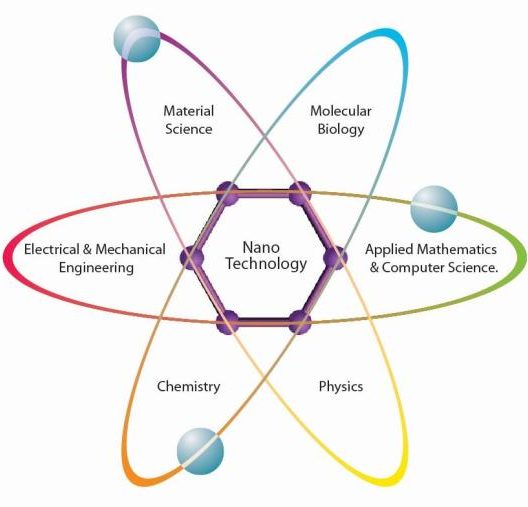









 Physics and Nano