Illustration of a UCLA-developed solid-state thermal transistor using an electric field to control heat movement. Credit: H-Lab/UCLA Topics: Applied Physics, Battery, Chemistry, Electrical Engineering, Energy, Thermodynamics A new thermal transistor can control heat as precisely as an electrical transistor can control electricity. From smartphones to supercomputers, electronics have a heat problem. Modern computer chips suffer from microscopicContinue reading “Cooling Circuitry…”
Category Archives: Materials Science
The “Tiny Ten”…
Researchers are working to overcome challenges related to nanoscale optoelectronic interconnects, which use light to transmit signals around an integrated circuit. IMAGE: PROVIDED BY NCNST Topics: Biology, Materials Science, Nanoengineering, Nanomaterials, Nanotechnology, Quantum Mechanics The promise of nanotechnology, the engineering of machines and systems at the nanoscale, is anything but tiny. Over the past decade alone,Continue reading “The “Tiny Ten”…”
Nano Racetracks…
In this image, optical pulses (solitons) can be seen circling through conjoined optical tracks. (Image: Yuan, Bowers, Vahala, et al.) An animated gif is at the original link below. Topics: Applied Physics, Astronomy, Electrical Engineering, Materials Science, Nanoengineering, Optics (Nanowerk News) When we last checked in with Caltech’s Kerry Vahala three years ago, his labContinue reading “Nano Racetracks…”
All-Solid-State Batteries
Comparison of cathode volume changes in all-solid-state cells under low-pressure operation. Credit: Korea Institute of Science and Technology Topics: Batteries, Chemistry, Climate Change, Lithium, Materials Science, Nanomaterials Often referred to as the “dream batteries,” all-solid-state batteries are the next generation of batteries that many battery manufacturers are competing to bring to market. Unlike lithium-ion batteries,Continue reading “All-Solid-State Batteries”
Microlenses…
Chromatic imaging of white light with a single lens (left) and achromatic imaging of white light with a hybrid lens (right). Credit: The Grainger College of Engineering at the University of Illinois Urbana-Champaign Topics: 3D Printing, Additive Manufacturing, Applied Physics, Materials Science, Optics Using 3D printing and porous silicon, researchers at the University of IllinoisContinue reading “Microlenses…”
Quantum Switch…
Credit: CC0 Public Domain Topics: Condensed Matter Physics, Materials Science, Quantum Computer, Quantum Mechanics Quantum scientists have discovered a rare phenomenon that could hold the key to creating a ‘perfect switch’ in quantum devices, which flips between being an insulator and a superconductor. The research, led by the University of Bristol and published in Science, found theseContinue reading “Quantum Switch…”
Graphite to Gold…
Artist’s rendition of the electron correlation, or the ability of electrons to talk with each other, can occur in a special kind of graphite (pencil lead). @ Sampson Wilcox, MIT Research Laboratory of Electronics Topics: Entanglement, Graphene, Materials Science, Nanomaterials, Nanotechnology MIT physicists have metaphorically turned graphite, or pencil lead, into gold by isolating fiveContinue reading “Graphite to Gold…”
Liquid Squeezing…
That isn’t tea, but the paradox still applies: Dispersing gold nanoparticles in an aqueous chlorine solution. (Courtesy: Ai Du) Topics: Aerogels, Einstein, Materials Science, Nanomaterials, Soft Materials If you stir a colloidal solution containing nanoparticles, you might expect the particles to disperse evenly through the liquid. But that’s not what happens. Instead, the particles endContinue reading “Liquid Squeezing…”
Stronger Than Steel…
Researchers from the University of Connecticut and colleagues have created a highly durable, lightweight material by structuring DNA and then coating it in glass. The resulting product, characterized by its nanolattice structure, exhibits a unique combination of strength and low density, making it potentially useful in applications like vehicle manufacturing and body armor. (Artist’s concept.)Continue reading “Stronger Than Steel…”
Build Better Batteries…
Electric field- and pressure-assisted fast sintering to control graphene alignment in thick composite electrodes for boosting lithium storage performance. Credit: Hongtao Sun, Penn State Topics: Battery, Energy, Graphene, Green Tech, Lithium, Materials Science, Nanomaterials The demand for high-performance batteries, especially for use in electric vehicles, is surging as the world shifts its energy consumption to aContinue reading “Build Better Batteries…”
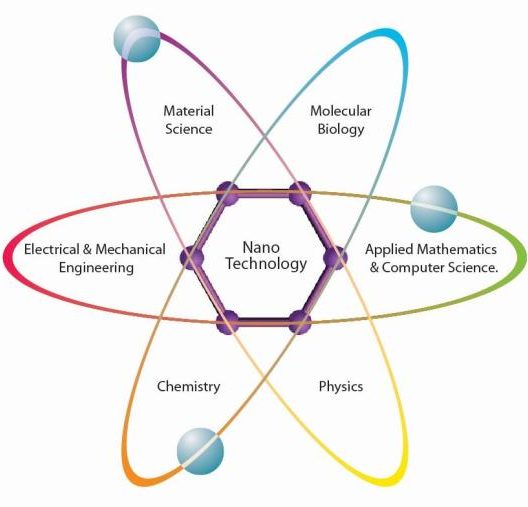
 Physics and Nano