NASA’s Goddard Space Flight Center Astronomers just measured the mass of a free-floating planet without a star for the first time Topics: Astronomy, Astrophysics, Exoplanets, NASA When we imagine a planet, we think of one like ours, orbiting a star. But some have a far lonelier existence, drifting through interstellar space without a sun toContinue reading “Rogue Planet…”
Category Archives: Exoplanets
Wages of the Thermal Budget…
Topics: Applied Physics, Astrobiology, Astrophysics, Civilization, Climate Change, Existentialism, Exoplanets, SETI, Thermodynamics Well, this firmly puts a kink in the “Fermi Paradox.” The Industrial Revolution started in Britain around 1760 – 1840, and there was a colloquial saying that “the sun did not set on the British Empire.” The former colony, America, cranked up itsContinue reading “Wages of the Thermal Budget…”
Nano Over Nukes…
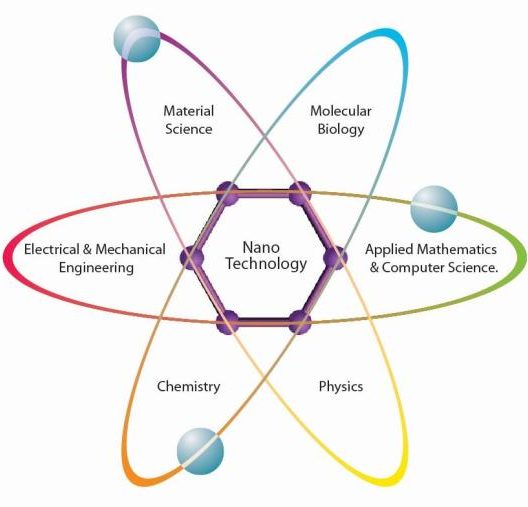
Heat trap The proposed nanoparticle warming method. (Courtesy: Aaron M. Geller, Northwestern Center for Interdisciplinary Exploration and Research in Astrophysics) Topics: Aerogels, Exoplanets, Mars, Materials Science, Nanomaterials, NASA, Planetary Science. Thermodynamics Suffice it to say, Mr. Musk’s nuking the Martian planet idea is impractical, and a nonstarter, but to show that he’s mature about it,Continue reading “Nano Over Nukes…”
“Boldly Going” Pretty Close…
Artist’s conception of the dwarf planet Sedna in the outer edges of the known solar system. (Image credit: NASA/JPL-Caltech/R. Hurt (SSC)) Topics: Astronomy, Astrophysics, Exoplanets, NASA, Space Exploration Astronomers are racing to explain peculiar orbits of faraway objects at the edge of our solar system. Among the many mysteries that make the furthest reaches of ourContinue reading ““Boldly Going” Pretty Close…”
Planet Video…
Topics: Astronomy, Astrophysics, Exoplanets, Space Exploration In 2008, HR8799 was the first extrasolar planetary system ever directly imaged. Now, the famed system stars in its very own video. Using observations collected over the past 12 years, Northwestern University astrophysicist Jason Wang has assembled a stunning time-lapse video of the family of four planets — each more massiveContinue reading “Planet Video…”
WASP-39b and CO2…
Topics: Astrophysics, Chemistry, ESA, Exoplanets, James Webb Space Telescope, NASA The James Webb Space Telescope — already famous for its mesmerizing images of the cosmos — has done it again. The telescope has captured the first unambiguous evidence of carbon dioxide in the atmosphere of a planet outside the Solar System. The finding not only provides tantalizingContinue reading “WASP-39b and CO2…”
Proxima Oceans…
Topics: Astronomy, Astrophysics, Exoplanets, Space Exploration, Spaceflight Astronomers have discovered a third planet orbiting Proxima Centauri, the star closest to the Sun. Called Proxima Centauri d, the newly spotted world is probably smaller than Earth and could have oceans of liquid water. “It’s showing that the nearest star probably has a very rich planetary system,”Continue reading “Proxima Oceans…”
Exomoon Two…
Topics: Astronomy, Astrophysics, Exomoon, Exoplanets And then there were two—maybe. Astronomers say they have found a second plausible candidate for a moon beyond our solar system, an exomoon, orbiting a world nearly 6,000 light-years from Earth. Called Kepler-1708 b-i, the moon appears to be a gas-dominated object, slightly smaller than Neptune, orbiting a Jupiter-sized planet around a sunlikeContinue reading “Exomoon Two…”
Yonder Water Worlds…
Topics: Astrobiology, Astronomy, Astrophysics, Exoplanets, Space Exploration Hot, ocean-covered exoplanets with hydrogen-rich atmospheres could harbor life and may be more common than planets that are Earth-like in size, temperature, and atmospheric composition. According to astronomers at the University of Cambridge, UK, this newly defined class of exoplanets could boost the search for life elsewhere inContinue reading “Yonder Water Worlds…”
Nano, to Planck…
Topics: Barrow Scale, Kardashev Scale, Exoplanets, SETI The Kardashev Scale is a discussion, and ranking of civilizations based on energy output: Type I: able to marshal energy resources for communications on a planet-wide scale, equivalent to the entire present power consumption of the human race, or about 1016 watts. Here, Carl Sagan begged to differ, due to powerContinue reading “Nano, to Planck…”
 Physics and Nano