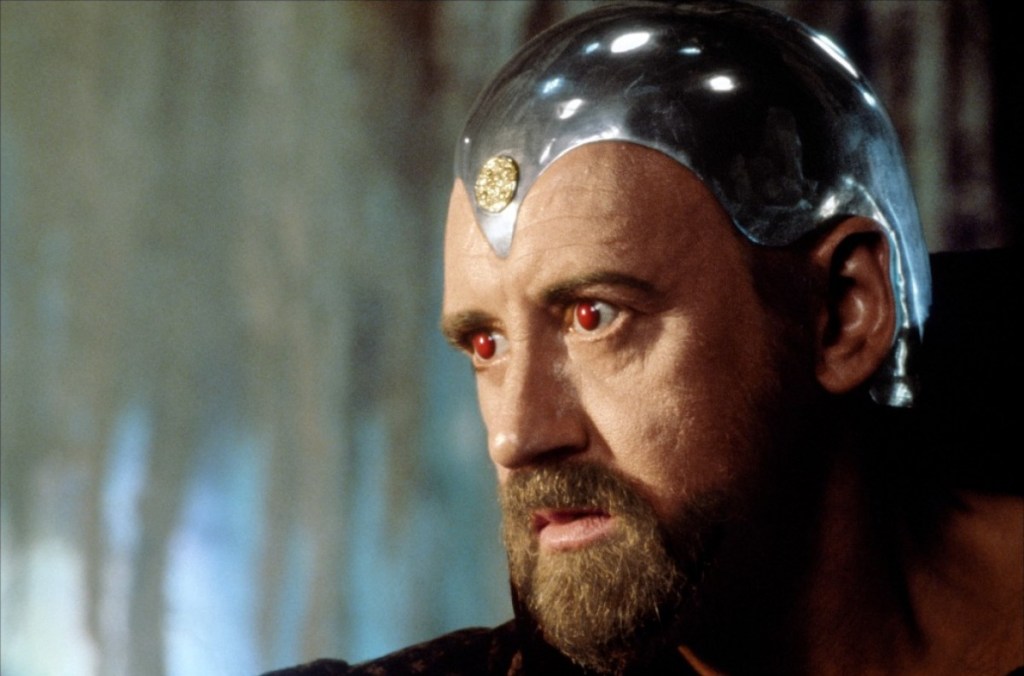
Mutant Reviews of the 1981 movie “Excalibur,” with the caption to this photo: “Yes, Merlin got struck by lightning a lot.“
Topics: Applied Physics, Astrophysics, Chemistry, Civics, Civilization, Computer Modeling
“Who is STEM for?”: a fairy tale.
The title of this post is from a question Dr. Fatima Abdurrahman raised on her YouTube channel regarding Diversity in STEM and Prager (Not a Real) University: “Who is STEM for?”
This generated an apocryphal story using familiar characters from mythology. The following story is NOT real, but a framework to perhaps answer the question.
*****
There was once a man named Merlin, a clever fellow who was a serf who managed to scrape out a living by thievery and pirating. By happenstance, he landed in Alexandria, Egypt, home of the first extensive libraries, the first university, and the mysterious cult of Pythagoras (the Geometry guy). Feeling homesick for Europe, he made his way back to London with no clue that Arthur was planning on a crusade to “Christianize the savages,” colonizer-speak for seizing control of natural resources without a modicum of guilt. “The big guy made me do it” along with “manifest destiny” is built into the schtick.
As a serf, Merlin was about to be conscripted involuntarily into this “Holy War” against infidels in Jerusalem. First, Art had to remove the Lords of London who didn’t want any part of his cockamamie schemes of grandeur.
Merlin noticed that Art and the other barbarians launched javelins and catapults full of burning refuse against each other without much strategy or accuracy. Merl took Art to the side, explaining to him that he was a MAGA (“sorcerer”) and that he was initiated into the Euclidian Mysteries. Using his special geometric incantations (ahem: calculating launch angles), he could ensure that Art could bring the other Lords under heel, and probably take the Holy City in the name of God. Art bought it. Merl didn’t have to lead from the front, content to optimize his angle calculations (incantations to the math-challenged serfs), and two legends were born: Merlin the MAGA (magician), King Arthur, and Camelot.
*****
To use the made-up epithet in the made-up universe of Battlestar Galactica: Everything between the five asterisks is felgercarb.
In my fan fiction, I gave Merl an amateurishly written background story. I’m framing it around Sir Arthur C. Clarke’s “Three Laws,” appearing in his essay, “Hazards of Prophecy: The Failure of Imagination,” appearing in “Profiles of the Future” (1962). I’m partial to the year, since that’s when I appeared on the planet:
- When a distinguished but elderly scientist states that something is possible, he is almost certainly right. When he states that something is impossible, he is very probably wrong.
- The only way of discovering the limits of the possible is to venture a little way past them into the impossible.
- Any sufficiently advanced technology is indistinguishable from magic.
Magic/MAGA. Math. Merl. Acting as his [own] hype man in medieval Europe, his Pythagorean vectors probably looked like magic to Art, or anybody else not initiates of Euclidian mysteries.
Taking a DiSC Model survey at work, my profile came out as follows:
DiSC:
The DiSC model: Dominance, Influence, Steadiness, and Conscientiousness.
People with D personalities tend to be confident and place an emphasis on accomplishing bottom-line results.
People with i personalities tend to be more open and place an emphasis on relationships and influencing or persuading others.
People with S personalities tend to be dependable and place an emphasis on cooperation and sincerity.
People with C personalities tend to place an emphasis on quality, accuracy, expertise, and competency.
Everything DiSC also measures priorities (the words around the circle), providing more nuanced and memorable feedback in profiles.
Model
Your DC story.
Because you have a DC style, Reginald, you probably pride yourself on your ability to face challenges head-on. When you’ve set your mind on a goal, you’re not easily swayed by obstacles or disapproval from others. And, when the status quo doesn’t make sense to you, you’re not afraid to question it, even if it means occasionally stepping on other people’s toes.
Ahem: As a “DC,” I can be a bit much!
My PhD dissertation asked not “who is STEM for,” but why is anyone attracted to STEM in the first place? My research question got an answer: the modeling from others, to the tune of a fraternity brother Edward the 5th, and like the four Edwards before him, was in biology pre-med, and planning on attending medical school in his sophomore year!
I have often been called “a wizard” at whatever level of math I happen to be in, when in reality I am just as befuddled as the next person feverously taking notes in the class. Some things are obvious, while others take hours of work, and hope the janitorial staff doesn’t erase your efforts to clean the chalk, or dry erase boards.
STEM is for the larger society driven by the product that STEM generates: knowledge, applicable to the design of instruments, and weapons of war. Werner Heisenberg was a German physicist during the Second World War. (In Quantum Mechanics at A&T, I studied the Heisenberg Uncertainty Principle) As such, he worked for the Nazi Party in their nuclear weapons program, the motivation (I’m sure) for the Manhattan Project in the US. Had he succeeded, as alluded to in the alternate history novel by Philip K. Dick, “The Man in the High Castle,” the first nuclear weapon might have been called the Heisenberg Device. The Director of the Hayden Planetarium, Neil deGrasse Tyson, and Avis Lang co-wrote a book, “Accessory to War,” alluding to the complicity of astrophysics in the military-industrial complex. From Merlin to Star Link managing signal traffic to drones, those with the bigger guns win, which has proven important in the colonial conquest of resources.
To conquer efficiently typically requires a lot of math. And those who pass the mysteries of differential and integral Calculus normally become modern Merlins for the state.
Using math to save the planet from climate catastrophe is rewarding, and altruistic, but it doesn’t conquer anything for God, or corporate profits.
Instead of better math, maybe we need better humans.
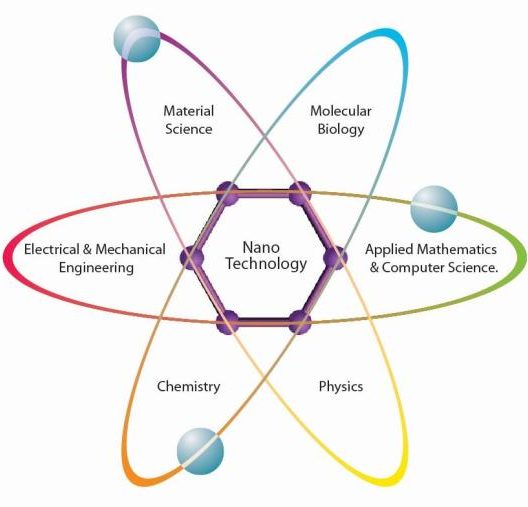
 Physics and Nano