The Lighthouse…

Creators Brian Haberlin and David Hine take “Jules Verne’s Lighthouse” into the depths of deep space piracy starting this April. (Image credit: Image Comics)

Topics: History, Science Fiction, Space Exploration, Spaceflight

Widely considered to be the “Father of Science Fiction,” the famed French poet, novelist, and playwright known as Jules Verne celebrates what would have been his 193rd birthday this year. 

Born Feb. 8, 1828, Verne ushered in the grand era of speculative fiction with his classic novels, “20,000 Leagues Under the Sea,” “From the Earth to the Moon,” “Around the World in 80 Days” and “Journey to the Center of the Earth.”

Now one of Verne’s lesser-known works from 1905, “The Lighthouse At The End Of The World,” is being adapted for the first time into a five-issue comic book miniseries at Image Comics premiering in April. Orchestrated by the veteran creative team of Brian Haberlin and David Hine (“The Marked,'” “Sonata”), “Jules Verne’s: Lighthouse” gets a sci-fi twist and casts readers into the high seas of outer space for a swashbuckling cyberpunk saga.

Here’s the official synopsis:

“Jules Verne’s: Lighthouse” is set at the edge of the galaxy, where there is a giant supercomputer known as the Lighthouse. The only brain powerful enough to navigate ships through a Sargasso of naturally occurring wormholes, potentially cutting months or even years off a spaceship’s journey. Three humans, one alien, and a nanny bot have manned the remote station for years in relative peace until the arrival of Captain Kongre and his band of cutthroat pirates threatens the future of civilization and reveals that each of the Lighthouse crew has been hiding a shocking secret. He who controls the Lighthouse controls this part of the galaxy.”

Exclusive: A little-known Jules Verne adventure novel scores a sci-fi comic book series with ‘Lighthouse’, Jeff Spry, Space.com
Habitable Epoch…

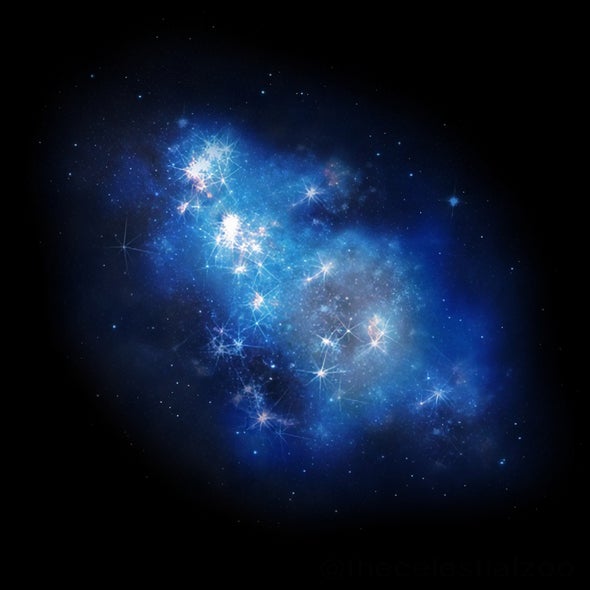
Artist’s conception of GN-z11, the earliest known galaxy in the universe. Credit: Pablo Carlos Budassi Wikimedia (CC BY-SA 4.0)

Topics: Astrobiology, Evolution, Existentialism, Exoplanets

About 15 million years after the big bang, the entire universe had cooled to the point where the electromagnetic radiation left over from its hot beginning was at about room temperature. In a 2013 paper, I labeled this phase as the “habitable epoch of the early universe.” If we had lived at that time, we wouldn’t have needed the sun to keep us warm; that cosmic radiation background would have sufficed.

Did life start that early? Probably not. The hot, dense conditions in the first 20 minutes after the big bang produced only hydrogen and helium along with a tiny trace of lithium (one in 10 billion atoms) and a negligible abundance of heavier elements. But life as we know it requires water and organic compounds, whose existence had to wait until the first stars fused hydrogen and helium into oxygen and carbon in their interiors about 50 million years later. The initial bottleneck for life was not a suitable temperature, as it is today, but rather the production of the essential elements.

Given the limited initial supply of heavy elements, how early did life actually start? Most stars in the universe formed billions of years before the sun. Based on the cosmic star formation history, I showed in collaboration with Rafael Batista and David Sloan that life near sunlike stars most likely began over the most recent few billion years in cosmic history. In the future, however, it might continue to emerge on planets orbiting dwarf stars, like our nearest neighbor, Proxima Centauri, which will endure hundreds of times longer than the sun. Ultimately, it would be desirable for humanity to relocate to a habitable planet around a dwarf star like Proxima Centauri b, where it could keep itself warm near a natural nuclear furnace for up to 10 trillion years into the future (stars are merely fusion reactors confined by gravity, with the benefit of being more stable and durable than the magnetically confined versions that we produce in our laboratories).

When Did Life First Emerge in the Universe? Avi Loeb, Scientific American

40 Years Since STS-1…

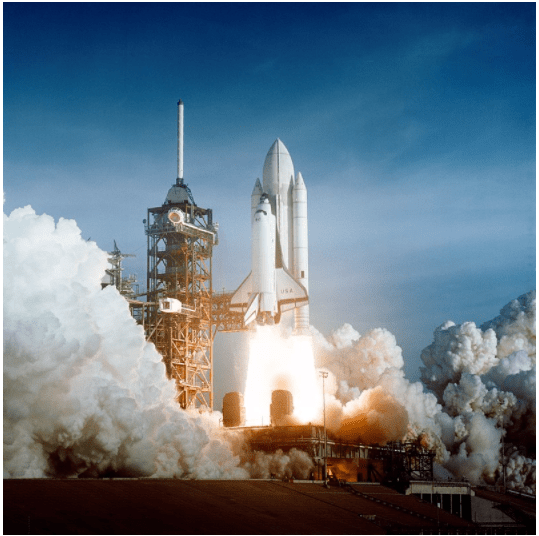
The first mission of the Space Shuttle Program, STS-1, blasts off from launch pad 39A on April 12, 1981, attempting to kick off a new era of rapid access to space.

Topics: History, NASA, Space Exploration, Spaceflight, Space Shuttle

In April 1981, John Young — America’s premier astronaut and one of only 12 people to ever walk on the Moon — was training with co-pilot Bob Crippen for STS-1, the maiden voyage of space shuttle Columbia. Though eager, Young harbored no illusions that he might never return from this first mission of the Space Shuttle Program.

After rocketing into space, Columbia aimed to circle our planet 36 times over two days. But then, unlike previous spacecraft, it would glide back to Earth, landing on a runway like an airplane. NASA hoped its reusable fleet of four shuttles — Atlantis, Challenger, Discovery, and Columbia — would launch weekly with crews of up to seven, allowing more rapid access to space than ever before. The Space Shuttle Program promised to both revolutionize and routinize spaceflight.

But, as with all cutting-edge technologies, the risks were severe. A month before STS-1, as Columbia sat on Pad 39A at the Kennedy Space Center in Florida, several technicians were asphyxiated by nitrogen fumes while working in the shuttle’s aft fuselage. Two of them later succumbed to their injuries. The accident served as a deadly reminder that spaceflight is a dangerous business, even when still on Earth.

40 years since the first space shuttle mission, STS-1, Ben Evans, Astronomy

Muon g-2…

Feynman QED Diagram: Fermilab

Topics: Modern Physics, Particle Physics, Quantum Mechanics

Solving a mystery

More than 200 scientists from around the world are collaborating with Fermilab on the Muon g-2 physics experiment which probes fundamental properties of matter and space. Muon g-2 (pronounced gee minus two) allows researchers to peer into the subatomic world to search for undiscovered particles that may be hiding in the vacuum.

Residing at Fermilab’s Muon Campus, the experiment uses the Fermilab accelerator complex to produce an intense beam of muons traveling at nearly the speed of light. Scientists will use the beam to precisely determine the value of a property known as the g-2 of the muon.

The muon, like its lighter sibling the electron, acts like a spinning magnet. The parameter known as “g” indicates how strong the magnet is and the rate of its gyration. The value of the muon’s g is slightly larger than 2. This difference from 2 is caused by the presence of virtual particles that appear from the quantum vacuum and then quickly disappear into it again.

In measuring g-2 with high precision and comparing its value to the theoretical prediction, physicists aim to discover whether the experiment agrees with theory. Any deviation would point to as yet undiscovered subatomic particles that exist in nature.

An experiment that concluded in 2001 at Brookhaven National Laboratory found a tantalizing 3.7 sigma (standard deviation) discrepancy between the theoretical calculation and the measurement of the muon g-2. With a four-fold increase in the measurement’s precision, Muon g-2 will be more sensitive to virtual or hidden particles and forces than any previous experiment of its kind and can bring this discrepancy to the 5 sigma discovery level.

The centerpiece of the Muon g-2 experiment at Fermilab is a large, 50-foot-diameter superconducting muon storage ring. This one-of-a-kind ring, made of steel, aluminum and superconducting wire, was built for the previous g-2 experiment at Brookhaven. The ring was moved from Brookhaven to Fermilab in 2013. Making use of Fermilab’s intense particle beams, scientists will be able to significantly increase the science output of this unique instrument. The experiment started taking data in 2018.

U.S. Department of Energy – Fermilab: Muon g – 2

Lies, Damned Lies, and Statistics…

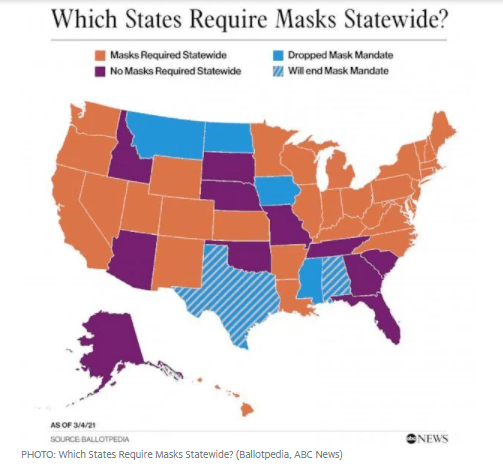
Which states have dropped mask mandates and why, Marlene Lenthang, Yahoo News

Topics: Biology, COVID-19, Dark Humor, Existentialism, Mathematics, Politics

Figures often beguile me, particularly when I have the arranging of them myself; in which case the remark attributed to Disraeli would often apply with justice and force: “There are three kinds of lies: lies, damned lies, and statistics.”

Mark Twain, also: https://en.wikipedia.org/wiki/Lies,_damned_lies,_and_statistics

A follow-up to Tuesday’s post: VOC…

‘No Thank You, Mr. President’: GOP States Still End Mask Mandates Despite Covid-19 Rise And Warnings From Biden, CDC, Alison Durkee, Forbes Business, April 2, 2021

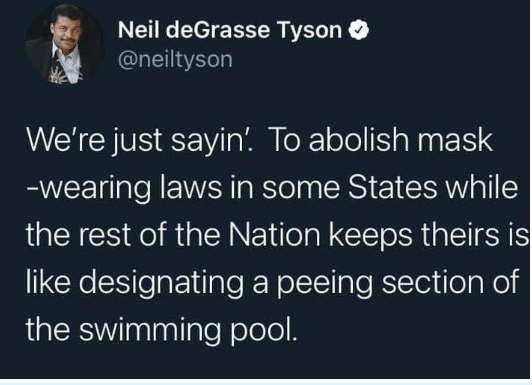
Having some “fun” with mathematics. It’s dark humor for all you young libertarians.

The current US COVID deaths are 573, 988 from https://ncov2019.live/.

The current US population is 332,494,997 from Worldometers.info. Each link updates minute-by-minute, so by the time you read this, these figures will have changed.

(US COVID deaths/current US population) x 100 = 0.17%. Round up to 0.2%.

That’s pretty low.

For the “freedom-loving libertarians” spring breaking in Miami, or Fort Lauderdale, Florida, and Corpus Christi, Texas – a thought experiment:

100,000 of you are about to dive in the ocean.

There is a 0.2% = 0.2/100 chance some of you will get devoured by sharks.

100,000 x (0.2/100) = 200 dead spring breakers.

So, out of 100,000 – 200 = 99,800, or 99.8% have a very good chance of not becoming “chicken of the sea,” and surviving your spring break. The dilemma is, there will still be blood in the water. Blood that carries pathogens that despite your “Y” swimming lessons and the saline environment, you might ingest red tide, and suffer the consequences.

The problem is, your 0.2% chance is not zero. Under normal circumstances (and pandemics are once-in-a-century “not normal”), there’s no libertarian case for this:

Ingenuity…

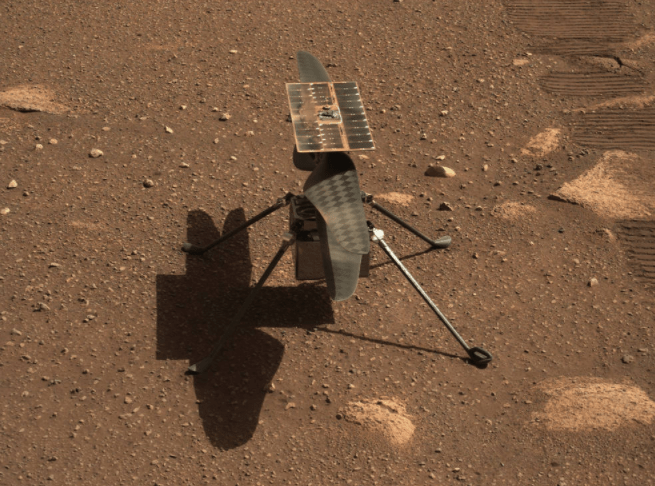
NASA’s Ingenuity Mars helicopter is seen in a close-up taken by Mastcam-Z, a pair of zoomable cameras aboard the Perseverance rover. This image was taken on April 5, 2021, the 45th Martian day, or sol, of the mission.
Credits: NASA/JPL-Caltech/ASU

Topics: Mars, NASA, Space Exploration, Spaceflight

NASA is targeting no earlier than Sunday, April 11, for Ingenuity Mars Helicopter’s first attempt at powered, controlled flight on another planet. To mark a month of Ingenuity flights, the agency will host several events to bring people along for the ride.

A livestream confirming Ingenuity’s first flight is targeted to begin around 3:30 a.m. EDT Monday, April 12, on NASA Television, the NASA app, and the agency’s website, and will livestream on multiple agency social media platforms, including the JPL YouTube and Facebook channels.

Ingenuity arrived at Mars’ Jezero Crater Feb. 18, attached to the belly of NASA’s Perseverance rover. The helicopter is a technology demonstration with a planned test flight duration of up to 31 days (30 Mars days, or sols). The rover will provide support during flight operations, taking images, collecting environmental data, and hosting the base station that enables the helicopter to communicate with mission controllers on Earth.

The flight date may shift as engineers work on the deployments, preflight checks, and vehicle positioning of both Perseverance and Ingenuity. Timing for events will be updated as needed, and the latest schedule will be available on the helicopter’s Watch Online webpage:

https://mars.nasa.gov/technology/helicopter/#Watch-Online

News Briefing and Televised Event Schedule

Virtual media briefings before and after Ingenuity’s first flight attempt and the livestream coverage of the flight attempt will originate from NASA’s Jet Propulsion Laboratory in Southern California.

A preflight briefing at 1 p.m. EDT (10 a.m. PDT) Friday, April 9, will provide the latest details on the helicopter’s operations and what to expect on the first flight day.

NASA Invites Public to Take Flight With Ingenuity Mars Helicopter

VOC…

Inside the B.1.1.7 Coronavirus Variant, By Jonathan Corum and Carl ZimmerJan, The New York Times, January 18, 2021

Topics: Biology, COVID-19, DNA, Research

VariantReported cases in USNumber of Jurisdictions Reporting
B.1.1.716,27552
B.1.35138636
P.135625
Source: CDC

Download Accessible Data [XLS – 738 B]

CDC is closely monitoring these variants of concern (VOC). These variants have mutations in the virus genome that alter the characteristics and cause the virus to act differently in ways that are significant to public health (e.g., causes more severe disease, spreads more easily between humans, requires different treatments, changes the effectiveness of current vaccines).

CDC: US COVID-19 Cases Caused by Variants

Weather Prediction…

Observations of clouds, sunbeams, and birds—like those seen in this photo taken in Salisbury, UK—were important elements of classical weather forecasting. (Image courtesy of Peter Lawrence.)

Topics: History, Meteorology, Research

In August 1861 the London-based newspaper The Times published the world’s first “daily weather forecast.” The term itself was created by the enterprising meteorologist Robert FitzRoy, who wanted to distance his work from astrological “prognostications.” That story has led to a widespread assumption that weather forecasting is an entirely modern phenomenon and that in earlier periods only quackery or folklore-based weather signs were available.

However, more recent research has demonstrated that astronomers and astrologers in the medieval Islamic world drew widely on Greek, Indian, Persian, and Roman knowledge to create a new science termed astrometeorology. Central to the new science was the universal belief that the planets and their movements around Earth affected atmospheric conditions and weather. It was enthusiastically received in Christian Latin Europe and was further developed by Tycho Brahe, Johannes Kepler, and other astronomers. The drive to produce reliable weather forecasts led scientists to believe that astrometeorological forecasting could be more accurate if they used precise observations and records of weather to refine predictions for specific localities. Such records were kept across Europe beginning in the 13th century and were correlated with astronomical data, which paved the way for the data-driven forecasts produced by FitzRoy.1

Islamicate astrometeorologists were the first to replace the ancient practice of observing only short-term signs, such as clouds and the flight of birds, to predict weather. They based their action on the hypothesis that weather is caused by the movements of planets and mediated by regional and seasonal climate conditions. Improved calculations of planetary orbits and updated geographical and meteorological information made the new science possible and compelling.

The prospect of acquiring reliable weather forecasts, closely linked to predictions of coming trends in human health and agricultural production, made the new meteorology attractive in Christian Europe too. Considerable pride shines through medieval Christian accounts of the weather questions that they could now start to answer. Central among them was one that classical meteorologists had failed to figure out: How can weather vary so much from one year to the next when the seasons are caused by regular, repeating patterns produced by Earth’s spherical shape and its interactions with the Sun?

Medieval weather prediction, Anne Lawrence-Mathers is a professor of history at the University of Reading in the UK. Physics Today

Asteroids, Dinosaurs, and Rain Forests…

Topics: Asteroids, Biology, Evolution, Existentialism, Research

Note: Working on two reviews, and my research proposal. It’s a very busy writing semester.

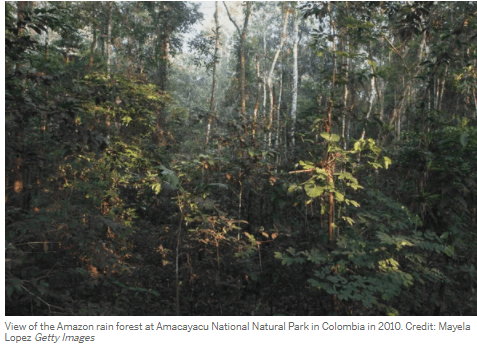
Dinosaur and fossil aficionados are intimately familiar with the meteorite strike that drove Tyrannosaurus rex and all nonavian dinosaurs to extinction around 66 million years ago. But it is often overlooked that the impact also wiped out entire ecosystems. A new study shows how those casualties, in turn, led to another particularly profound evolutionary outcome: the emergence of the Amazon rain forest of South America, the most spectacularly diverse environment on the planet. Yet the Amazon’s bounty of tropical species and habitats now face their own existential threat because of unprecedented destruction from human activity, including land clearing for agriculture.

The new study, published on Thursday in Science, analyzed tens of thousands of plant fossils and represents “a fundamental advance in knowledge,” says Peter Wilf, a geoscientist at Pennsylvania State University, who was not involved in the research. “The authors demonstrate that the dinosaur extinction was also a massive reset event for neotropical ecosystems, putting their evolution on an entirely new path leading directly to the extraordinary, diverse, spectacular and gravely threatened rain forests in the region today.”

These insights, Wilf adds, “provide new impetus for the conservation of the living evolutionary heritage in the tropics that supports human life, along with millions of living species.”

The Asteroid That Killed the Dinosaurs Created the Amazon Rain Forest, Rachel Nuwer, Scientific American

Women’s History Month, and CRISPR…

Topics: Biology, Chemistry, DNA, Nobel Prize, Research, Women in Science

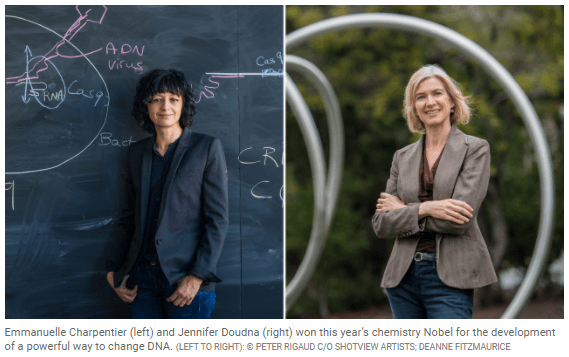
This year’s (2020) Nobel Prize in Chemistry has been awarded to two scientists who transformed an obscure bacterial immune mechanism, commonly called CRISPR, into a tool that can simply and cheaply edit the genomes of everything from wheat to mosquitoes to humans. 

The award went jointly to Emmanuelle Charpentier of the Max Planck Unit for the Science of Pathogens and Jennifer Doudna of the University of California, Berkeley, “for the development of a method for genome editing.” They first showed that CRISPR—which stands for clustered regularly interspaced short palindromic repeats—could edit DNA in an in vitro system in a paper published in the 28 June 2012 issue of Science. Their discovery was rapidly expanded on by many others and soon made CRISPR a common tool in labs around the world. The genome editor spawned industries working on making new medicines, agricultural products, and ways to control pests.

Many scientists anticipated that Feng Zhang of the Broad Institute, who showed 6 months later that CRISPR worked in mammalian cells, would share the prize. The institutions of the three scientists are locked in a fierce patent battle over who deserves the intellectual property rights to CRISPR’s discovery, which some estimate could be worth billions of dollars.

“The ability to cut DNA where you want has revolutionized the life sciences. The genetic scissors were discovered 8 years ago, but have already benefited humankind greatly,” Pernilla Wittung Stafshede, a chemical biologist at the Chalmers University of Technology, said at the prize briefing.

CRISPR was also used in one of the most controversial biomedical experiments of the past decade, when a Chinese scientist edited the genomes of human embryos, resulting in the birth of three babies with altered genes. He was widely condemned and eventually sentenced to jail in China, a country that has become a leader in other areas of CRISPR research.

Although scientists were not surprised Doudna and Charpentier won the prize, Charpentier was stunned. “As much as I have been awarded a number of prizes, it’s something you hear, but you don’t completely connect,” she said in a phone call with the Nobel Prize officials. “I was told a number of times that when it happens, you’re very surprised and feel that it’s not real.”

At a press briefing today, Doudna noted she was asleep and missed the initial calls from Sweden, only waking up to answer the phone finally when a Nature reporter called. “She wanted to know if I could comment on the Nobel and I said, Well, who won it? And she was shocked that she was the person to tell me.”

CRISPR, the revolutionary genetic ‘scissors,’ honored by Chemistry Nobel, Jon Cohen, Science Magazine, AAAS