
Students enter Harvard Yard, on the university’s main campus in Cambridge, Massachusetts. Credit: John Tlumacki/The Boston Globe via Getty
“Who controls the past controls the future. Who controls the present controls the past.”
“There was truth and there was untruth, and if you clung to the truth even against the whole world, you were not mad.”
“Freedom is the freedom to say that two plus two make four.”
“The further a society drifts from truth, the more it will hate those that speak it.”
George Orwell, “1984”
Topics: Civilization, Democracy, Economics, Education, Existentialism
As the US government slashes Harvard University’s funding, the damage to research at the institution is becoming clearer. Nature has learnt that researchers there have lost nearly 1,000 grants, worth more than US$2.4 billion.
An e-mail to Harvard, in Cambridge, Massachusetts, from the US National Science Foundation (NSF) lists 193 grants worth nearly $150 million combined as being terminated, and one from the US Department of Defense (DoD) logs 56 grants worth $105 million. Other cuts are smaller: for instance, the US Department of Agriculture and the US Department of Housing and Urban Development each terminated three grants. But by far the largest tranche comes from the US National Institutes of Health (NIH), the world’s largest funder of biomedical science: it is cutting more than 600 grants worth about $2.2 billion over multiple years. The cuts do not include awards to Harvard-affiliated hospitals.
Through research grants, the US government funds about 11% of Harvard’s annual $6.4-billion budget, and these cancellations will be devastating, researchers say. “Harvard cannot, even with its vast resources, just make up for this loss of federal funding,” says Joseph Loparo, a biological chemist at Harvard Medical School in Boston, Massachusetts, who lost two NIH grants for studying repair processes in DNA, totaling $ 4.3 million.
T.S. Eliot Recites “The Hollow Men” on YouTube.
Harvard researchers devastated as Trump team cuts nearly 1,000 grants, Dan Garisto, Nature
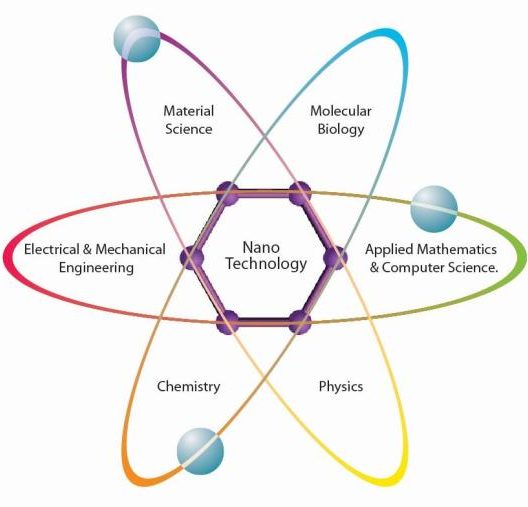
 Physics and Nano
When Planck, and later Einstein, introduced the 𝐸=ℎ𝑓 formula , their conclusions were based on the interaction of light with matter at atomic and molecular scales. However, light–matter interaction fundamentally depends on the size of the receiver—effectively, the antenna. For efficient power absorption, the receiving antenna must typically be smaller than the wavelength of the incoming radiation. This is why 𝐸=ℎ𝑓 appeared valid when applied to sub-micrometer structures such as atoms and molecules. From an electromagnetic standpoint, these were effectively tiny antennas, smaller than the wavelength of visible light. But such antennas are inherently incapable of detecting radiation at millimeter or longer wavelengths. Therefore, the justification for 𝐸=ℎ𝑓 was rooted in a test setup that did not account for scale and wavelength limitations—calling into question its universal applicability. Despite this, the formula has been treated as foundational and even incorporated into the derivation of the Schrödinger equation. It is possible that some of the shortcomings of Schrödinger’s equation stem from this questionable assumption.
Preprint Critique of the Planck/Einstein Formula: E = hf
LikeLike